 Skip to content

 EN
EN  Deutsch
  Français
  Español
  Italiano
  日本語
日本語  Português


Crete · In this guide
Crete Guide: Luxury Yacht Charter in Crete
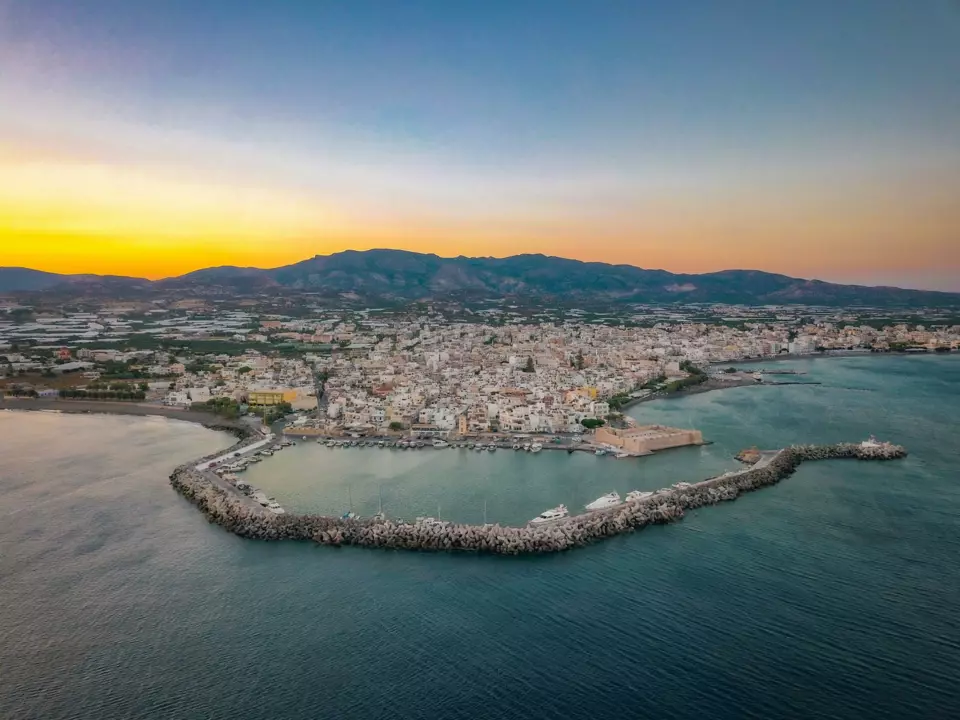
Crete is Greece’s largest island and, by any measure, its most diverse. Stretching 260 kilometres from west to east, with a coastline of over 1,000 kilometres, it is a place of extraordinary contrasts: the snow-capped White Mountains of the west give way to the fertile Messara Plain in the centre and the arid, sun-baked plateaux of the east, while the northern shore – protected, harbour-rich and gently shelving – could scarcely be more different from the wild, cliff-lined southern coast that drops sheer into the Libyan Sea. For yacht charter guests, Crete offers something no other single Greek island can: a destination so large and varied that a week aboard feels less like touring an island and more like voyaging along an entire coastline, each anchorage revealing a different landscape, a different character and a different chapter of a history that stretches back over five thousand years.
This is, after all, the birthplace of European civilisation. The Minoans built their great palaces here – at Knossos, Phaistos, Malia and Zakros – long before Athens rose to prominence, and their legacy is visible everywhere, from the archaeological sites themselves to the terraced hillsides and olive groves that the Minoans first cultivated four millennia ago. Crete’s wine-making tradition is the oldest in Europe, its cuisine is considered the purest expression of the Mediterranean diet, and its people retain a fierce cultural identity that sets them apart from the rest of Greece. Approaching Crete by yacht – watching the mountains materialise from the sea haze, the fortified Venetian harbours of Chania and Rethymno opening to receive you, the turquoise shallows of Balos or Elounda beckoning from around the next headland – is to experience the island the way its earliest traders and seafarers did: from the water, where Crete reveals itself most completely. Enquire with Boatcrowd for availability and pricing on our Crete fleet.
Why Charter a Yacht in Crete
Birthplace of European Civilisation
The Minoan civilisation, which flourished on Crete from roughly 2700 to 1450 BC, was the first advanced society in Europe – a maritime power with sophisticated architecture, plumbing, written language and trade networks extending to Egypt, the Levant and the Cyclades. The Palace of Knossos, six kilometres south of Heraklion, is the largest and most famous Minoan site: a labyrinthine complex of over 1,300 rooms that inspired the myth of the Minotaur. Phaistos, overlooking the Messara Plain with views to Mount Ida, is perhaps the more atmospheric site – unrestored, set in wild landscape, and home to the enigmatic Phaistos Disc. Zakros, on the remote eastern coast, is reachable by tender and offers a genuinely uncrowded archaeological experience. In 2025, six Minoan Palatial Centres across Crete were collectively recognised by UNESCO, confirming what visitors have long understood: this is ground zero for European civilisation.
The Longest Coastline in Greece
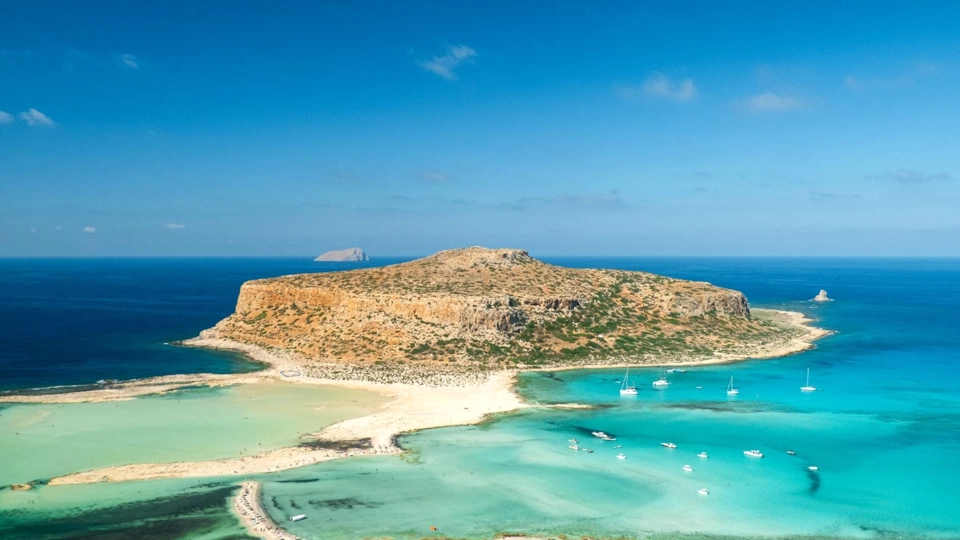
With over 1,000 kilometres of coast, Crete offers a yacht charter experience of remarkable variety. The sheltered northern shore runs from the Venetian grandeur of Chania in the west to the cosmopolitan marina of Agios Nikolaos in the east, dotted with harbours, protected bays and well-serviced marinas. The southern coast is another world entirely: a wall of mountains plunging into the Libyan Sea, with villages accessible only by boat – Loutro, Agia Roumeli, Sougia – and anchorages so remote that you may be the only yacht for miles. The western tip holds Balos Lagoon, one of the most photographed natural wonders in Greece, and the eastern reaches deliver the palm-fringed exoticism of Vai Beach and the Minoan ruins at Kato Zakros. No other Greek island offers such range within a single charter.
Dramatic Mountain-Meets-Sea Landscapes
Crete’s interior is dominated by four mountain ranges, the most spectacular being the Lefka Ori (White Mountains) in the west, which rise to over 2,400 metres and retain snow well into May. These mountains plunge directly into the sea along the southern coast, creating some of the most dramatic yacht-viewing scenery in the Mediterranean. The Samaria Gorge – Europe’s longest at 16 kilometres, cutting through the heart of the White Mountains to emerge at the coast at Agia Roumeli – is a UNESCO Biosphere Reserve and one of Crete’s defining natural landmarks. Charter guests can anchor at Agia Roumeli and arrange a guided hike through the gorge, returning to the yacht by evening – a combination of wilderness adventure and floating luxury that is unique to Crete.
Europe’s Oldest Wine Tradition
Crete has been producing wine continuously for over 3,500 years, making it the oldest wine-producing region in Europe. The island’s indigenous grape varieties – Vidiano and Vilana among the whites, Kotsifali and Liatiko among the reds – are grown nowhere else in meaningful quantities, and a new generation of winemakers is producing bottles that are winning international recognition. The principal wine-producing zones are concentrated around Archanes and Peza, south of Heraklion, and Sitia in the east. Several estates offer private tastings that your crew can arrange, including Lyrarakis (pioneers of the Vidiano revival), Douloufakis (organic, biodynamic) and Domaine Paterianakis. A shore excursion to the vineyards pairs beautifully with a morning visit to Knossos.
Authentic Cretan Gastronomy
Cretan cuisine is widely regarded as the most healthful and flavourful expression of the Mediterranean diet. The island produces exceptional olive oil (Crete accounts for a third of Greek production), wild herbs gathered from mountain slopes, raw-milk cheeses like graviera and anthotyros, dark Cretan honey, and seafood pulled daily from the surrounding waters. Dining at waterfront tavernas – accessible by tender at virtually every anchorage – is a highlight of any Cretan charter. In Chania’s Venetian harbour, in the hilltop restaurants above Elounda, or at a fisherman’s table in Loutro, the quality of the ingredients speaks for itself. For guests who prefer to dine aboard, provisioning in Cretan markets yields produce of a standard that rivals anything in the Mediterranean.
Key Destinations Around Crete
• Chania – The jewel of western Crete. A Venetian harbour framed by pastel-coloured warehouses, a lighthouse dating to the 1500s, and a labyrinth of lanes lined with leather workshops, jewellers and some of the island’s finest restaurants. Souda Bay, a few kilometres east, offers deep-water anchorage and full marina services for larger yachts.
• Rethymno – A Renaissance-era harbour town topped by the Fortezza, a massive Venetian fortress. Cobbled streets open onto lively squares, taverna terraces spill onto the seafront, and the town retains an unhurried authenticity that charter guests find deeply appealing. Good marina facilities with excellent provisioning.
• Heraklion – Crete’s capital and the gateway to Knossos. The Archaeological Museum of Heraklion houses the world’s finest collection of Minoan artefacts, including the Bull-Leaper fresco and the Snake Goddess figurines. A modern yacht marina provides full services, fuel and provisioning for extended voyages.
• Agios Nikolaos – A sophisticated harbour town on the Gulf of Mirabello with a modern 255-berth marina. The gateway to Elounda and Spinalonga, with fine dining, boutique shopping and an atmosphere that feels distinctly cosmopolitan. The marina offers water, power, fuel and full shore-side services.
• Elounda – The luxury resort coast of eastern Crete. Calm, sheltered waters, some of Greece’s most exclusive waterfront hotels, and a natural beauty that is quietly spectacular. The approach by yacht, past Spinalonga Island with the Dikti Mountains rising behind, is one of the most rewarding arrivals in the Aegean.
• Spinalonga – A fortified island at the entrance to the Gulf of Mirabello. Built by the Venetians in 1579 and later used as a leper colony (the last in Europe, closing in 1957), it is a place of haunting beauty and powerful history. The turquoise waters surrounding the island are outstanding for swimming.
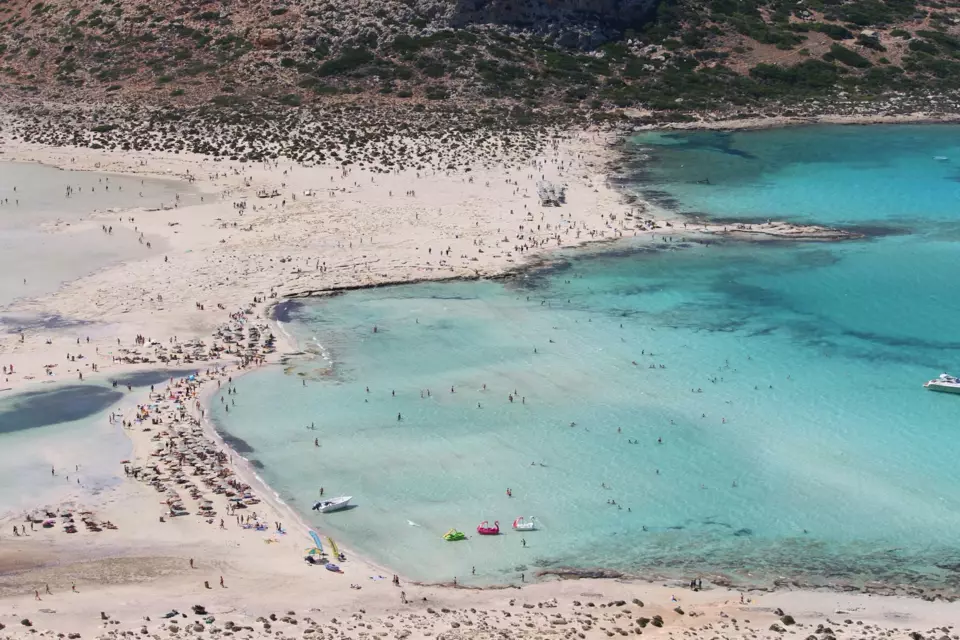
• Balos Lagoon – A shallow, enclosed lagoon at the northwestern tip of Crete where the sea shades from aquamarine to milky turquoise over white and pink sand. Anchoring here in the early morning, before the day-trip boats arrive, is one of the most magical experiences in Greek yachting. The nearby Gramvousa fortress, perched on a rocky islet, adds historical drama to the setting.
• Loutro – A tiny whitewashed village tucked into a semi-circular bay on the southern coast, accessible only by boat or hiking trail. Mountains tumble directly into transparent water, a handful of tavernas serve fresh fish on the waterfront, and the sense of isolation is complete. It is Crete at its most unspoilt.
• Vai Beach – On the northeastern coast, a pristine crescent of sand backed by Europe’s largest natural palm forest – over 5,000 Theophrastus palms that create a landscape more reminiscent of the Caribbean than the Aegean. Anchor offshore and tender in for a truly exotic beach experience.
• Gavdos – The southernmost point of Europe, lying 26 nautical miles south of Hora Sfakion. Remote, wild and almost entirely undeveloped, with pristine beaches, crystal-clear water and a sense of having reached the very edge of the continent. The passage south is an adventure in itself – open sea, big horizons, and the feeling of genuine exploration.
When to Charter in Crete
Peak Season: July – August
High summer brings the warmest water temperatures (24–26 °C), the longest days and the most reliable sunshine. It also brings the Meltemi – the strong northerly wind that can blow at 15–25 knots for days at a time, occasionally gusting higher. On Crete’s northern coast, the Meltemi is generally manageable and provides pleasant cooling; on the exposed southern coast, katabatic gusts funnelling down the mountain gorges can be more challenging. Peak season is ideal for guests who enjoy spirited conditions and want to swim in the warmest waters, though popular anchorages like Balos will be busy with day-trip boats from mid-morning. Motor yacht charter rates from $33,000 per week; superyacht charters from $90,000 per week.
Shoulder Season: May – June and September – October
The shoulder months are, for many experienced charterers, the finest time to visit Crete. May and June bring warm, settled weather with water temperatures of 19–23 °C, lighter winds, and an island that is green and fragrant from the winter rains. September and October offer water temperatures of 22–25 °C (often the warmest swimming of the year), softer light, fewer visitors and a Meltemi that has largely subsided. The shoulder season is particularly rewarding for guests interested in the southern coast, where calmer conditions open up anchorages and passages that are less comfortable in the peak Meltemi months. Rates are typically 15–25% below high season.
Winter Escape: November – April
Crete’s southern position (it lies further south than much of the North African coast) gives it milder winters than the rest of Greece, with daytime temperatures of 14–18 °C and frequent sunshine. While swimming is reserved for the hardier guest, the archaeological sites, wine country and mountain villages are at their most atmospheric when free of crowds. A winter charter in Crete is a contemplative experience – the island at its most Cretan, with roaring fireplaces in harbour-side tavernas, snow on the White Mountains, and the deep satisfaction of having the anchorages entirely to yourself.
Signature Experiences by Yacht
Samaria Gorge by Sea
Anchor at Agia Roumeli – a coastal village accessible only by boat – and hike into Europe’s longest gorge. The full 16-kilometre descent starts at Omalos, 1,200 metres above sea level, and emerges at the coast through the famous “Iron Gates” where the gorge narrows to just three metres wide. Your crew can arrange a guided half-day hike through the lower section, allowing you to experience the towering cliffs, rare Cretan wild goats (kri-kri) and ancient cypress forests before returning to the yacht for a late lunch at anchor. It is an adventure that only a yacht charter can deliver in such comfort.
Minoan Heritage Trail
A multi-day exploration of Crete’s four great Minoan palaces, accessed from different anchorages along the coast. Begin at Heraklion for Knossos and the Archaeological Museum; cruise south to the Messara coast for an overland excursion to Phaistos; continue east to Malia (accessible from the northern anchorage off the town); and conclude at the remote Palace of Zakros on the eastern coast, reachable by tender to Kato Zakros. Together, these sites tell the story of a civilisation that was building multi-storey palaces with running water and frescoed walls when much of Europe was still in the Bronze Age.
Volcanic Wine and Olive Oil Immersion
Combine a visit to the wine country around Archanes and Peza (a 30-minute transfer from Heraklion marina) with tastings at estates like Lyrarakis, where the rediscovered Vidiano grape has become one of Greece’s most exciting white wines. Follow with an olive oil tasting at a traditional press – Crete’s extra-virgin oil is among the finest in the world – and return to the yacht with provisions for an exceptional onboard supper. In autumn, the grape harvest and olive pressing offer particularly immersive experiences.
Southern Coast Wilderness Voyage
The passage along Crete’s southern coast, from Hora Sfakion in the west to Ierapetra in the east, is one of the most dramatic coastal voyages in the Mediterranean. Towering mountains drop sheer into deep water, villages cling to tiny coves, and the anchorages – Loutro, Agia Roumeli, Sougia, Paleochora – are accessible only from the sea. This is a passage for experienced charterers who appreciate genuine remoteness: limited provisioning, exposed crossings between harbours, and the reward of landscapes that few visitors ever see.
Yacht Types for Crete
Luxury Motor Yachts (78–99 ft)
The most popular choice for Crete charters. A luxury motor yacht in the 78–99 ft range offers the speed to cover meaningful distances along Crete’s extensive coastline – important when the island stretches 260 km from west to east – while drawing shallow enough to access the lagoons, coves and tender-only anchorages that define the Cretan experience. Expect three to four guest cabins, professional crew of three to four, a swim platform for water sports and the stability to handle the Meltemi comfortably. Weekly rates from $33,000 to $55,000 depending on season and specification.
Superyachts (100 ft+)
For guests seeking the full-service Crete experience, a superyacht brings a dedicated chef who can source directly from Cretan markets, a tender large enough to explore remote southern anchorages in comfort, and the range to cruise the entire island without refuelling. The larger platform handles the open-water crossing to Gavdos (26 nm each way) with ease, and provides the entertaining space for hosting aboard in Chania’s Venetian harbour or against the backdrop of Elounda’s luxury coast. Crew of six to twelve; weekly rates from $90,000 to $175,000 plus APA (typically 30–35% of the charter fee to cover fuel, provisioning, marina fees and excursions). Gratuity for the crew is customary at 10–15% of the base charter fee.
Luxury Catamarans (55 ft+)
A luxury catamaran is exceptionally well suited to Crete, where shallow lagoons (Balos, Elounda) and calm northern anchorages reward a vessel with minimal draught and generous beam. The stability of a catamaran is particularly welcome in the Meltemi chop, and the expansive deck space lends itself to long, leisurely days at anchor. Catamarans perform best on the northern coast and eastern routes; the more exposed southern passages benefit from the speed and power of a motor yacht. Weekly rates from $35,000 to $50,000.
Frequently Asked Questions: Crete Yacht Charter
How long does it take to cruise around Crete?
A complete circumnavigation of Crete is roughly 320 nautical miles and would require a minimum of ten days to two weeks, depending on your yacht’s cruising speed and how many stops you wish to make. Most charter guests focus on either the eastern half (Heraklion to Agios Nikolaos, with extensions to Vai and Zakros) or the western half (Chania, Balos, and the southern coast) within a seven-day charter, which allows a far more rewarding pace of exploration.
Is the Meltemi wind a concern for Crete charters?
The Meltemi, a strong northerly wind that blows from late June through September, does affect Crete, though less severely than the central Cyclades. On the sheltered northern coast, it is generally manageable and provides welcome cooling. The southern coast can experience gusty katabatic winds where mountain gorges funnel air down to the sea. Your captain will plan the itinerary around conditions, favouring the lee side of the island when the Meltemi is strong. Shoulder-season charters (May–June, September–October) largely avoid the strongest winds.
What are the best anchorages for families with children?
Balos Lagoon, with its shallow, warm, turquoise water, is a paradise for children. Elounda’s calm waters and accessible beaches are equally well suited. On the eastern coast, the protected bays around Agios Nikolaos and the Gulf of Mirabello offer gentle swimming and easy tender access to shore. Your captain can tailor the route to favour sheltered anchorages with calm water and short tender rides.
Can I visit Knossos directly from the yacht?
Yes. Berth at Heraklion’s yacht marina and the Palace of Knossos is a 15-minute drive. Your crew can arrange a private transfer and guide. We recommend combining the palace visit with the Archaeological Museum of Heraklion, which houses the Minoan frescoes and artefacts that bring the site to life. Allow a half-day for both.
How does Crete compare to the Cyclades for a yacht charter?
The Cyclades – Mykonos, Santorini, Paros and their neighbours – offer classic island-hopping with short passages between islands and a vibrant social scene. Crete offers depth rather than breadth: a single island so large and varied that a week barely scratches the surface. Where the Cyclades deliver contrast through variety of islands, Crete delivers it through variety of landscape, history and experience within one coastline. Guests who have already explored the Cyclades often find Crete to be a revelatory next chapter.
What is the APA and what does it cover?
The Advance Provisioning Allowance (APA) is a fund, typically 30–35% of the charter fee, paid before the charter begins. It covers running expenses including fuel, marina and port fees, food and beverages, and any shore excursions or activities arranged by the crew. At the end of the charter, the captain provides a detailed accounting and any unspent balance is refunded.
Is Gavdos worth the crossing?
For the right guest, absolutely. The 26-nautical-mile crossing from Hora Sfakion to Gavdos – the southernmost point of Europe – is an open-sea passage that requires settled weather and a capable yacht. The reward is pristine beaches, crystalline water and the rare satisfaction of anchoring at Europe’s southern frontier. Your captain will advise on weather windows; the crossing is most reliably comfortable in May, June and September.
Ready to plan your Crete charter?
Tell us your dates and party size – we'll match you with the right yacht and crew.
30–45 min by road to Alimos Marina
Every yacht is chartered fully crewed with a professional captain and crew, so no licence or sailing experience is required — you simply step aboard.
Best time to charter Greece
Local knowledgeThe Ionian offers calm, sheltered waters ideal for families, while the Cyclades reward experienced crews when the meltemi blows in high summer.
