 Skip to content

 EN
EN  Deutsch
  Français
  Español
  Italiano
  日本語
日本語  Português


Komodo · In this guide
Komodo Guide: Luxury Phinisi and Yacht Charter in Komodo
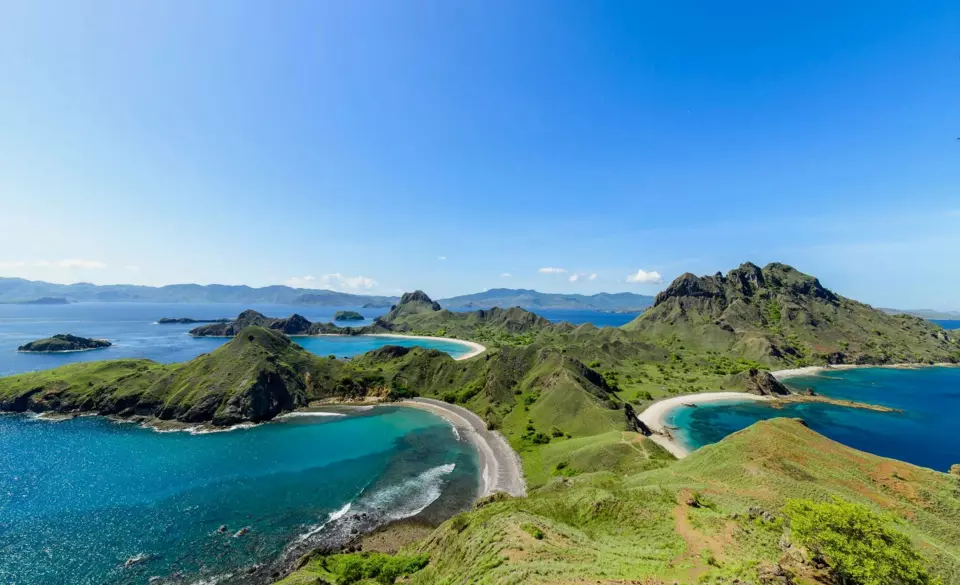


Komodo National Park occupies a chain of volcanic islands between Sumbawa and Flores in eastern Indonesia, and it is one of those rare places where superlatives actually undersell the experience. The park’s three main islands – Komodo, Rinca and Padar – are home to the Komodo dragon, the world’s largest living lizard, a creature that has not changed significantly in four million years and still patrols these dry, volcanic hillsides as if the rest of the world’s megafauna never disappeared. Beneath the surface, the waters between these islands host some of the richest and most dramatic diving in Indonesia: current-swept pinnacles, manta cleaning stations, soft-coral walls and a marine food chain fuelled by the convergence of the Indian Ocean and the Flores Sea.
Labuan Bajo, a small harbour town on the western tip of Flores, is the gateway to the park and the embarkation point for most charters. From here, a phinisi or motor yacht reaches the park’s northern dive sites in under two hours and Komodo Island itself in roughly three. The cruising ground is compact enough for a thorough five-to-eight-day exploration yet varied enough to fill every day with a completely different experience: one morning you’re hiking with Komodo dragons, the afternoon you’re drifting with manta rays, and the evening you’re watching the sun set behind Padar’s three-bay summit panorama. For charter guests who want world-class diving, genuine wildlife encounters and Indonesia’s most photogenic landscapes in a single week, Komodo has no equal.
Enquire with Boatcrowd for availability and pricing on our Komodo phinisi and motor yacht fleet.
Why Charter a Yacht in Komodo
Komodo Dragons – The World’s Last Great Lizards
Komodo dragons (Varanus komodoensis) survive on just a handful of islands in this corner of Indonesia, and the two main viewing sites – Komodo Island and Rinca Island – sit within the national park. Adults reach three metres in length and 70 kilograms, with muscular tails, serrated teeth and a venomous bite that has remained largely unchanged for four million years. Ranger-guided treks on both islands bring you within metres of these extraordinary animals in their natural habitat: basking on volcanic rock, foraging through dry monsoon forest and patrolling territorial boundaries. Rinca’s Loh Buaya ranger station offers the most compact and reliable viewing, with roughly 2,000 dragons on a smaller island, while Komodo Island’s larger landscape rewards longer treks with more varied terrain and wildlife sightings including water buffalo, Timor deer and wild boar.
World-Class Diving and Snorkelling
Komodo’s underwater world is shaped by powerful currents that bring nutrient-rich water from the deep ocean, fuelling a food chain that supports everything from pygmy seahorses to oceanic manta rays. The park’s headline dive sites – Batu Bolong, Castle Rock, Crystal Rock and Manta Point (Karang Makassar) – are consistently ranked among the best in Asia. Batu Bolong is a solitary pinnacle whose walls are coated in soft corals and sea fans so dense they look spray-painted; Castle Rock’s submerged peak attracts vast schools of surgeonfish, trevally and white-tip reef sharks. Manta Point’s three-kilometre sandy ridge hosts one of the world’s most reliable manta cleaning stations: oceanic mantas with wingspans of up to four metres glide in to be cleaned by wrasse in water as shallow as 10–15 metres. Even snorkellers can experience the mantas here on calm days.
Padar Island’s Three-Bay Panorama
A 30-minute summit hike on Padar Island rewards with one of Indonesia’s most iconic views: three bays curving away below you – one pink, one white, one black sand – against a backdrop of turquoise water, volcanic ridges and open ocean. The trail is well-marked and manageable for most fitness levels, best done at sunrise when the light is golden and the air is still cool. Your phinisi or motor yacht anchors in one of Padar’s bays below, and your crew has breakfast waiting when you descend.
Pink Beaches
Komodo’s Pink Beach (Pantai Merah) owes its colour to fragments of red organ-pipe coral (Tubipora musica) mixed with white sand – a geological curiosity found on only a handful of beaches worldwide. The effect is subtle but beautiful: a blush-toned strand that deepens in colour as the coral content increases closer to the waterline. The snorkelling just offshore is superb – a shallow coral garden in 1–3 metres of calm, clear water with sea turtles, parrotfish and clouds of damselfish. A second pink beach on Padar’s southern coast offers a quieter alternative.
Compact Cruising Ground
Komodo’s key attractions are clustered within a relatively compact area, making it possible to combine dragon treks, world-class dives, beach time and island hikes in a single day without long passages. Labuan Bajo to Komodo Island is roughly 35 nautical miles (two to three hours on a phinisi); the northern dive sites around Gili Lawa are closer, roughly 20 nautical miles from port. This compactness means less time in transit and more time in the water or on the trail.
Key Destinations in Komodo
-
Komodo Island – The park’s namesake and largest island. Ranger-guided dragon treks from Loh Liang, Pink Beach, and sheltered anchorages on the eastern coast. The island’s interior is dry, volcanic and dramatic – monsoon forest, grassland and rocky ridges inhabited by dragons, deer and wild boar.
-
Rinca Island – Closer to Labuan Bajo and home to roughly 2,000 Komodo dragons in a smaller, more concentrated area. The Loh Buaya ranger station offers short (30-minute), medium (one-hour) and long (two-hour) guided treks. Rinca’s rugged terrain and higher dragon density make sightings virtually guaranteed.
-
Padar Island – Uninhabited volcanic island with the park’s most famous viewpoint: three bays visible from the summit, each a different colour of sand. Excellent anchorages in the sheltered bays, with good snorkelling along the rocky edges.
-
Gili Lawa Darat – A pair of small islands in the park’s north, with a summit hike offering panoramic views and sheltered bays for overnight anchorage. The nearby dive sites – Castle Rock, Crystal Rock, The Passage and Lighthouse – are among Komodo’s finest.
-
Batu Bolong – A solitary rock pinnacle visible above the surface, whose underwater walls are among the most densely populated in Indonesia. Strong currents, experienced-diver conditions, and a marine display that includes Napoleon wrasse, white-tip reef sharks, giant trevally and soft corals in every conceivable colour.
-
Karang Makassar (Manta Point) – A three-kilometre sandy ridge hosting one of the world’s most reliable manta ray cleaning stations. Drift dives in 10–15 metres over sand, with oceanic mantas gliding through in ones, twos and – during peak season – groups of a dozen or more. Suitable for experienced snorkellers as well as divers.
-
Kanawa Island – A tiny coral-fringed island roughly 30 minutes from Labuan Bajo, with an excellent house reef for easy snorkelling in calm, clear water. A popular first or last stop on Komodo charters.
Best Time to Charter in Komodo
Dry Season: April to October
The prime charter season. Skies are clear, seas are calm, air temperatures sit between 27°C and 32°C and underwater visibility reaches 15–30 metres on the best days. July and August offer the driest conditions and the most stable weather for diving and hiking. This is also the busiest period, with the most popular dive sites seeing multiple boats – though a phinisi charter gives you the flexibility to time your dives outside the peak hours.
Manta Season: October to March
Plankton blooms triggered by seasonal currents attract the largest manta aggregations to Karang Makassar, with December through February the peak period – 12 to 15 mantas on a single dive is not uncommon. Water temperature rises slightly (28–30°C), visibility may drop to 10–20 metres due to plankton, and occasional rain is possible. For guests whose primary goal is manta encounters, November or March offer the best compromise between manta numbers, visibility and weather stability.
Shoulder Months: April and October
The transition months often deliver the best of both worlds: settled weather, reasonable visibility, good manta numbers (especially October) and noticeably fewer vessels at the dive sites. Charter rates may be 10–15% softer than peak. These are the months that experienced Komodo visitors return for.
Signature Experiences in Komodo
- Sunrise Summit on Padar – Your captain anchors in Padar’s bay before dawn, and a 30-minute hike to the summit rewards with a panorama of three coloured bays as the first light sweeps across the volcanic ridges. Breakfast on the aft deck afterward, with the view still filling the horizon.
- Drift Dive with Mantas at Karang Makassar – Descend to 12–15 metres on the sandy ridge and let the gentle current carry you through the cleaning station as oceanic manta rays glide overhead, pausing to be cleaned by wrasse. The scale of these animals – wingspans of three to four metres – never fails to take the breath away.
- Dragon Trek on Rinca – A ranger-guided walk through Rinca’s dry woodland and grassland, where Komodo dragons bask, forage and patrol their territory with a slow, deliberate menace that is simultaneously terrifying and mesmerising. The rangers’ knowledge of individual animals and their behaviour adds depth to an encounter that is truly unlike any other wildlife experience.
- Pink Beach Picnic – Your crew sets up a barefoot lunch on blush-toned sand while you snorkel the coral garden just steps away. Sea turtles, parrotfish and clownfish in water so shallow and clear a child could spot them from the beach.
- Night Dive at Siaba Besar – After dark, Komodo’s reefs reveal a hidden cast: hunting cuttlefish, Spanish dancers, basket stars unfurling and fluorescent corals glowing under UV light. A completely different experience from the daytime dives and well worth the early-morning dive alarm.
Yacht Types Available
-
Luxury Phinisi (80’–180’) – The most popular charter vessel for Komodo, combining the romance of a traditional Indonesian sailing yacht with modern luxury: teak-panelled cabins, personal chefs, dedicated dive masters and full water-sports arsenals. Phinisi are ideal for Komodo’s compact cruising ground, where the emphasis is on spending time at each site rather than covering distance quickly. Weekly rates start from approximately $45,000–$90,000 all-inclusive.
-
Motor Yachts (55’–99’) – Crewed motor yachts offer faster transits between dive sites and a more conventional charter experience. Suitable for guests who want to combine Komodo diving with broader island-hopping – a motor yacht can cover the distance from Bali to Komodo in a multi-day passage that slower phinisi might find challenging. Weekly rates from approximately $30,000–$55,000.
-
Superyachts (100’+) – For the ultimate Komodo experience: lavish staterooms, full dive centres, extensive deck spaces and crews of 10+. Superyacht charters in Komodo operate on expedition-style terms. Weekly rates from approximately $90,000–$175,000+ depending on vessel.
-
Luxury Catamarans (55’+) – Stable, spacious and shallow-drafted, catamarans are an excellent choice for families and groups who prioritise comfort and calm seas. The twin-hull design reduces rolling and provides generous living space. Weekly rates from approximately $35,000–$55,000.
Frequently Asked Questions
How much does a yacht charter in Komodo cost?
Luxury phinisi charters in Komodo typically range from $45,000 to $90,000 per week on an all-inclusive basis. Crewed motor yachts start from around $30,000–$55,000 per week, while superyachts operate from $90,000–$175,000+ on expedition-style terms with an Advance Provisioning Allowance. Komodo National Park entry fees (approximately $20–40 per person per day) are typically included in the charter rate. Crew gratuity is customarily 10–15%. Enquire with Boatcrowd for a personalised quote.
Are Komodo dragon encounters safe?
Yes, provided you follow park regulations. All dragon treks are led by experienced park rangers who know individual animals and their behaviour. Visitors stay on designated paths and maintain safe distances; rangers carry traditional forked wooden sticks as a precaution. Komodo dragons are wild and powerful predators, which is precisely what makes the experience so thrilling – but incidents are extremely rare when the rules are followed. Your phinisi crew will brief you on what to expect before each trek.
Can I see manta rays in Komodo even if I’m not a certified diver?
Yes. Karang Makassar (Manta Point) is shallow enough – 10–15 metres on the cleaning station, shallower at the edges – that experienced snorkellers can observe mantas from the surface on calm days. Your dive master will assess conditions and advise whether snorkelling is feasible at the manta site on any given day. For the most reliable and immersive manta encounters, diving is recommended, but Komodo offers plenty of extraordinary snorkelling at other sites (Pink Beach, Kanawa, Tatawa Besar) where the marine life is abundant and accessible.
Is Komodo suitable for a honeymoon or special celebration?
Komodo is one of Indonesia’s most romantic charter destinations. Imagine a sunset dinner on the deck of a traditional phinisi anchored beneath Padar’s volcanic silhouette, a private picnic on Pink Beach with champagne and freshly grilled seafood, or a sunrise hike to Padar’s summit followed by a couples’ spa treatment on the yoga deck. The combination of dramatic landscapes, extraordinary wildlife and the intimacy of a crewed phinisi makes Komodo exceptional for proposals, honeymoons and milestone celebrations. Let Boatcrowd know the occasion when you enquire.
How do I get to Komodo?
Most charter guests fly to Labuan Bajo (airport code LBJ) on the western tip of Flores. Domestic flights connect from Bali (approximately 1.5 hours), Jakarta and other major Indonesian cities. From Labuan Bajo’s airport, a 10-minute transfer takes you to the harbour where your phinisi or motor yacht will be waiting. Your Boatcrowd charter specialist can recommend the most convenient routing and arrange all transfers.
Can I combine Komodo with other Indonesian destinations?
Absolutely. The most popular combinations are Komodo and Flores (extending east to explore the island’s volcanic landscape, traditional villages and lesser-known dive sites), Komodo and the Alor Archipelago (a 10–14-day phinisi voyage east from Labuan Bajo through some of Indonesia’s most remote and culturally rich islands) and Bali to Komodo (a multi-day island-hopping route through the Lesser Sundas). Some guests book back-to-back charters, combining a week in Komodo with a week in Raja Ampat via a domestic flight from Labuan Bajo to Sorong.
Ready to plan your Komodo charter?
Tell us your dates and party size – we'll match you with the right yacht and crew.
15–20 min by road to Labuan Bajo Harbour
Every yacht is chartered fully crewed with a professional captain and crew, so no licence or sailing experience is required — you simply step aboard.
Best time to charter Indonesia
Local knowledgeThe dry southeast monsoon opens Komodo's dragon-guarded passes and pink beaches; Raja Ampat takes over when the season turns.
