


Galápagos Itineraries: Multi‑Day Routes
The Galápagos archipelago’s 13 major islands are spread across 45,000 square kilometres of Pacific Ocean, and the distances between them – combined with the national park’s visitor‑site rotation system – make multi‑day itineraries the natural way to experience the islands. The two routes below are designed to complement each other: the 8‑day itinerary explores the western and southern islands (Isabela, Fernandina, Santiago, Rábida, Floreana and Española), while the 10‑day itinerary covers the central, eastern and northern archipelago (San Cristóbal, Santa Fé, South Plaza, North Seymour, Bartolomé and Genovesa). Every stop is different and no visitor site is repeated between the two routes. Your Boatcrowd charter specialist will tailor timing, pacing and excursions to your group’s interests, fitness levels and the season.
8‑Day Galápagos Yacht Charter: The Western and Southern Circuit
Day 1: Santa Cruz – Charles Darwin Research Station and the Highlands
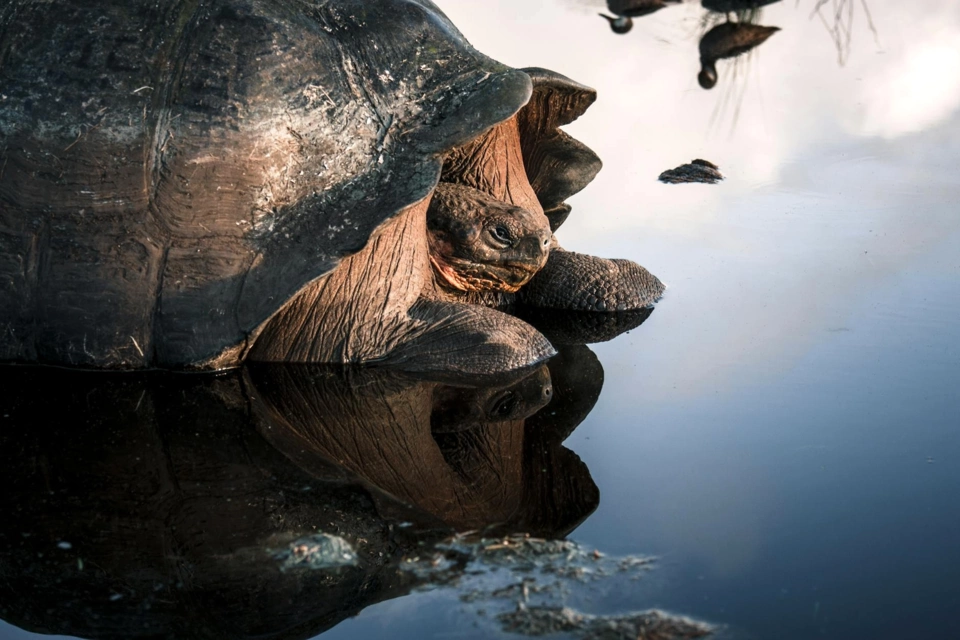
Board your yacht at Puerto Ayora by mid‑morning. Begin with a visit to the Charles Darwin Research Station, a short walk from the waterfront – explore the giant‑tortoise breeding enclosures, learn about the conservation programmes that have brought several subspecies back from the brink, and meet the researchers who continue Darwin’s legacy. After lunch aboard, drive 30 minutes into the misty highlands to walk among wild giant tortoises in their natural habitat. These animals, weighing over 250 kilograms, graze through lush scalesia forest with an unhurried grace that makes time feel elastic. Return to your yacht for sundowners and dinner on the aft deck as the sun sets over Academy Bay.
Day 2: Isabela – Los Túneles and Puerto Villamil
Depart Puerto Ayora after breakfast and cruise west to Isabela – roughly 45 nautical miles, about four hours at cruising speed. Your crew serves brunch on the aft deck as the volcanic profiles of the western islands rise from the horizon. Arrive at Puerto Villamil by early afternoon and head straight to Los Túneles: a network of lava tunnels and arches where the water is shallow, calm and crystal‑clear. Snorkel among sea turtles, Galápagos penguins, seahorses, rays and blue‑footed boobies perched on the lava formations above. The geological drama – bridges, tunnels and archways of solidified lava over turquoise water – is unique to the Galápagos and one of the most photogenic snorkelling sites in the archipelago. Return via the flamingo lagoons behind Puerto Villamil for an evening anchorage off Isabela’s south coast.
Day 3: Isabela – Tagus Cove and Elizabeth Bay
Cruise north along Isabela’s dramatic west coast to Tagus Cove, a sheltered inlet where whalers and buccaneers once carved their names into the cliff face – some graffiti dates to the 1800s. Walk the trail to Darwin Lake, a saltwater crater lake surrounded by arid volcanic landscape with views stretching to the horizon. Continue south to Elizabeth Bay, a mangrove‑fringed inlet where Galápagos penguins, flightless cormorants and marine iguanas gather on the rocky islets. Explore by tender through the calm, dark water of the bay – a haven for green sea turtles and spotted eagle rays that glide beneath the surface. Overnight at anchor off western Isabela.
Day 4: Fernandina – Punta Espinosa and the Flightless Cormorant
Cruise west across the Bolívar Channel to Fernandina, the youngest and most pristine island in the archipelago. Fernandina’s single active shield volcano, La Cumbre, last erupted in 2024, and the landscape is a raw, otherworldly expanse of black lava flows. Land at Punta Espinosa for a guided walk through one of the densest marine‑iguana colonies in the Galápagos – hundreds of dark iguanas basking on the lava, their red‑and‑green breeding colours vivid against the rock. Flightless cormorants spread their stunted wings to dry in the breeze. Sea lions bark from the shoreline. The snorkelling off Punta Espinosa is among the best in the archipelago: marine iguanas feed on algae underwater, penguins dart past, and the cold, nutrient‑rich water supports dense schools of fish. Overnight at anchor off Fernandina.
Day 5: Santiago – Puerto Egas and the Fur Seal Grottos
Cruise east to Santiago and land at Puerto Egas on the western coast for a morning walk along the black volcanic shoreline. Natural rock pools carved into the basalt harbour Galápagos fur seals resting in the shade – a smaller, more reclusive relative of the sea lion that prefers the cool, rocky grottos. Marine iguanas graze on algae at the waterline, and Sally Lightfoot crabs glow vivid orange against the dark rock. The snorkelling at Puerto Egas is excellent, with sea turtles, rays and reef fish in the shallows. After lunch aboard, explore Sullivan Bay on Santiago’s east coast – a surreal landscape of rope‑like pahoehoe lava flows, frozen in time just over a century after the last eruption. Overnight at anchor off Santiago.
Day 6: Rábida – Red Sand Beach and Flamingo Lagoon
A short cruise south brings you to Rábida, one of the most colourful islands in the archipelago. The distinctive dark‑red sand beach – stained by iron‑rich volcanic deposits – is home to a noisy colony of Galápagos sea lions. Walk the short inland trail past a briny lagoon where flamingos sometimes feed, surrounded by palo santo trees and opuntia cacti. The snorkelling along Rábida’s rocky coastline is superb: sea lions play alongside you, reef fish dart through the shallows, and white‑tip reef sharks rest on the sandy bottom. After a morning on Rábida, cruise south towards Floreana – roughly 35 nautical miles, arriving by late afternoon. Overnight at anchor off Floreana.
Day 7: Floreana – Devil’s Crown and Post Office Bay
Morning at Devil’s Crown: slip into this submerged volcanic cone and snorkel among sea lions, white‑tip reef sharks, eagle rays, sea turtles and dense schools of king angelfish and surgeonfish. The current sweeps nutrients into the crater, making this one of the richest snorkelling sites in the Galápagos. After lunch aboard, visit Post Office Bay and its famous barrel post – a tradition dating to the 18th century, when passing whalers would leave letters for ships heading home to deliver. Today visitors continue the custom, leaving postcards and hand‑delivering those addressed to their home countries. Explore Cormorant Point in the afternoon: a green‑sand beach (coloured by olivine crystals) where flamingos wade in a brackish lagoon and sea turtles nest in the dunes. Overnight at anchor.
Day 8: Española – Gardner Bay and Punta Suarez
Cruise south‑east to Española, the oldest island in the archipelago. Morning at Gardner Bay: a pristine white‑sand beach where a colony of Galápagos sea lions lounges, swims and plays in the surf. The snorkelling is outstanding – sea lions spiral around you, green sea turtles glide past, and the visibility is excellent. After lunch aboard, land at Punta Suarez for a guided walk along the coastal trail. This is the Galápagos at its most spectacular: marine iguanas in their most vivid breeding colours, nesting blue‑footed and Nazca boobies, a blow hole sending spray 25 metres into the air, and (from April to December) waved albatrosses performing their bill‑clacking courtship. This single day on Española is often cited as the highlight of any Galápagos voyage. Return to Santa Cruz by evening for a farewell dinner.
10‑Day Galápagos Yacht Charter: The Grand Archipelago Expedition
Day 1: San Cristóbal – Arrival and La Lobería
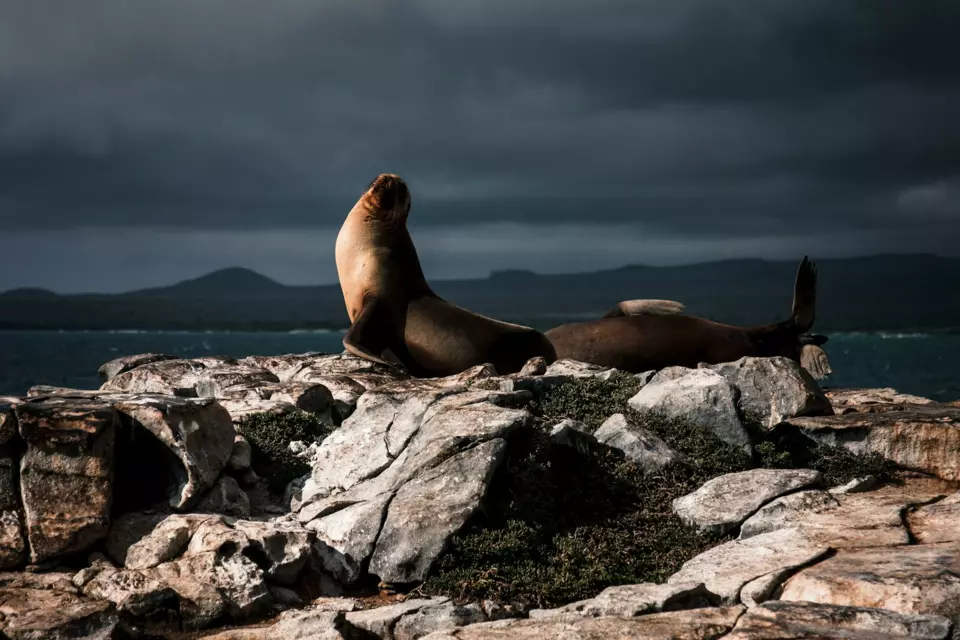
Fly into San Cristóbal’s airport from Quito or Guayaquil and board your yacht at Puerto Baquerizo Moreno, the provincial capital of the Galápagos. Settle into your cabin, meet your crew and naturalist guide, and take a short afternoon excursion to La Lobería – a rocky shoreline just south of town where a large colony of Galápagos sea lions lounges, plays and bodysurfs in the waves. Marine iguanas bask on the lava rocks above, and frigatebirds circle overhead. It is the perfect introduction to Galápagos wildlife: close, confident and completely unfazed by your presence. Return to the yacht for a welcome dinner and a briefing on the days ahead.
Day 2: San Cristóbal – Kicker Rock
Cruise 8 nautical miles offshore to Kicker Rock (León Dormido), a dramatic volcanic formation that rises vertically from the sea – the eroded remains of a volcanic tuff cone split into two towering pinnacles with a narrow channel between them. Spend the morning diving or snorkelling the sheer walls: scalloped hammerhead sharks, eagle rays, manta rays, Galápagos sharks and green sea turtles in visibility that can exceed 20 metres. The current brings nutrients and large pelagic species through the channel, making this one of the most thrilling underwater sites in the central islands. After lunch aboard, visit Cerro Brujo on San Cristóbal’s north‑western coast – a white coral‑sand beach with excellent snorkelling and a sea lion colony. Overnight at anchor.
Day 3: Española – Punta Suarez and Gardner Bay
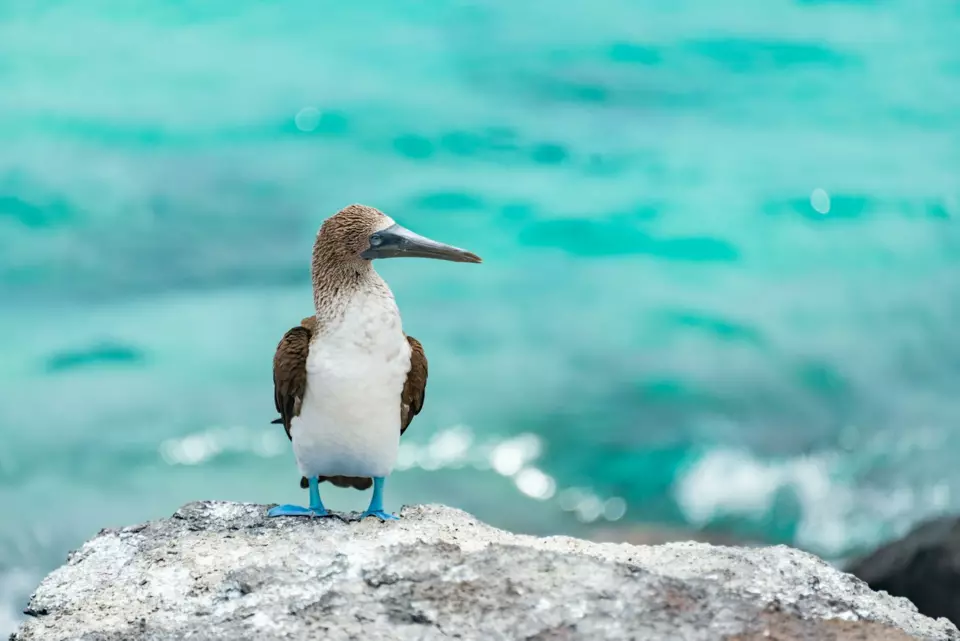
Cruise south to Española, the oldest island in the archipelago. Begin at Punta Suarez for a morning walk along the spectacular coastal trail: blow holes sending spray high into the air, marine iguanas in vivid red‑and‑green breeding colours, nesting blue‑footed and Nazca boobies, and (from April to December) waved albatrosses – the only place on Earth where this majestic bird breeds. After lunch, tender to Gardner Bay for an afternoon swim and snorkel with Galápagos sea lions on one of the most beautiful beaches in the archipelago. The pups are irresistible underwater – spinning, blowing bubbles and making eye contact as if inviting you to play. Overnight at anchor off Española.
Day 4: Floreana – Devil’s Crown and Cormorant Point
Cruise north‑west to Floreana. Morning snorkel at Devil’s Crown, the submerged volcanic cone just offshore: sea lions, white‑tip reef sharks, eagle rays and sea turtles swirl inside a natural amphitheatre of rock while schools of king angelfish and surgeonfish catch the current. After lunch, land at Cormorant Point for a walk to the flamingo lagoon – a brackish pool behind the green‑sand beach (coloured by olivine crystals) where greater flamingos feed in the shallows. Continue to the far beach to see where green sea turtles come ashore to nest. Visit Post Office Bay and continue the centuries‑old barrel‑post tradition before returning to the yacht for an evening anchorage.
Day 5: Santa Cruz – Highlands and Tortuga Bay
Cruise to Santa Cruz and spend the morning in the highlands, walking among wild giant tortoises in their natural habitat. The lush scalesia forest, draped in orchids and mosses, feels a world away from the arid lowlands. Visit a lava tunnel – a long, underground passage formed by flowing lava that cooled on the surface while the interior continued to drain – before returning to Puerto Ayora for provisioning and lunch at one of the waterfront restaurants. In the afternoon, take the trail to Tortuga Bay: a long crescent of white sand backed by mangroves, where marine iguanas bask, sea turtles surface in the shallows and reef sharks patrol the bay. Overnight at mooring in Academy Bay.
Day 6: Santa Fé – Land Iguanas and Barrington Bay
Cruise south‑east to Santa Fé, a small island with a distinctive landscape of towering opuntia cacti – the tallest in the Galápagos, reaching up to 10 metres. Land at the turquoise‑water anchorage and walk the trail through the forest of giant cacti, looking for the Santa Fé land iguana – a species found only on this island, paler and larger than its cousins on other islands, and one of the rarest reptiles in the Galápagos. Galápagos hawks perch in the palo santo trees, and the rocky coastline hosts a sea lion colony. Snorkel in Barrington Bay’s clear water with sea lions, reef fish and the occasional eagle ray before returning to the yacht. Overnight at anchor.
Day 7: South Plaza and North Seymour
Morning landing on South Plaza, a small uplifted island just east of Santa Cruz. Despite its modest size, South Plaza is one of the most visually striking sites in the Galápagos: a carpet of red Sesuvium plants contrasts with bright‑green opuntia cacti and golden‑coloured land iguanas. The southern cliffs host nesting swallow‑tailed gulls, red‑billed tropicbirds and shearwaters. After lunch aboard, cruise north to North Seymour for an afternoon walk among one of the Galápagos’ most impressive seabird colonies. Male great frigatebirds inflate their vivid scarlet throat pouches during courtship displays, blue‑footed boobies nest along the trail, and land iguanas lumber through the low scrub. Overnight at anchor near Baltra.
Day 8: Bartolomé – Pinnacle Rock and Chinese Hat
Morning cruise to Bartolomé for the archipelago’s most iconic view. Climb the boardwalk trail to the summit – a moderate ascent through a volcanic moonscape of spatter cones and lava formations – for a panorama of Pinnacle Rock rising from turquoise water with Santiago’s lava fields in the background. Descend to the beach and snorkel with Galápagos penguins at the base of the rock. After lunch, cruise the short distance to Chinese Hat (Sombrero Chino), a tiny volcanic islet off Santiago’s south‑eastern coast. Its gently sloping cone resembles a traditional Chinese hat from a distance. Walk the short trail past recent lava flows and snorkel the channel between the islet and Santiago: Galápagos penguins, sea lions, Sally Lightfoot crabs and colourful reef fish in shallow, sheltered water. Overnight at anchor.
Day 9: Genovesa (Tower Island) – Darwin Bay
Cruise north to Genovesa, a remote island formed by a collapsed shield‑volcano caldera. The crossing takes approximately seven hours, and your crew will keep you comfortable with meals, films and a chance to spot dolphins, manta rays and pilot whales in the open ocean. Arrive at Darwin Bay, a flooded caldera that serves as a sheltered natural harbour. Land on the white coral‑sand beach and walk the trail through the world’s largest colony of red‑footed boobies – the only site in the Galápagos where this species nests. Great frigatebirds, Nazca boobies, swallow‑tailed gulls and storm petrels fill the air. The bay itself offers excellent snorkelling with hammerhead sharks, eagle rays and a kaleidoscope of reef fish. Overnight at anchor in Darwin Bay.
Day 10: Genovesa – El Barranco, then Return to Santa Cruz
Early morning landing at El Barranco (Prince Philip’s Steps) on Genovesa’s southern coast. Climb the steep, rocky trail to a plateau alive with nesting Nazca boobies, red‑footed boobies and great frigatebirds. The real highlight is the storm‑petrel colony: thousands of these delicate seabirds nest in the lava crevices, emerging at dusk in swirling clouds. The short‑eared owl hunts them in daylight here – one of the few places in the world where this normally nocturnal raptor has adapted to daytime hunting. After the walk, board the yacht and begin the return cruise to Santa Cruz, arriving by late afternoon. Farewell dinner in Puerto Ayora at one of the waterfront restaurants, or aboard the yacht under the stars – a fitting end to ten days in the most extraordinary wildlife destination on Earth.
