


Galápagos Guide: Luxury Yacht Charter in the Galápagos Islands
The Galápagos Islands lie roughly 960 kilometres west of mainland Ecuador – a volcanic archipelago of 13 major islands, six smaller islands and more than 100 islets strung across 45,000 square kilometres of open Pacific. Formed by a geological hotspot that continues to reshape the landscape today, the islands range from the ancient, wind‑worn plateau of Española (some four million years old) to the young lava fields of Fernandina, where eruptions still send rivers of molten basalt into the sea. Roughly 97% of the land area is protected as Galápagos National Park, a UNESCO World Heritage Site since 1978, and the surrounding marine reserve – 133,000 square kilometres of regulated ocean – ranks among the largest and most biodiverse on Earth.
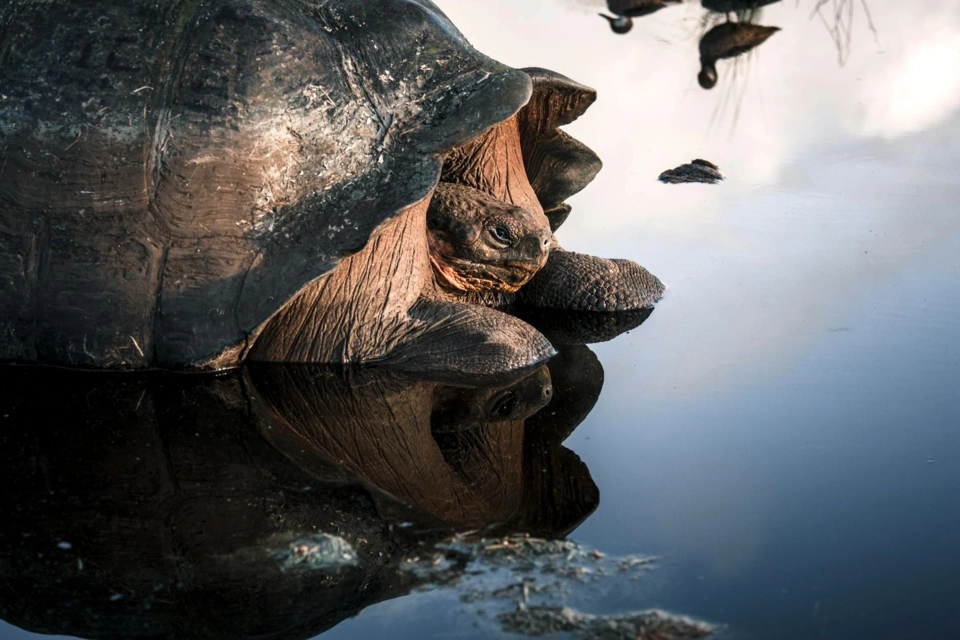
For charter guests, the archipelago offers something no other destination can match: wildlife that has never learned to fear humans. Marine iguanas bask on the rocks at your feet. Blue‑footed boobies perform their courtship dance two metres from the trail. Sea lion pups circle your snorkel mask with unbridled curiosity. Giant tortoises, some weighing over 250 kilograms and well past their hundredth birthday, lumber through the misty highlands of Santa Cruz and Isabela with a slow grace that makes the modern world feel very far away. Charles Darwin’s 1835 visit here shaped our understanding of life on Earth, and the islands remain a living laboratory of evolution – every anchorage brings a different landscape, a different cast of endemic species and a different moment of quiet wonder.
All visits to Galápagos National Park visitor sites require a licensed naturalist guide, and every charter itinerary follows park‑approved routes. Far from a limitation, this system ensures each excursion is led by one of the most knowledgeable wildlife interpreters you will ever meet. Your crew handles provisioning, navigation and logistics; your naturalist guide transforms each landing into a masterclass in biology, geology and conservation. Start planning your Galápagos charter with Boatcrowd.
Why Charter a Yacht in the Galápagos
Wildlife Encounters That Exist Nowhere Else
The Galápagos’ most remarkable quality is the animals’ complete indifference to human presence. Millions of years of evolution on islands free of terrestrial predators have produced creatures with no instinct to flee. Walk the coastal trail at Punta Suarez on Española and blue‑footed boobies high‑step through their courtship routine within arm’s reach. Slip into the water at Gardner Bay and sea lion pups spiral around you, blowing bubbles and mimicking your movements. Step ashore on Fernandina and hundreds of marine iguanas – the only sea‑going lizards on Earth – barely lift their heads as you pass. A private yacht charter allows you to arrive at each visitor site early, before the day‑trip boats, experiencing these encounters in near‑solitude with your naturalist guide.
A Living Laboratory of Evolution
Darwin’s 13 species of finch – each with a beak adapted to a different food source – are still here, alongside a cast of endemic species found nowhere else: the flightless cormorant (the world’s only cormorant that cannot fly), the waved albatross (which breeds exclusively on Española from April to December), the Galápagos hawk and the Galápagos penguin – the only penguin species found north of the equator. The Charles Darwin Research Station on Santa Cruz, established in 1959, continues captive‑breeding programmes that have brought several giant‑tortoise subspecies back from the brink of extinction. Visiting the station adds a layer of scientific context that elevates a beautiful voyage into a genuinely educational experience.
World‑Class Diving and Snorkelling
The cold, nutrient‑rich Humboldt Current from the south meets warm equatorial waters here, creating conditions that support both tropical and cold‑water species in extraordinary concentrations. Gordon Rocks, an extinct volcanic crater off Santa Cruz rated by CNN as the sixth‑best dive location in the world, delivers encounters with schools of 10 to 30 scalloped hammerhead sharks per dive, along with eagle rays, sea turtles and Galápagos sharks. Kicker Rock off San Cristóbal offers sheer volcanic walls where hammerheads, manta rays and white‑tip reef sharks patrol in visibility that can exceed 20 metres. And the remote northern islands of Wolf and Darwin – home to the largest shark biomass on the planet, an average of 17.5 tonnes per hectare – deliver whale‑shark encounters and massive hammerhead aggregations that consistently rank among the finest dives on Earth.
An Archipelago of Contrasts
No two islands look or feel alike. Isabela, the largest at 5,800 square kilometres, is shaped by five active shield volcanoes and supports the archipelago’s biggest giant‑tortoise population. Fernandina, the youngest island, is a pristine volcanic landscape of black lava flows and dense marine‑iguana colonies untouched by human settlement. Española, the oldest, is a wind‑sculpted plateau where waved albatrosses return each April to breed. Rábida’s dark‑red sand beach – coloured by iron‑rich volcanic deposits – contrasts sharply with the white coral sand of Gardner Bay. Genovesa’s flooded caldera hosts enormous seabird colonies rarely seen by other visitors. A private charter lets you weave between these contrasting worlds at your own pace, tailoring each day’s itinerary to your group’s interests.
Privacy, Flexibility and Expert Guidance
Galápagos expedition cruises carry 16 to 100 passengers on fixed schedules. A private yacht charter reverses that equation: your vessel, your naturalist guide, your pace. Linger at a snorkelling site if the sea lions are particularly playful. Add an extra dive at Gordon Rocks if conditions are perfect. Adjust the route to catch waved‑albatross season on Española or whale‑shark season at Wolf and Darwin. Your crew handles every detail – from provisioning in Puerto Ayora to coordinating park permits – while you focus on the experience. It is expedition‑style wildlife exploration with the comfort, privacy and service of a luxury yacht.
Key Destinations in the Galápagos
-
Santa Cruz – The operational heart of the archipelago and the natural base for most charters. Puerto Ayora (population 12,000+) offers the best infrastructure for provisioning, dining and medical facilities. The Charles Darwin Research Station is a short walk from the waterfront. The highlands, reached by a 30‑minute drive, support a wild population of giant tortoises grazing in lush scalesia forest. Excellent snorkelling at Tortuga Bay and Las Grietas.
-
Isabela – The largest island (5,800 km²), dominated by five active shield volcanoes including Wolf Volcano (1,707 metres, the highest point in the Galápagos). Puerto Villamil on the southern coast provides a quiet village atmosphere and access to Los Túneles – a network of lava tunnels where sea turtles, rays, seahorses and Galápagos penguins gather in calm, crystal‑clear water. Flamingo lagoons sit behind the town.
-
San Cristóbal – The easternmost major island and a common entry point, with daily flights from Quito and Guayaquil via Baltra. Kicker Rock (León Dormido), a dramatic volcanic formation 8 nautical miles offshore, is the island’s signature dive site – hammerheads, eagle rays, manta rays and Galápagos sharks along sheer walls. A large sea lion colony lounges on the waterfront of Puerto Baquerizo Moreno, the provincial capital.
-
Fernandina – The youngest and most pristine island, formed by a single active shield volcano (La Cumbre, which last erupted in 2024). No permanent human settlement. Punta Espinosa hosts one of the densest marine‑iguana populations in the archipelago and is the primary habitat of the flightless cormorant – a species with stunted wings that has lost the ability to fly.
-
Española – The oldest island in the chain (approximately four million years) and the exclusive breeding ground of the waved albatross (April–December). Punta Suarez offers a spectacular coastal trail past blow holes, nesting boobies and vivid marine iguanas in red‑and‑green breeding colours. Gardner Bay is a pristine white‑sand beach with a resident sea lion colony.
-
Bartolomé – A small volcanic island famous for Pinnacle Rock, an eroded tuff spire rising from turquoise water. A boardwalk trail climbs to a summit viewpoint with one of the most photographed panoramas in the archipelago. Galápagos penguins nest at the base of Pinnacle Rock, and the surrounding waters provide reliable snorkelling with reef fish and sea lions.
-
Floreana – Rich in human history – early settlers, a self‑proclaimed baroness and mysterious disappearances that remain unexplained. Devil’s Crown, a submerged volcanic cone just offshore, is one of the finest snorkelling sites in the Galápagos: sea lions, white‑tip reef sharks, eagle rays and turtles inside a natural amphitheatre of rock. Post Office Bay’s barrel‑post tradition dates to the 18th century.
-
Genovesa (Tower Island) – A remote northern island formed by a collapsed shield‑volcano caldera. Darwin Bay hosts enormous colonies of red‑footed boobies (the only site in the Galápagos where they nest), great frigatebirds, Nazca boobies and storm petrels. El Barranco (Prince Philip’s Steps) leads to a plateau alive with nesting seabirds. Fewer visitors reach Genovesa, making it a genuine off‑the‑beaten‑path highlight.
-
Rábida – One of the most colourful and volcanically varied islands in the archipelago. Its distinctive dark‑red sand beach – stained by iron‑rich volcanic deposits – is home to a noisy sea lion colony. A short inland trail passes a briny lagoon where flamingos sometimes feed. The snorkelling along Rábida’s rocky coastline is excellent, with sea lions, reef fish and the occasional white‑tip reef shark.
-
North Seymour – A flat, uplifted island just north of Baltra that supports one of the largest frigatebird colonies in the Galápagos. Male great frigatebirds inflate their vivid scarlet throat pouches during courtship, while blue‑footed boobies nest along the trail and land iguanas bask in the low scrub. A reliable site for close‑range seabird photography.
Best Time to Charter a Yacht in the Galápagos
Warm Season: December to May
The warm, wet season brings air temperatures of 25–31°C (77–88°F), water temperatures of 21–27°C (70–80°F) and generally calmer seas – ideal conditions for snorkelling, diving and water sports. Brief tropical showers are common, heaviest from January through March, but they pass quickly and the skies between are bright and blue. Underwater visibility is at its best, often exceeding 30 metres from January to March. Marine iguanas display their vivid red‑and‑green breeding colours (most spectacular on Española), green sea turtles nest on the beaches, and giant tortoise eggs hatch between January and March. This is the preferred season for families and guests who prioritise warm‑water snorkelling and comfortable conditions.
Cool Season (Garúa): June to November
The Humboldt Current strengthens from the south, bringing cooler water temperatures (18–23°C / 65–75°F) and a characteristic layer of coastal mist known as the garúa. While air temperatures are cooler (20–26°C), this is paradoxically the richest season for marine life. The cold, nutrient‑laden water produces vast plankton blooms that fuel the food chain from bottom to top: large schools of fish draw sharks, rays, dolphins and seabirds in extraordinary numbers. Blue‑footed boobies breed from June to August, their courtship dances reaching a peak of activity. Galápagos penguin activity increases. Whale sharks appear at Wolf and Darwin islands from June through November, with peak sightings in August and September. Humpback whales pass through the western islands. This is the season favoured by divers and wildlife photographers.
Year‑Round Highlights
The Galápagos have no true off‑season. Giant tortoises, sea lions, marine iguanas and Darwin’s finches are present every day of the year. The question is which season’s particular highlights match your interests. September to November brings sea lion pupping season – playful, curious pups that are endlessly entertaining underwater. December marks the start of warmer water and calmer seas. April and May offer a transition window with pleasant conditions and fewer visitors. There is no hurricane risk at any time of year. Every month has something extraordinary to offer.
Signature Galápagos Experiences
-
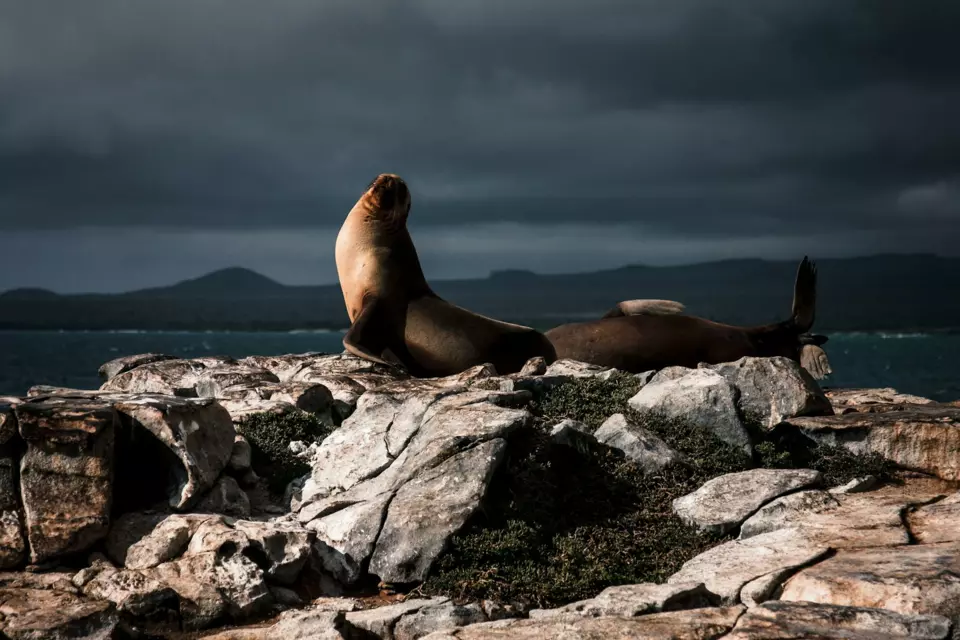
Snorkelling with Sea Lions at Gardner Bay – Anchor off Española’s white‑sand beach and slip into the water alongside a colony of Galápagos sea lions. Pups spiral around you, blowing bubbles and mimicking your movements with unbridled curiosity. Adults lounge on the sand, utterly unconcerned. The water is clear, the sand is white, and the encounter is unlike anything you have experienced in any ocean.
-
Hammerhead Sharks at Gordon Rocks – For certified divers, Gordon Rocks off Santa Cruz is among the world’s top hammerhead‑shark sites. Descend into the volcanic crater and watch 10 to 30 scalloped hammerheads glide past in formation, their distinctive silhouettes framed against the deep blue. Eagle rays, Galápagos sharks and sea turtles complete a dive that routinely ranks among the finest on Earth.
-
Giant Tortoises in the Santa Cruz Highlands – Tender ashore and drive into the misty highlands of Santa Cruz to walk among wild giant tortoises – animals weighing over 250 kilograms, living well past 100 years, moving through lush scalesia forest with an unhurried deliberation. The Charles Darwin Research Station adds context with its captive‑breeding programme that has pulled several subspecies back from the edge.
-
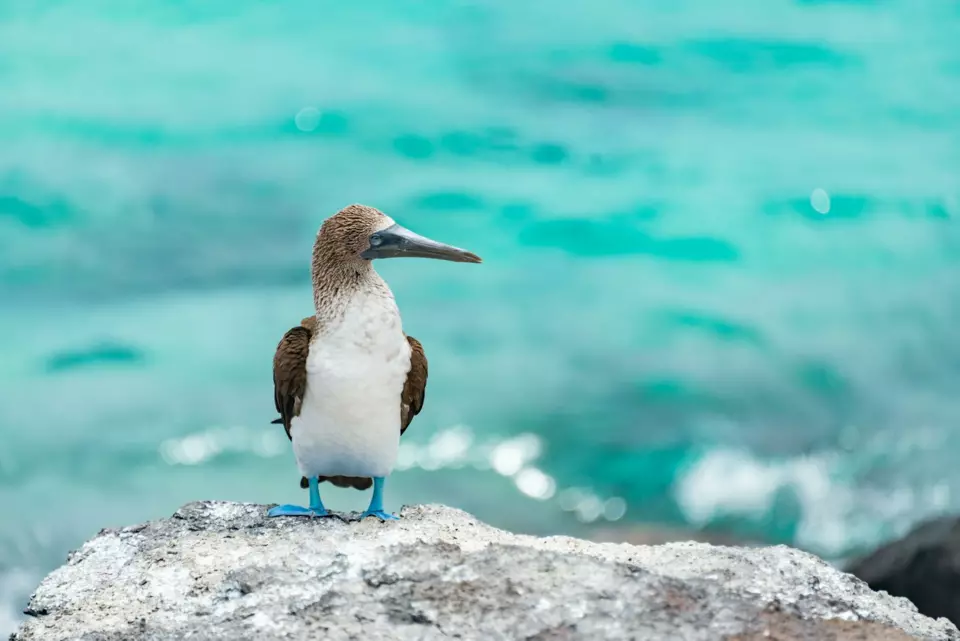
Blue‑Footed Booby Courtship on Española – Walk the coastal trail at Punta Suarez during breeding season (June–August) and watch blue‑footed boobies perform their elaborate courtship – sky‑pointing, foot‑lifting and presenting nest materials – within two metres of the trail. The vivid blue feet, displayed in a slow, deliberate high‑stepping dance, are one of the most joyful sights in the natural world.
-
Pinnacle Rock at Bartolomé – Climb the boardwalk trail to Bartolomé’s summit for one of the most iconic views in the Galápagos: Pinnacle Rock rising from turquoise water, the volcanic landscape stretching in every direction, Santiago’s lava fields in the background. Descend to snorkel with Galápagos penguins at the base of the rock.
-
Whale Sharks at Wolf and Darwin – Between June and November, the remote northern islands of Wolf and Darwin host some of the most spectacular shark diving on the planet. Over 90% of Galápagos whale‑shark sightings occur here, alongside massive aggregations of scalloped hammerheads, Galápagos sharks, eagle rays and dolphins. This is a bucket‑list dive experience for the dedicated.
-
Flightless Cormorants on Fernandina – Land at Punta Espinosa on the youngest island in the archipelago and observe the world’s only flightless cormorant drying its stunted wings in the equatorial breeze. These birds evolved in a place with no terrestrial predators and abundant marine food – flight became unnecessary, and over millennia their wings shrank to decorative stubs. It is evolution made visible.
Conservation and Responsible Chartering
The Galápagos operate under one of the strictest conservation frameworks of any charter destination in the world. All visiting vessels must obtain an Autografo permit processed through the Ecuadorian Ministry of Defence – paperwork that should begin at least 60 days before arrival. A licensed yacht agent is required to represent the vessel with Ecuadorian authorities for tax payments, port reception and permit coordination. Every charter itinerary must be approved by the Galápagos National Park Directorate, and a certified naturalist guide must be aboard for all visitor‑site excursions. Anchoring is prohibited in most areas; vessels use designated moorings to protect the marine reserve’s fragile seabed. Visitor numbers at each site are carefully controlled through a rotation system that limits crowding and environmental impact.
These regulations are not obstacles – they are what make the Galápagos extraordinary. The system has preserved an ecosystem where wildlife behaves as it did before humans arrived, where coral reefs thrive, and where encounters feel genuinely wild. Your Boatcrowd charter specialist handles the permit process, naturalist‑guide coordination and park‑authority liaison so that your only concern is choosing which island to visit next.
Yacht Types Available
The Galápagos operate under strict national‑park regulations governing vessel size, passenger numbers and itineraries. All charter yachts must carry licensed naturalist guides, follow approved visitor‑site schedules and comply with the marine reserve’s environmental protocols. Your Boatcrowd charter specialist will match you to a vessel and itinerary that meets park requirements while delivering the luxury, privacy and flexibility of a crewed charter.
-
Luxury Motor Yachts (78’–99’) – A growing fleet of luxury motor yachts operates in the Galápagos, typically accommodating 8–16 guests in 4–8 en‑suite cabins. These vessels offer the speed to cover the archipelago’s distances efficiently (Santa Cruz to Isabela is roughly 45 nautical miles) and the comfort of a floating boutique hotel. Full crew plus a licensed naturalist guide, snorkelling and diving equipment, tenders and kayaks as standard. Weekly rates typically start from approximately $50,000–$100,000 depending on season and vessel.
-
Superyachts (100’+) – A limited number of superyachts operate in the Galápagos under special park permits. These vessels offer the highest level of space, privacy and service – personal chefs, spa treatments, dedicated dive tenders and naturalist guides for your group alone. Puerto Ayora and Puerto Baquerizo Moreno can accommodate larger vessels, though advance coordination with park authorities is essential. Booking 12–18 months ahead is strongly recommended. Weekly rates from roughly $150,000–$300,000+, depending on vessel and season.
-
Luxury Catamarans (55’+) – Premium power catamarans are well suited to the Galápagos’ varied conditions: twin‑hull stability handles open‑water crossings, and the wide beam provides a generous platform for snorkelling, diving and wildlife observation. Catamarans typically accommodate 8–16 guests and carry full water‑sports equipment. Their shallower draft allows access to coves and visitor sites that deeper‑hulled vessels cannot reach. Weekly rates from approximately $30,000–$60,000.
Frequently Asked Questions
How much does a yacht charter in the Galápagos cost?
Charter pricing reflects the Galápagos’ premium status and strict environmental regulations. Luxury catamarans (55’–80’) start from around $30,000–$60,000 per week, fully crewed with a licensed naturalist guide. Motor yachts (78’–99’) typically start from $50,000–$100,000 per week. Superyachts (100’+) start from roughly $150,000–$300,000+ per week. All visitors pay a Galápagos National Park entrance fee of $200 per adult ($100 per child under 12) and a Transit Control Card fee of $20 per person. Most charters include food, drink, guided excursions and water‑sports equipment. Fuel and provisioning are typically covered by an Advance Provisioning Allowance (APA) of 25–35% on top of the base rate. Crew gratuity is customarily 10–15%. Enquire with Boatcrowd for a personalised quote.
Are luxury catamarans available for charter in the Galápagos?
Yes, and they are among the most popular vessels in the archipelago. Premium power catamarans from builders such as Sunreef provide excellent stability for the open‑water crossings between islands, generous living space both above and below deck, and a shallower draft that opens up anchorages closer to shore. All catamarans come fully crewed with a licensed naturalist guide. They are particularly popular with families and multi‑generational groups who appreciate the wide beam, the absence of rolling in swells, and the easy swim‑platform access for snorkelling.
Can I charter a yacht in the Galápagos for a film or documentary production?
The Galápagos have a distinguished history with film and documentary production. David Attenborough has visited four times, most recently for the 3D documentary series Galápagos (2013). The BBC’s Life on Earth, Baraka and Earth: One Amazing Day have all featured Galápagos footage. Peter Weir’s Master and Commander: The Far Side of the World (2003) was the first major feature film to shoot on the islands. Production charters require special filming permits from Ecuador’s Ministry of Environment and strict compliance with ecosystem‑protection protocols. Boatcrowd can coordinate with park authorities, arrange a suitable charter vessel and assist with the additional permit paperwork.
Is the Galápagos a good destination for a proposal, honeymoon or milestone celebration?
There is something deeply moving about marking a life milestone surrounded by creatures that have been on Earth far longer than we have. Your crew can arrange a sunset proposal on a deserted beach while sea lions play in the shallows. A honeymoon itinerary might include a private snorkel with penguins at Bartolomé, a walk among giant tortoises in the Santa Cruz highlands, and a starlit dinner on the aft deck as the Southern Cross rises above the volcanic horizon. Milestone birthdays, anniversaries and family reunions work beautifully here – the shared wonder of these encounters brings generations closer together. Let Boatcrowd know the occasion when you enquire.
Can I bring the whole family, including grandparents and young children?
The Galápagos are one of the world’s most family‑friendly wildlife destinations. The animals’ fearlessness means children do not need binoculars or patience – sea lions, iguanas, boobies and tortoises are right there, within arm’s reach. Snorkelling is accessible to beginners (sea lion pups make the most entertaining snorkelling companions imaginable), and the guided walks are manageable for all fitness levels. Catamarans and motor yachts offer stable platforms with easy water access. Naturalist guides are experienced with young visitors and can turn every excursion into an adventure. Grandparents appreciate the gentle pace, the shade of the aft deck and the once‑in‑a‑lifetime encounters.
Can I combine the Galápagos with mainland Ecuador or other destinations?
Absolutely. Many charter guests fly into Quito or Guayaquil a few days early to explore mainland Ecuador before heading to the Galápagos. Quito’s colonial old town is a UNESCO World Heritage Site, and the Avenue of the Volcanoes offers stunning Andean landscapes. The Amazon rainforest is accessible by a short flight from Quito. After your Galápagos charter, some guests continue to the Pacific coast of South America or connect through Guayaquil to Peru, Colombia or the Caribbean. Boatcrowd can help coordinate multi‑destination itineraries that pair your Galápagos yacht charter with overland adventures on the mainland.
What are the Galápagos National Park rules I should know about?
The park’s rules exist to protect one of the most pristine ecosystems on Earth, and they are refreshingly straightforward. Stay on marked trails. Maintain a minimum distance of two metres from all wildlife. Never feed or touch the animals. Do not remove any natural materials (rocks, shells, plants). All visitors must be accompanied by a licensed naturalist guide at visitor sites. Flash photography is not permitted near wildlife. Drones require special permits and are generally prohibited. Your naturalist guide and yacht crew will brief you before each excursion. The rules are easy to follow and exist to ensure future generations experience the same extraordinary encounters you will.
