 Skip to content

 EN
EN  Deutsch
  Français
  Español
  Italiano
  日本語
日本語  Português


Curacao · In this guide
Curaçao Guide: Luxury Yacht Charter in Curaçao


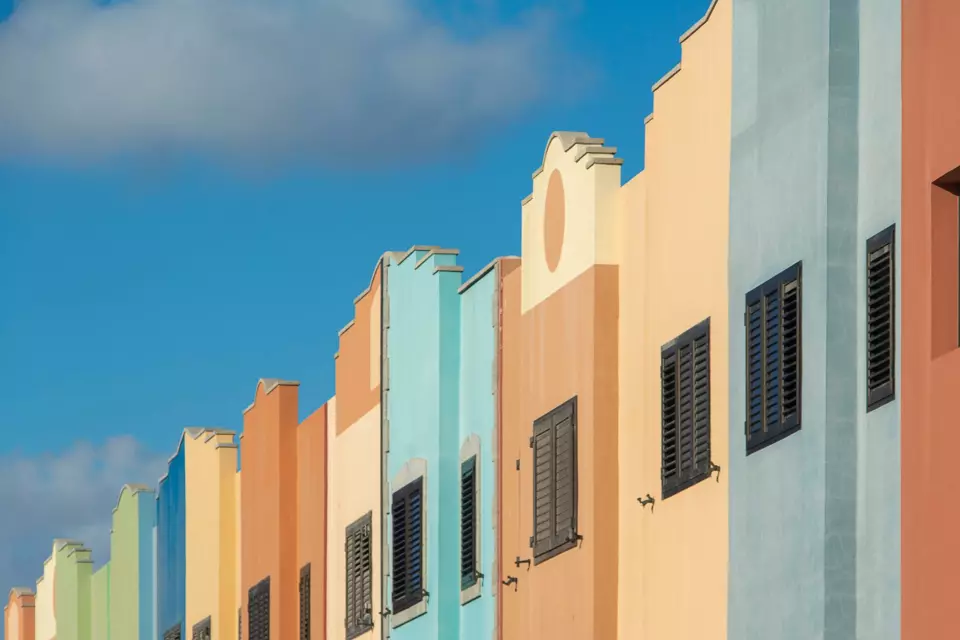
Curaçao is the largest and most cosmopolitan of the ABC Islands, 444 square kilometres of arid hillside, dramatic limestone coastline and over 40 beaches, anchored by one of the most visually striking cities in the Caribbean. Willemstad, the island’s capital, is a UNESCO World Heritage Site whose waterfront row of pastel-coloured Dutch colonial buildings, the famous Handelskade, has appeared on everything from postage stamps to airline advertisements. The city sits on both sides of St Anna Bay, connected by the Queen Emma pontoon bridge (known locally as the ‘Swinging Old Lady’), which opens regularly to let ocean-going vessels pass through to the harbour beyond. On one side, Punda’s 17th-century streets are packed with duty-free shops, cafés and galleries; on the other, Otrobanda’s grander colonial architecture gives way to the vibrant Pietermaai district, where restored townhouses now house some of the island’s best restaurants and bars.
For yacht charter guests, Curaçao’s great advantage is Spanish Water (Spaanse Water), a landlocked natural harbour on the south-east coast that is one of the most protected anchorages in the Caribbean. Surrounded by low hills, mangroves and private villas, Spanish Water offers flat-calm water, excellent holding in 5 to 7 metres over mud, and enough space for vessels of any size to swing comfortably at anchor. Seru Boca Marina provides 128 slips for yachts up to 45 metres, while Curaçao Marine offers full haul-out and maintenance facilities. The harbour is the natural base for a Curaçao charter, with Willemstad just 8 nautical miles to the west and the island’s best beaches stretching along the western coast beyond.
Beyond the capital, Curaçao’s coastline rewards exploration. The western Banda Abou region is home to the island’s finest beaches, Cas Abao, Playa Lagun, Grote Knip and Kleine Knip, each tucked into limestone coves with calm, turquoise water and excellent snorkelling. Klein Curaçao, an uninhabited island 6.5 miles off the south-east coast, offers pristine reef, a photogenic pink lighthouse and a genuine castaway feel. And the diving is outstanding: the Curaçao Marine Park protects 21.7 kilometres of coastline, the Mushroom Forest is one of the most unusual dive sites in the Caribbean, the Blue Room cave creates an ethereal underwater light show, and the Superior Producer wreck sits in 22 to 30 metres of water off Willemstad. Enquire with Boatcrowd for yacht or catamaran availability and pricing on our Curaçao fleet.
Ready to plan your Curacao charter?
Tell us your dates and party size, we'll match you with the right yacht and crew.
Why Charter a Yacht in Curaçao
A UNESCO World Heritage City at Your Stern
Willemstad is the only UNESCO-listed city in the Caribbean that doubles as an active yachting base. The Handelskade waterfront, a row of gabled Dutch colonial buildings painted in every shade of pink, yellow, blue and green, dates back to the island’s founding as a Dutch trading settlement in 1634, and the tradition of colourful façades began in 1817 when a governor banned white lime finishes to protect against glare. Today, 743 listed properties make up the historic core, and walking the streets of Punda and Otrobanda feels like stepping into a Caribbean version of Amsterdam. Fort Amsterdam (built 1635) still houses the governor’s residence. The Floating Market, wooden boats from Venezuela selling tropical fruit, fish and spices along the canal, has been a feature of the waterfront for over a century. And Landhuis Chobolobo, a 19th-century plantation house, is where the world-famous Blue Curaçao liqueur has been distilled since 1896 from the dried peels of the laraha citrus, a bitter orange unique to the island.
Spanish Water: The Caribbean’s Safest Anchorage
Few natural harbours in the Caribbean match Spanish Water for protection, beauty and convenience. This landlocked inlet on the south-east coast is entirely sheltered from ocean swells and trade-wind waves, offering glass-calm water year-round. Depths of 5 to 7 metres over good mud holding suit vessels of all sizes, from 55-foot catamarans to visiting superyachts. Seru Boca Marina provides 128 slips with fuel, water, power and 24-hour security. The surrounding hills are dotted with private villas and gardens, and the mangrove-lined eastern shore is a peaceful spot for paddleboarding or tender exploring at sunset. For charter guests arriving after a long open-water crossing from Aruba or Bonaire, Spanish Water is the perfect decompression stop, calm, secure and scenic.
Over 40 Beaches Along a Dramatic Limestone Coast
Curaçao’s western coastline is carved into dozens of coves and inlets, each with its own character. Cas Abao offers a wide bay with calm water, cliff walls and excellent snorkelling for beginners. Playa Lagun is a narrow inlet between rocky cliffs where sea turtles are regularly spotted in the shallows. Grote Knip (Kenepa Grandi), the island’s most photographed beach, sits in a small lagoon between high limestone walls, with water so clear and still it resembles a swimming pool. Klein Curaçao, the uninhabited island off the south-east coast, is a RAMSAR-protected site with pristine reef, nesting sea turtles and a pink lighthouse that could have been painted by a film set designer. The variety is exceptional for a single island, and a yacht is the best way to experience it, your captain reads the wind and swell each morning and picks the calmest, most beautiful spot for the day.
World-Class Diving: Wrecks, Caves and Mushroom Forests
Curaçao’s underwater world is diverse enough to keep experienced divers engaged for a week. The Superior Producer, a 50-metre Dutch freighter that sank in 1977, sits upright in 22 to 30 metres off Willemstad’s harbour entrance, colonised by nearly 50 years of coral growth and home to tarpon, barracuda and dense schools of reef fish. The Mushroom Forest, hard corals eroded into mushroom shapes by centuries of current, is one of the most unusual dive sites in the Caribbean, in 12 to 18 metres off the north-west coast. And the Blue Room, a partially submerged cave where beams of sunlight create an ethereal blue glow, is accessible to snorkellers and divers alike. With 38-plus shore-accessible sites along the southern coast, visibility often exceeding 30 metres and water temperatures of 26 to 29°C year-round, Curaçao ranks among the Caribbean’s top diving destinations.
Key Destinations Near Curaçao
- Spanish Water (Spaanse Water), A landlocked natural harbour on the south-east coast offering the most protected anchorage in the ABC Islands. Glass-calm water, 5 to 7 metres depth over mud, surrounded by mangroves and hillside villas. Seru Boca Marina provides 128 slips. The natural base for any Curaçao charter.
- Cas Abao, A wide bay on the west coast (Banda Abou) with calm, turquoise water, cliff walls and a healthy reef. Excellent for beginner snorkellers, with sea turtles and spotted eagle rays commonly sighted. Beach facilities include a restaurant, equipment rental and sun loungers.
- Playa Lagun, A narrow inlet carved between rocky cliffs on the west coast. Crystal-clear water, a sandy bottom and a shallow channel teeming with reef fish make it one of the island’s best snorkelling spots. Sea turtles are regular visitors. Restaurants perch on the cliffs above with views down to the turquoise water.
- Grote Knip (Kenepa Grandi), Curaçao’s most photographed beach. A small lagoon between high limestone cliffs with crystal-clear water that feels like a natural swimming pool. Free public access, snorkelling gear rental and a snack bar. Anchor offshore and tender in for a morning swim.
- Klein Curaçao, An uninhabited 1.7 km² island roughly 6.5 miles off the south-east coast. Pristine reefs with dramatic drop-offs, vibrant coral and abundant marine life. A pink lighthouse, the rusted hull of a 1988 shipwreck and nesting sea turtles complete the Robinson Crusoe atmosphere. RAMSAR-protected since 2018.
- Willemstad, The UNESCO World Heritage capital. Handelskade’s colourful Dutch colonial waterfront, the Queen Emma pontoon bridge, Fort Amsterdam, the Floating Market, duty-free shopping in Punda, and the Pietermaai nightlife district. Walk from your berth or tender to a 400-year history lesson.
- Westpunt, The island’s north-western tip, home to multiple beaches (Playa Kalki, Playa Forti, Playa Piskado), the Mushroom Forest dive site and the Blue Room cave. Playa Piskado is the best spot for snorkelling with giant sea turtles. Playa Forti is famous for cliff jumping.
- Bonaire, Approximately 40 nautical miles east (around 2.5 hours at cruising speed). The world’s best shore-diving destination, with 94 marked mooring sites protected by the Bonaire National Marine Park. Klein Bonaire and the Hilma Hooker wreck are highlights. A natural pairing for a multi-island ABC charter.
Best Time to Charter a Yacht in Curaçao
Peak Season: December to April
The dry season brings warm, settled weather (27 to 30°C / 80 to 86°F), steady trade winds and minimal rainfall. Water temperatures sit at 26 to 27°C with excellent visibility for diving and snorkelling. Curaçao’s Carnival, a six-week festival of parades, music, dance and the Tumba Festival, runs from January to early March, culminating in the Gran Marcha parade. Charter rates are at their highest during Christmas, New Year and Carnival. January through April offers excellent conditions. The driest months are February through June.
Shoulder Season: May to July and November
May through July remains warm (28 to 32°C) and largely dry, with south-east trade winds keeping conditions comfortable. Dive visibility stays excellent and the beaches are noticeably quieter. November sits at the tail end of the nominal hurricane season, but Curaçao’s position south of the belt means the risk is negligible, conditions are warm and settled. Both periods suit guests who prefer fewer boats in the anchorages.
Hurricane Season: August to October
Curaçao lies south of the Atlantic hurricane belt, close to the South American coast, and is rarely affected by tropical storms. The rainy season (September to January) can bring brief showers, but rainfall is modest, annual totals average around 600 mm, and conditions remain warm, sunny and swimmable. Some charter yachts may reposition during these months, but for guests willing to travel in the quieter season, Curaçao offers year-round weather safety and excellent diving conditions.
Curaçao Carnival and Cultural Calendar
Curaçao’s Carnival (Nos Karnaval) is the island’s biggest cultural event, six weeks of parades, music and celebration running from early January to Ash Wednesday. The Tumba Festival crowns a King and Queen whose winning song becomes the official Carnival anthem. The Gran Marcha, held on the Sunday before Ash Wednesday, is the climax: a massive street parade through Willemstad with floats, costumes, steel bands and thousands of revellers. At the close of Carnival, the straw-filled figure of King Momo is ceremonially burnt, a symbolic purification that blends African, European and Caribbean traditions. For charter guests, timing a visit to coincide with Carnival adds an extraordinary cultural dimension to the voyage. Beyond Carnival, the cultural calendar includes the Curaçao North Sea Jazz Festival (formerly in September), the Harvest Festival, and year-round live music in the Pietermaai district.
Signature Experiences
- Sunrise at Grote Knip, Have your captain anchor off this iconic beach before dawn. As the first light catches the limestone cliffs and the lagoon turns from ink-blue to turquoise, slip off the swim platform for a morning snorkel in water so clear it barely seems real. Your chef has fresh tropical fruit, pastries and coffee waiting on the aft deck. No other boats, no other sounds, just you and one of the most beautiful beaches in the Caribbean.
- Walking Willemstad at Dusk, Moor in Spanish Water and tender to the capital as the sun drops. Walk the Handelskade waterfront as the pastel buildings glow in the golden light, cross the Queen Emma pontoon bridge to Otrobanda, and explore the cobblestone streets of Punda. Dinner at Fort Nassau, a hilltop restaurant built in 1796 with panoramic views over the twinkling city, or in the buzzing Pietermaai district.
- The Blue Room by Snorkel, Cruise to the north-west coast and tender to this partially submerged cave, where beams of sunlight pierce the water and create an ethereal blue glow that shifts and pulses with the movement of the sea. Swim into the cavern, float in the luminous blue light, and surface in an air-filled chamber. Best experienced mid-morning when the sun is overhead. One of the most magical natural sights in the Caribbean.
- Blue Curaçao Liqueur at Landhuis Chobolobo, Tender ashore near Willemstad and visit this 19th-century plantation house where the world-famous liqueur has been distilled since 1896. Learn how the bitter laraha citrus (unique to Curaçao) is sun-dried, macerated and distilled into the vivid blue spirit. The cocktail workshop lets you mix your own creation to take back to the yacht.
- Sea Turtle Snorkelling at Playa Piskado, Cruise to this small beach near Westpunt, where giant sea turtles feed in the shallows around the fishermen’s pier. Slip off the swim platform and float alongside green and hawksbill turtles at arm’s length, one of the most reliable turtle-snorkelling encounters in the Caribbean. Your crew has towels and cold drinks waiting when you surface.
- Klein Curaçao Castaway Day, Cruise to this uninhabited island and anchor offshore for a full day of pristine snorkelling, beach lounging and castaway solitude. The pink lighthouse, the rusted wreck on the beach and the crystal-clear reef make it feel like the end of the world. Your chef prepares a beach barbecue while you explore the island on foot.
Yacht Types Available
Curaçao has the most developed yachting infrastructure of the ABC Islands, with Spanish Water as its centrepiece. As with Aruba and Bonaire, the locally based fleet is weighted towards luxury catamarans, with motor yachts and superyachts visiting seasonally.
-
Luxury Catamarans (55’+), The most popular option for Curaçao charters. Stable, spacious and shallow-drafted, ideal for exploring the west-coast coves and anchoring close to shore at Cas Abao, Playa Lagun and Grote Knip. Fully crewed with captain, chef and steward/ess. The twin-hull design provides excellent stability for snorkelling and diving-focused charters.
-
Motor Yachts (55’-99’), A growing selection of crewed motor yachts operates in the ABC Islands. The speed advantage (18 to 28 knots) makes multi-island itineraries comfortable, covering the 40-nautical-mile crossing to Bonaire in about 2.5 hours. Accommodation for 6 to 8 guests in 3 to 4 en-suite cabins, with a crew of 3 to 5 and water toys.
-
Superyachts (100’+), Seru Boca Marina in Spanish Water accommodates vessels up to 45 metres, while the Willemstad harbour facilities can handle significantly larger ships. Several superyachts transit the ABC Islands each winter season. A superyacht charter in Curaçao pairs the island’s UNESCO-listed capital and dramatic diving with the privacy and space of a floating five-star resort.
Frequently Asked Questions
How much does a yacht charter in Curaçao cost?
Luxury catamarans (55’-80’) are fully crewed with captain, chef and steward/ess. Most charters operate on MYBA terms: base rate plus an Advance Provisioning Allowance covering fuel, food, drinks and dockage. Crew gratuity is customarily 10 to 15%. Enquire with Boatcrowd for a personalised quote.
Are luxury catamarans available for charter in Curaçao?
Yes, and they are the most widely available charter vessel in the ABC Islands. Boatcrowd’s fleet includes premium power catamarans from builders like Sunreef and Lagoon, ideal for Curaçao’s west-coast coves where shallow draft allows you to anchor close to shore. Catamarans are fully crewed and particularly popular with families and groups who appreciate the wide beam, the stability for water-entry, and the generous living space.
Can I charter a yacht in Curaçao for a film or TV production?
Yes. Curaçao’s diverse locations, UNESCO-listed colonial architecture, dramatic limestone coastlines, pristine beaches, underwater caves and desert-like hinterland, make it a versatile filming destination. The island has hosted productions including Curaçao (1993, starring William Petersen), Tula, Lay the Favourite and multiple documentary series. Boatcrowd can arrange production-friendly charters and coordinate with local authorities for filming permits. The island’s year-round sunshine and position outside the hurricane belt ensure reliable shooting conditions.
Is Curaçao a good destination for a proposal, honeymoon or milestone celebration?
Curaçao is exceptional for celebrations. Your crew can arrange a sunset proposal on the deserted sand of Klein Curaçao, with champagne, flowers and a photographer arriving by tender. A honeymoon itinerary might weave between the Blue Room’s magical light show, a private beach barbecue at Grote Knip and a candlelit dinner overlooking Willemstad from Fort Nassau. Milestone birthdays are equally memorable, a cocktail workshop at Landhuis Chobolobo, a snorkel among sea turtles at Playa Piskado, or a Carnival-themed aft-deck party. Let Boatcrowd know the occasion when you enquire.
Can I bring the whole family, including grandparents and young children?
Absolutely. Curaçao’s west-coast beaches, particularly Cas Abao and the calm waters of Spanish Water, are ideal for young swimmers. The shallow, reef-protected coves offer safe snorkelling for children, and the UNESCO-listed capital provides cultural excursions that engage all ages. Catamarans offer the widest, most stable platform for multi-generational groups. Crews are experienced with guests of all ages and can organise reef safaris, turtle-spotting excursions and kid-friendly menus.
Can I combine Curaçao with Bonaire and Aruba in one charter?
Yes, and Curaçao is the ideal hub for an ABC Islands circuit. Bonaire is approximately 40 nautical miles east (about 2.5 hours at cruising speed), and Aruba is roughly 61 nautical miles west (about 3.5 hours). A 5-day charter can comfortably cover two islands, while a 7 to 8 day voyage takes in all three. Each island offers a completely different character: Curaçao’s UNESCO heritage and dramatic diving, Bonaire’s world-class marine park and eco-tourism focus, and Aruba’s arid beauty and vibrant beach scene. Your Boatcrowd charter specialist will design a multi-island route that balances passage time with time at anchor.
What makes Curaçao different from Aruba and Bonaire?
Curaçao is the largest of the three (444 km² versus Aruba’s 193 km² and Bonaire’s 288 km²) and the most culturally diverse, with 55-plus nationalities represented. It has the only UNESCO World Heritage city in the ABC group, the most developed yachting infrastructure (Spanish Water is the safest anchorage in the region), the most varied coastline (over 40 beaches) and the richest cultural calendar (Carnival alone runs for six weeks). It also has the Blue Room, a natural wonder that exists nowhere else in the ABC Islands. Where Aruba offers arid desert beauty and Bonaire offers world-class diving, Curaçao delivers a blend of urban sophistication, natural drama and maritime heritage that is unique in the southern Caribbean.
Ready to plan your Curacao charter?
Tell us your dates and party size, we'll match you with the right yacht and crew.
15 to 20 min by road to Curaçao Marine
Every yacht is chartered fully crewed with a professional captain and crew, so no licence or sailing experience is required, you simply step aboard.
Best time to charter Curacao
Local knowledgeWillemstad's pastel waterfront meets sheltered south-coast bays, and, like its ABC neighbours, Curaçao sails outside the hurricane belt all year.
