 Skip to content

 EN
EN  Deutsch
  Français
  Español
  Italiano
  日本語
日本語  Português


Turks and Caicos · In this guide
Turks and Caicos Guide: Luxury Yacht Charter in Turks and Caicos


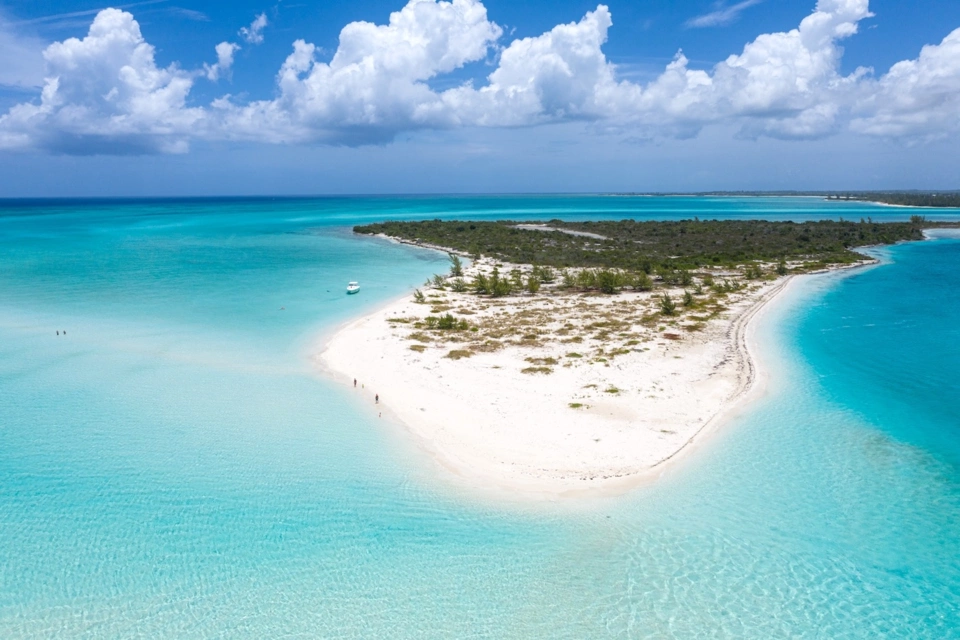
Turks and Caicos is a British Overseas Territory of more than 40 islands and cays scattered across 616 square miles of the shallow Caicos Bank and the deeper waters of the Atlantic. Only eight islands are inhabited, and even those feel lightly touched – the total population is roughly 46,000, most of it concentrated on Providenciales (locally called Provo), which serves as the tourism gateway. What draws yacht charter guests here is deceptively simple: the water. The Caicos Bank is a vast underwater plateau rarely deeper than 8 metres, floored with white sand that reflects sunlight upward through the clearest turquoise imaginable. Grace Bay Beach, on Provo’s north shore, is routinely voted the finest beach on the planet, and the barrier reef system that wraps around the archipelago – roughly 340 miles in length, the third largest in the world – supports wall diving of extraordinary drama, with shallow reef giving way to sheer drop-offs plunging hundreds of metres into the Atlantic.
Beyond the main resort island, the cruising ground opens into something genuinely special. Half Moon Bay, a sandbar beach between Little Water Cay and Water Cay, appears at low tide as a crescent of white sand in knee-deep turquoise water – a natural infinity pool with no structure in sight. Little Water Cay is a protected sanctuary for the critically endangered Turks and Caicos rock iguana. West Caicos, uninhabited and pristine, offers wall diving and snorkelling that rivals any in the Caribbean. French Cay, a speck of sand to the south-east, draws grey reef sharks, hammerheads and nurse sharks to its dramatic underwater walls. North Caicos hides thousands of Caribbean flamingos at Flamingo Pond, while Middle Caicos contains the Conch Bar Caves – the largest non-submerged cave system in the Bahamas–Turks and Caicos chain. Farther east, across the 20-mile Turks Island Passage, Grand Turk and Salt Cay offer humpback whale encounters from January through April and a quieter, history-rich alternative to the Caicos Islands.
Whether you’re planning a long weekend around Grace Bay and the barrier reef or a week-long voyage that takes in the flamingos of North Caicos, the wall dives of West Caicos and the whales of Salt Cay, Turks and Caicos delivers Caribbean beauty at its most vivid and uncrowded. Enquire with Boatcrowd for availability and pricing on our Turks and Caicos fleet.
Why Charter a Yacht in Turks and Caicos
The Third-Largest Barrier Reef in the World
The Turks and Caicos barrier reef stretches roughly 340 miles around the archipelago – approximately 240 miles encircling the Caicos Islands and a further 100 miles around the Turks Islands. Around 60 species of hard coral support an ecosystem of extraordinary diversity: parrotfish, angelfish, groupers, eagle rays, nurse sharks, hawksbill and green sea turtles, and, at the deeper wall sites, grey reef sharks and the occasional hammerhead. The wall diving is world-class: shallow reef at 5–15 metres gives way to sheer vertical drop-offs that plunge into deep blue, with visibility routinely exceeding 30 metres (100 feet) and often reaching 45 metres. For charter guests, the reef is right at your doorstep – your captain can anchor within swimming distance of pristine snorkelling sites that most Caribbean destinations lost to development decades ago.
Grace Bay: The World’s Best Beach
Grace Bay Beach on Providenciales is not just a marketing claim – it is consistently voted the number-one beach in the world by TripAdvisor travellers and travel publications alike. The beach stretches roughly 3 miles along Provo’s north shore: powder-fine white sand, calm turquoise water protected by the barrier reef, and a gentle gradient that makes it safe for swimming at all ages. From your yacht anchored offshore, the view is of a beach that looks almost unreal in its perfection. Behind the sand, Grace Bay’s dining scene has matured into one of the Caribbean’s most interesting – from the five-course chef’s table at Terra Mar to the coconut-grove charm of Coco Bistro and the barefoot conch salad at Da Conch Shack on Blue Hills Beach.
Humpback Whales in the Turks Island Passage
Each winter, humpback whales migrate through the deep Turks Island Passage – the 20-mile-wide channel separating the Turks Islands from the Caicos Islands – on their way to breeding grounds in the Silver Bank north of the Dominican Republic. The season runs from mid-January through mid-April, with peak activity in February and March. Salt Cay, sitting on the eastern edge of the passage, is the prime whale-watching location: humpbacks pass so close to shore that breaches and tail slaps are visible from the beach, and a short boat ride puts you within respectful viewing distance of mothers with calves, competing males and travelling pods. Grand Turk, across a short channel from Salt Cay, offers equally rewarding encounters. For charter guests, a voyage to the Turks Islands during whale season adds a wildlife dimension that most Caribbean itineraries cannot match.
Uninhabited Islands and Deserted Sandbars
Turks and Caicos has more uninhabited islands and cays than inhabited ones, and many are accessible only by private boat. Half Moon Bay – a sandbar that emerges between Little Water Cay and Water Cay at low tide – is one of the most photogenic spots in the Caribbean: a crescent of white sand in ankle-deep turquoise water with no buildings, no facilities, nothing but sky and sea. West Caicos, Pine Cay, French Cay, Fort George Cay and dozens of unnamed cays offer private-island experiences that your crew can set up with a beach barbecue, paddleboards and snorkel gear. In a region where many Caribbean destinations feel crowded, Turks and Caicos delivers the rare promise of a beach entirely to yourselves.
A Culinary Heritage Built on Conch
The queen conch is to Turks and Caicos what lobster is to Maine – the foundation of the local cuisine and a source of genuine island pride. Conch salad (a ceviche of fresh conch, lime, tomato, onion and Scotch bonnet pepper, prepared to order) is served at beachside shacks and fine-dining restaurants alike. Da Conch Shack on Blue Hills Beach is the essential stop: sit at a picnic table on the sand, watch the kitchen crack fresh conch, and enjoy cracked conch, conch fritters and conch chowder with a cold Turk’s Head beer. At the other end of the spectrum, Terra Mar on Grace Bay offers a five-course gastronomic experience led by Chef Clayton Julien – the only dedicated chef’s-table restaurant in the islands. Coco Bistro, set in a lantern-lit coconut grove, is one of the hardest reservations in the Caribbean and worth every effort.
Key Destinations in Turks and Caicos
-
Grace Bay Beach (Providenciales) – Three miles of powder-white sand on Provo’s north shore, protected by the barrier reef and lapped by calm, crystal-clear water. Routinely voted the world’s best beach. Anchor offshore and tender in for a morning swim, or spend the afternoon strolling the sand with a stop at one of the beachfront restaurants. The Alexandra and Shore Club resorts line the beach, and the dining options behind the sand are among the best in the Caribbean.
-
Half Moon Bay – A stunning sandbar beach that appears between Little Water Cay and Water Cay, roughly 15 minutes by tender from Provo’s Leeward Channel. Shallow, turquoise water, white sand, and no development of any kind – just sky, sea and the occasional passing stingray. Your crew sets up paddleboards, snorkel gear and a picnic while you wade in water that barely reaches your knees. Combine with a visit to Little Water Cay’s iguana sanctuary for a memorable half-day excursion.
-
Little Water Cay (Iguana Island) – A protected nature reserve and the primary habitat of the critically endangered Turks and Caicos rock iguana. Elevated boardwalks lead through the scrubby vegetation, and the iguanas are remarkably habituated to visitors – you’ll see them basking on the trail at arm’s length. The island sits adjacent to Half Moon Bay and is a standard stop on day-charter routes from Providenciales.
-
West Caicos Marine National Park – An uninhabited island roughly 9 miles south-west of Providenciales, offering some of the finest wall diving and snorkelling in the Caribbean. The reef drops off dramatically from shallow coral gardens to vertical walls plunging hundreds of metres. Visibility regularly exceeds 30 metres, and marine life includes eagle rays, reef sharks, turtles and dense schools of reef fish. The island’s beaches are pristine and empty – your crew can set up a private beach day on sand that no road reaches.
-
French Cay – A tiny, remote cay south-east of West Caicos, renowned for its shark encounters. Grey reef sharks are the most common visitors, but hammerheads, bull sharks, nurse sharks and lemon sharks have all been recorded. The underwater walls drop away sharply, offering dramatic dive profiles and some of the most exhilarating underwater experiences in the Turks and Caicos. Access is by boat only – a genuine expedition stop for adventurous charter guests.
-
North Caicos and Middle Caicos – The largest and greenest islands in the chain, connected by a causeway and home to fewer than 2,100 residents combined. North Caicos hides Flamingo Pond, a protected wetland where thousands of Caribbean flamingos wade and feed – the viewing area is near Whitby, a short drive from the ferry landing. Middle Caicos contains the Conch Bar Caves, the largest non-submerged cave system in the Bahamas–Turks and Caicos chain, and Mudjin Harbour, a dramatic limestone headland with turquoise water crashing against the cliffs. Both islands reward a full day of exploration by tender and hire car.
-
Grand Turk – The tiny capital island of the territory (roughly 7 miles long and 1.5 miles wide), sitting on the eastern side of the Turks Island Passage. Grand Turk is the historic heart of the islands: the salt industry that made the colony wealthy is memorialised in the historic salinas and windmill ruins of Cockburn Town, and the Columbus Landfall National Park marks the spot where Columbus may have first set foot in the Americas in 1492. The wall diving off Grand Turk’s western shore is exceptional – the reef drops from 10 metres to over 2,000 metres within swimming distance of the beach. During whale season (January–April), humpbacks pass through the Turks Island Passage within sight of shore.
-
Salt Cay – A three-square-mile island south of Grand Turk, with a population of roughly 100. Salt Cay is a Bermudian-style village of stone cottages, abandoned salt pans and donkeys wandering the lanes – it feels like a Caribbean island frozen in the 18th century. The whale watching here is the best in the territory: humpbacks pass so close that encounters from a small boat are intimate and deeply moving. The surrounding reef offers excellent wall diving, and the White House – a grand 19th-century salt-merchant’s residence – is a fascinating architectural relic.
Best Time to Charter a Yacht in Turks and Caicos
Peak Season: December to April
The dry season delivers the most reliable charter conditions: air temperatures of 25°C–30°C (77–86°F), water temperatures of 25°C–27°C (77–81°F), steady trade winds of 10–18 knots, and very little rainfall. Visibility on the reef is at its best, and humpback whales are present in the Turks Island Passage from mid-January through mid-April. This is the busiest period for tourism on Providenciales, and charter rates are at their highest during Christmas, New Year and the February–March whale season peak. Book well in advance for this window.
Shoulder Season: May to June and November
May and June remain warm (28°C–32°C), sunny and significantly less crowded. Trade winds moderate slightly, which can mean calmer seas and even better diving visibility. Charter rates drop by 15–25% compared to peak season. November, at the tail end of the official hurricane season, typically delivers settled weather, warm water (still 27°C–28°C) and uncrowded anchorages. Both periods suit guests who prefer quieter conditions and better value.
Hurricane Season: July to October
The official Atlantic hurricane season runs from June to November, with peak activity in August and September. Turks and Caicos sits in the hurricane belt and tropical systems are a genuine consideration during these months. Conditions outside of storm events can be beautiful – warm water (28°C–29°C), quiet anchorages and reduced visitor numbers – but flexible booking and close weather monitoring are essential. Some charter operators offer reduced rates during this period.
Signature Experiences
- Conch Salad at Da Conch Shack – Tender ashore at Blue Hills Beach on Provo’s north shore and pull up a chair at this legendary beachside restaurant. Watch the kitchen crack fresh queen conch and prepare it to order as ceviche – lime, tomato, onion, Scotch bonnet pepper and a squeeze of sour orange – while your toes dig into the sand and a cold Turk’s Head beer sweats in the sunshine. It is the essential Turks and Caicos culinary experience.
- Wall Diving off Grand Turk – Anchor off Cockburn Town and descend into some of the most dramatic wall diving in the Caribbean. The reef shelf at 10–15 metres gives way to a sheer vertical drop that plunges over 2,000 metres into the deep Atlantic. Giant barrel sponges, sea fans and brain corals cling to the wall face, while eagle rays, reef sharks and hawksbill turtles glide past in visibility that routinely exceeds 30 metres. The proximity of the wall to shore means your dive is a short tender ride from the yacht.
- Whale Watching off Salt Cay – During the January–April migration season, join a guided excursion from Salt Cay into the Turks Island Passage. Humpback whales pass through this deep channel in remarkable numbers, and encounters with mothers and calves, breaching males and singing whales are common. The small-boat experience here is intimate and unhurried – Salt Cay receives a fraction of the visitors of Providenciales, and the whale encounters feel genuinely personal.
- Sunset Picnic on Half Moon Bay – Time your visit for late afternoon and have your crew set up a champagne picnic on this sandbar beach as the sky turns gold. Wade in ankle-deep water that glows turquoise in the fading light, with no building, no road and no other visitor in sight. It is one of the most photogenic sunsets in the Caribbean, and your yacht is anchored just minutes away.
- Flamingo Pond on North Caicos – Cruise to North Caicos and tender ashore for a drive to Flamingo Pond, a protected wetland where thousands of Caribbean flamingos wade and feed in the shallows. The viewing area near Whitby offers close-range observation of these vivid pink birds against a backdrop of mangrove and turquoise water. Combine with a drive across the causeway to Middle Caicos for the Conch Bar Caves and the dramatic headland at Mudjin Harbour.
- Shark Diving at French Cay – For experienced divers, French Cay offers one of the Caribbean’s most thrilling underwater experiences. Descend the wall and drift with the current as grey reef sharks, nurse sharks and occasionally hammerheads patrol the deep blue below. The remote location and limited boat traffic mean the marine life here is abundant and uninhibited. Your captain makes the run from Provo in roughly an hour and a half.
Yacht Types Available
-
Luxury Motor Yachts (78’–99’) – Ideal for exploring the Turks and Caicos archipelago, with the speed to cover the 70 nautical miles from Providenciales to Grand Turk in a comfortable day’s cruise. Cruising at 14–20 knots, these vessels handle the open-water crossing of the Turks Island Passage confidently while offering the luxury and comfort guests expect. Fully crewed with captain, chef and deckhand, accommodating 6–8 guests in 3–4 en-suite cabins. Weekly rates start from approximately $50,000–$95,000 depending on vessel and season.
-
Superyachts (100’+) – Blue Haven Marina on Providenciales accommodates superyachts up to 67 metres (220’+) in 12-foot deep water with in-slip fuelling, customs and immigration clearance, and full provisioning support. A superyacht charter in Turks and Caicos pairs the archipelago’s extraordinary water clarity and uncrowded anchorages with the space, privacy and service of a floating five-star resort. Weekly rates start from roughly $100,000–$275,000+ depending on vessel size and season.
-
Luxury Catamarans (55’+) – The most popular option for the shallow waters of the Caicos Bank. Power catamarans offer exceptional stability, generous deck space, and a shallow draft that allows access to Half Moon Bay, the sandbar anchorages and the reef-protected bays that deeper-hulled vessels cannot reach. Twin-hull design virtually eliminates rolling, making catamarans the most comfortable choice for families and guests who prefer minimal motion. Fully crewed, accommodating 6–10 guests. Weekly rates start from approximately $30,000–$55,000 depending on season and vessel.
Frequently Asked Questions
How much does a yacht charter in Turks and Caicos cost?
Luxury catamarans (55’+) start from around $30,000–$55,000 per week, fully crewed with captain, chef and steward/ess. Motor yachts (78’–99’) typically range from $50,000–$95,000 per week. Superyachts (100’+) start from roughly $100,000–$275,000+ per week. Most charters operate on a base rate plus Advance Provisioning Allowance (25–35%) covering fuel, food, beverages and dockage. Crew gratuity is customarily 10–15%. Day charters and shorter multi-day options are available at adjusted rates. Enquire with Boatcrowd for a personalised quote based on your dates, group size and island preferences.
Are luxury catamarans available for charter in Turks and Caicos?
Yes, and they are the most popular charter option for the archipelago. The Caicos Bank’s shallow waters make catamaran draft a significant advantage – power catamarans in the 55’–80’ range can access Half Moon Bay, the sandbar anchorages and the reef-protected shallows that deeper-hulled yachts cannot reach. Their exceptional stability, wide beam and generous deck space make them the preferred choice for families and larger groups. Boatcrowd’s Turks and Caicos fleet includes premium catamarans from leading builders.
Can I charter a yacht in Turks and Caicos for a film or TV production?
Yes. The islands’ extraordinary water clarity, white-sand beaches, deserted cays and photogenic barrier reef make them a natural fit for luxury lifestyle content, fashion shoots and marine documentaries. The variety of settings – from the manicured beach of Grace Bay to the wild, uninhabited cays of West Caicos and the whale-filled Turks Island Passage – offers versatility within a compact cruising area. Boatcrowd can arrange production-friendly charters with vessels that accommodate camera crews, drones and lighting equipment. The Turks and Caicos Film Commission supports visiting productions.
Is Turks and Caicos a good destination for a honeymoon or proposal?
Turks and Caicos is one of the Caribbean’s most romantic destinations. Imagine a proposal on the deserted sands of Half Moon Bay as the sun sets, a honeymoon snorkel on the barrier reef with sea turtles gliding past, or a candlelit dinner at Coco Bistro beneath the lantern-lit coconut palms. Your crew tailors every detail – champagne on the sandbar, a private beach setup on an uninhabited cay, rose-petal turndowns in your master stateroom. The combination of world-class beaches, crystal-clear water and genuine seclusion makes this one of the most romantic charter destinations in the Caribbean. Let Boatcrowd know the occasion when you enquire.
Can I bring the whole family, including grandparents and young children?
Absolutely. Grace Bay’s calm, shallow water is ideal for young swimmers, Half Moon Bay’s knee-deep sandbar is a natural playground, and the iguana sanctuary on Little Water Cay fascinates children of all ages. Catamarans offer the most stable platform for multi-generational groups, with easy swim-platform access and plenty of space for everyone. Crews are experienced with guests of all ages: children get age-appropriate snorkelling instruction and kid-friendly menus, while grandparents appreciate calm anchorages, comfortable sun lounges and attentive service.
Can I combine the Caicos Islands with Grand Turk and Salt Cay?
Yes, though the crossing of the Turks Island Passage (roughly 20 miles of open water) means it’s best incorporated into a 4- or 5-day itinerary rather than a quick day trip. A motor yacht covers the passage comfortably, and the reward is significant: Grand Turk’s spectacular wall diving, Salt Cay’s intimate whale encounters (January–April), and a pace of life that feels like the Caribbean of 50 years ago. Your Boatcrowd charter specialist will design a route that balances the open-water crossing with sheltered days in the Caicos Bank.
When is the best time to see whales in Turks and Caicos?
Humpback whales migrate through the Turks Island Passage from mid-January to mid-April, with peak activity in February and March. Salt Cay, on the eastern edge of the passage, is the prime whale-watching location – humpbacks pass so close to shore that encounters feel remarkably intimate. Grand Turk also offers excellent whale viewing. If whale watching is a priority, plan your charter for February or March and include at least two days in the Turks Islands to maximise your chances of close encounters.
Ready to plan your Turks and Caicos charter?
Tell us your dates and party size – we'll match you with the right yacht and crew.
15–20 min by road to Blue Haven Marina
Every yacht is chartered fully crewed with a professional captain and crew, so no licence or sailing experience is required — you simply step aboard.
Best time to charter Turks and Caicos
Local knowledgeGrace Bay's impossible turquoise and mile after mile of uninhabited cays – shallow-draft heaven on the edge of the third-largest reef system on earth.
