 Skip to content

 EN
EN  Deutsch
  Français
  Español
  Italiano
  日本語
日本語  Português


Palawan · In this guide
Palawan Guide: Luxury Yacht Charter in Palawan
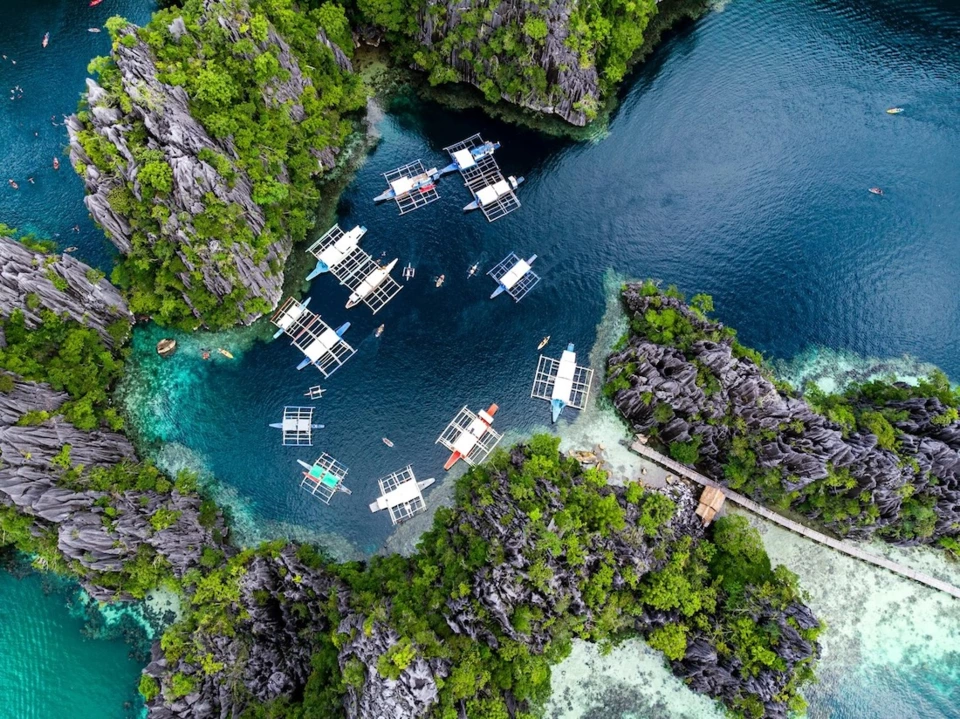

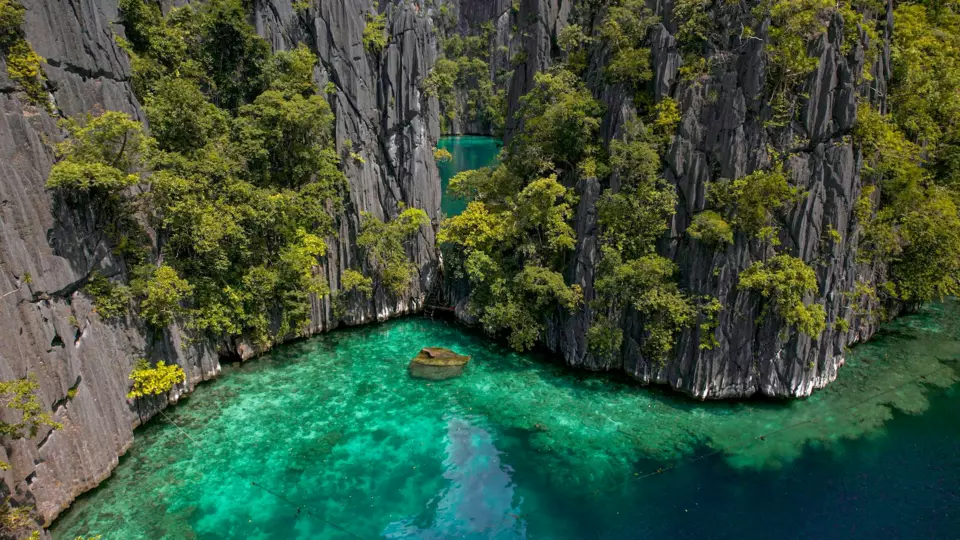
Palawan is the long, slender island that stretches 450 kilometres south-west from Luzon into the Sulu Sea, and it is, without exaggeration, one of the most beautiful cruising grounds on the planet. The island has been voted the best island in the world by Condé Nast Traveler and Travel + Leisure readers multiple times, and from the deck of a yacht you quickly understand why: the western coast faces the South China Sea with towering limestone karsts, hidden lagoons and long stretches of white sand, while the eastern shore opens onto the sheltered, reef-rich waters of the Sulu Sea. Between them lies a spine of tropical rainforest so intact that UNESCO inscribed the Puerto Princesa Subterranean River National Park as a World Heritage Site in 1999.
For charter guests, Palawan’s great advantage is its diversity within manageable distances. El Nido’s Bacuit Archipelago – 45 limestone islets scattered across a turquoise bay – is roughly 50 nautical miles south of Coron’s WWII wreck-diving grounds. Puerto Princesa, the provincial capital, sits roughly midway down the island and provides provisioning, domestic flights and access to the Underground River. Further south, the Balabac Islands approach the borders of Malaysia, with some of the most remote and pristine reefs in the Philippines. A one-week charter can comfortably combine El Nido’s lagoons, Coron’s wrecks and the open-water passages between them; a two-week voyage adds Puerto Princesa, Apo Reef and the frontier islands to the south. Enquire with Boatcrowd for availability and pricing.
Why Charter a Yacht in Palawan
Karst Seascapes Without Equal
Palawan’s limestone karst geology is the headline attraction. In El Nido, the Bacuit Archipelago’s 45 islets rise like cathedral spires from lagoons that shift through every shade of green and blue. In Coron, volcanic karst towers surround mirror-still bays hiding freshwater lakes in collapsed craters. The scenery is cinematic, immersive and best experienced from the water – many of the most spectacular formations are accessible only by yacht or tender.
Two UNESCO World Heritage Sites
The Puerto Princesa Subterranean River – one of the longest navigable underground rivers in the world at 8.2 kilometres – is a UNESCO World Heritage Site. Tubbataha Reefs Natural Park, a 100,000-hectare marine sanctuary in the Sulu Sea accessible only by liveaboard or extended yacht charter, is the second. Together, they represent some of the Philippines’ most precious natural treasures, both best accessed from the water.
Frontier-Grade Privacy
Unlike more developed charter destinations, Palawan’s cruising ground remains refreshingly uncrowded. Even during peak season, a well-planned itinerary will find you anchoring alone in pristine bays. The Linapacan Islands, midway between El Nido and Coron, are regularly cited as having the clearest water in the Philippines – and you may be the only yacht in the anchorage for days at a time.
Key Destinations in Palawan
-
El Nido – The Bacuit Archipelago’s 45 limestone islets, lagoons and hidden beaches. The Big Lagoon, Small Lagoon, Secret Lagoon, Shimizu Island and Snake Island are the headline stops, but dozens more reward exploration.
-
Coron – Asia’s wreck-diving capital, with ten WWII Japanese shipwrecks in 10–42 metres of warm water. Above the surface: Kayangan Lake, Barracuda Lake, Twin Lagoon, and the Maquinit Hot Springs.
-
Puerto Princesa – Palawan’s capital and provisioning hub, gateway to the UNESCO-listed Subterranean River and the starting point for voyages south towards Balabac and Tubbataha.
-
Linapacan Islands – A chain of small islands between El Nido and Coron renowned for having some of the clearest water in the Philippines. Untouched coral reefs, deserted white-sand beaches and a genuine sense of being off the grid.
-
Apo Reef Natural Park – The second-largest contiguous reef in the world, lying off Palawan’s northern coast. Accessible on a multi-day yacht voyage, Apo Reef offers wall diving, manta rays, reef sharks and some of the healthiest coral in the Philippines.
Best Time to Charter a Yacht in Palawan
Peak Season: December to April
The amihan brings clear skies, calm seas and near-zero rainfall to Palawan’s western coast. Visibility on the reefs exceeds 25 metres, and the lagoons of El Nido and Coron are at their most vivid. January and February offer the mildest temperatures (26–31°C), while March and April are hotter but deliver the best underwater visibility. This is the busiest period: popular anchorages in El Nido attract day-trip boats by late morning. Book early and arrive at the lagoons before 9 a.m. for the most serene experience.
Shoulder Months: November and May
November sees the tail end of the monsoon transition, with Palawan drying out rapidly by the second half of the month. May is still warm and largely fine, though afternoon showers become more frequent. Both months offer quieter anchorages and softer charter rates. Sea temperatures in May reach 30°C – the warmest of the year.
Wet Season: June to October
The habagat brings periodic rain to Palawan’s western coast, though the eastern (Sulu Sea) side remains comparatively sheltered. Palawan sits south of the main typhoon belt and rarely takes a direct hit. Chartering is possible with flexible planning, and the trade-off is dramatic: lush green landscapes, empty anchorages and the lowest rates of the year.
Yacht Types Available
-
Luxury Motor Yachts (78’–99’) – The versatile choice for Palawan island-hopping. Cruising speeds of 18–28 knots cover the 50 nautical miles from El Nido to Coron in around three hours. Weekly rates from $33,000–$55,000.
-
Superyachts (100’+) – For extended voyages and larger groups. Full crew, expansive deck areas and a complete water-toy inventory. Weekly rates from $90,000–$175,000 on MYBA terms.
-
Luxury Catamarans (55’+) – Shallow draft makes catamarans ideal for Palawan’s lagoon entrances and reef-fringed anchorages. Exceptional stability and generous space for families. Weekly rates from $35,000–$50,000.
Frequently Asked Questions
How do I get to Palawan to start a yacht charter?
Most charter guests fly into Puerto Princesa (the main airport) or El Nido (the small Lio Airport, served by domestic flights from Manila and Cebu). From Puerto Princesa, it is a 5–6 hour drive or a short domestic flight to El Nido. For Coron-based charters, fly into Busuanga Airport (also known as Francisco B. Reyes Airport), which receives daily flights from Manila. Your Boatcrowd specialist will arrange airport-to-yacht transfers.
Can I visit the Underground River during a Palawan charter?
Yes. The Puerto Princesa Subterranean River is accessible by yacht from the western coast of Palawan. Your captain anchors off Sabang Beach, and you take a short paddle boat into the cave system. Permits are required and limited to 900 visitors per day, so advance booking is essential. Your Boatcrowd team can secure permits as part of your charter planning.
How clear is the water in Palawan?
Palawan is famous for some of the clearest water in the world. In the Linapacan Islands (between El Nido and Coron), visibility regularly exceeds 30 metres, and the water is so transparent that boats appear to float on air. El Nido’s lagoons offer visibility of 15–25 metres depending on the season, while Coron’s wreck-diving sites typically see 10–20 metres. The peak visibility months are March, April and May.
Is Palawan suitable for families with young children?
Palawan is one of the best family charter destinations in Southeast Asia. The lagoons of El Nido are calm, shallow and sheltered – perfect for young snorkellers. Kayangan Lake in Coron has a gentle boardwalk approach. The water is warm year-round (27–30°C), and crews are experienced at tailoring activities to all ages. Catamarans with their wide beam and easy swim-platform access are particularly popular for family groups.
What marine life will I see in Palawan?
Palawan sits within the Coral Triangle, and the marine biodiversity is extraordinary. Expect sea turtles (hawksbill and green), reef sharks (blacktip and whitetip), schools of barracuda and trevally, giant clams, parrotfish, clownfish, nudibranchs, reef squid and, in the deeper passages, manta rays and whale sharks. The WWII wrecks at Coron support their own dense ecosystems of batfish, lionfish, scorpionfish and soft coral. Dugongs – the gentle sea-grass-feeding mammals sometimes called sea cows – are occasionally sighted around Coron Island, one of their last remaining habitats in the Philippines.
Ready to plan your Palawan charter?
Tell us your dates and party size – we'll match you with the right yacht and crew.
2.5–3 hr by road to Subic Bay Yacht Club
Every yacht is chartered fully crewed with a professional captain and crew, so no licence or sailing experience is required — you simply step aboard.
Best time to charter Philippines
Local knowledgeThe amihan trade season unlocks Palawan's lagoons and El Nido's karst cathedrals – seven thousand islands, most without another yacht in sight.
