 Skip to content

 EN
EN  Deutsch
  Français
  Español
  Italiano
  日本語
日本語  Português


Norway · In this guide
Norway Guide: Luxury Yacht Charter in Norway
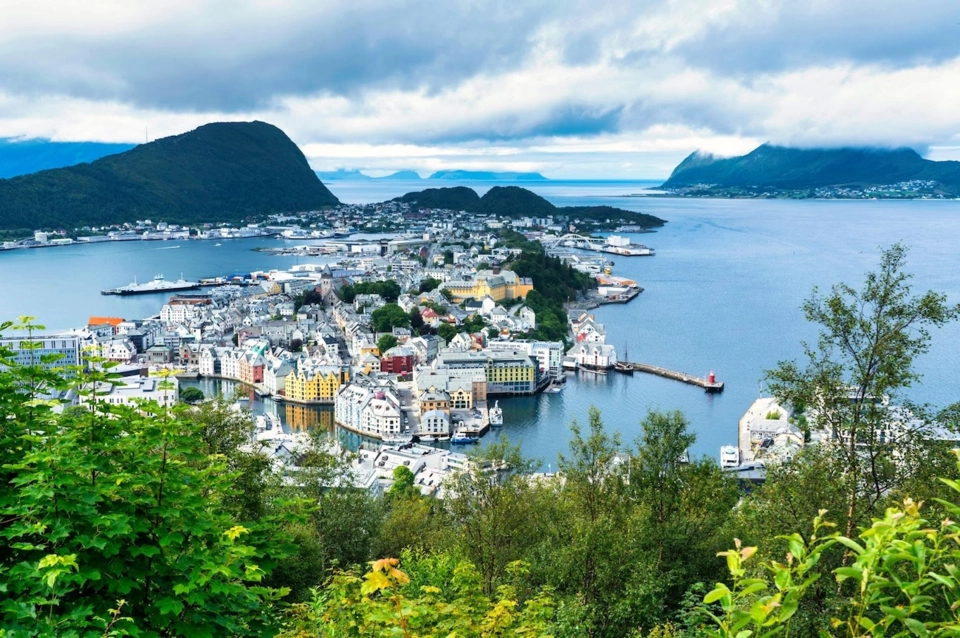
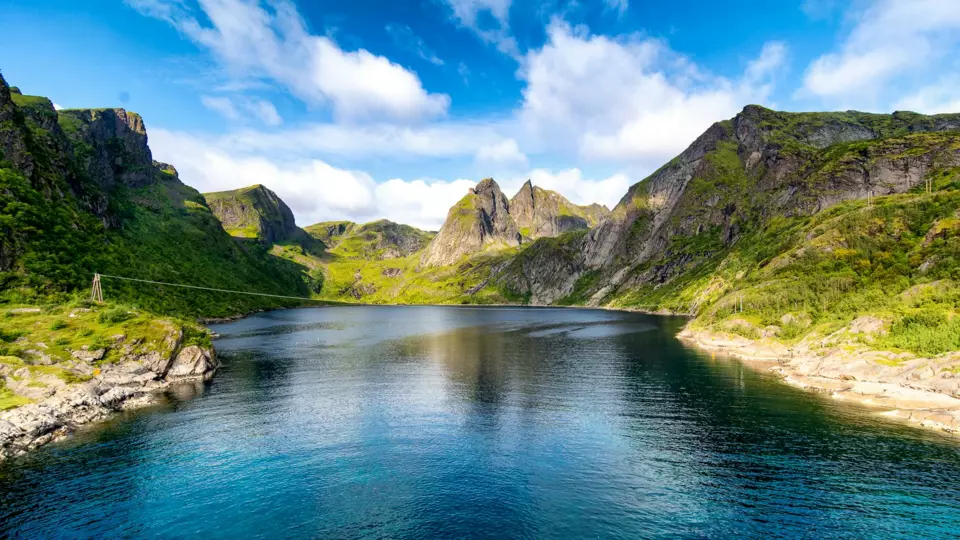
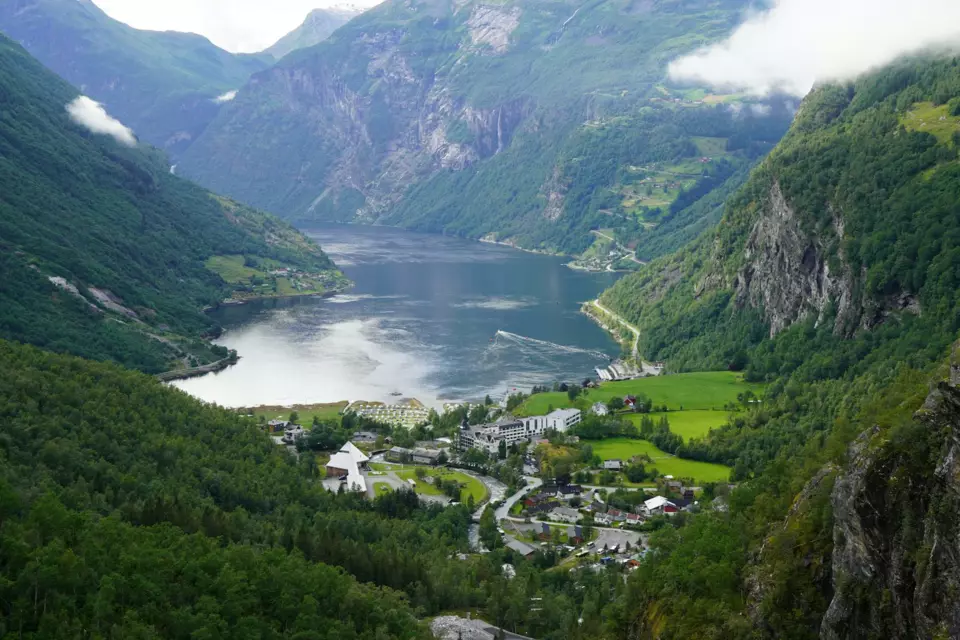
Norway’s western coastline is one of the most dramatic cruising grounds on earth. From Bergen north to the Lofoten Islands, a distance of roughly 690 nautical miles, the coast is carved into a labyrinth of deep fjords, sheltered channels and over 50,000 islands that make road travel impossible and yacht travel irresistible. The fjords themselves are on a scale that defies casual description: Sognefjord, Norway’s longest, reaches 205 kilometres inland and plunges to 1,308 metres at its deepest – deeper than much of the North Sea. Geirangerfjord and Nærøyfjord share UNESCO World Heritage status for their crystalline rock walls rising 1,400 metres from the water, their cascading waterfalls and their near-vertical mountainsides cloaked in birch and pine. For charter guests aboard an expedition yacht or superyacht, this is a landscape that delivers something genuinely new every hour: a waterfall that wasn’t on the chart, a sea eagle circling overhead, a fishing village of 30 painted wooden houses with no road in or out.
What makes Norway particularly compelling for crewed yacht charter is the combination of wild, untouched nature and world-class infrastructure concentrated in the western fjords. Bergen – the country’s second city and the natural starting point for most charters – offers superyacht berths capable of handling vessels up to 150 metres, five Michelin-starred restaurants, the UNESCO-listed Bryggen wharf, and direct flights from most major European cities. From Bergen, your captain can reach the mouth of Sognefjord in under four hours, the Art Nouveau city of Ålesund in roughly 17 hours of cruising at 14 knots, or the spectacular Trollfjord – barely 100 metres wide at its entrance, flanked by mountains over 1,000 metres high – within a multi-day passage north. The distances are generous enough to feel like a true expedition, yet the coastline is so sheltered by islands and skerries that conditions remain comfortable even when the open North Sea is rough.
Whether you’re planning a 10-day exploration of the western fjords from Bergen to Ålesund, a two-week expedition reaching the Lofoten archipelago and the midnight sun, or a focused week immersed in Sognefjord’s glacier-fed arms and stave churches, this guide covers every region in detail – seasons, distances, signature experiences and the vessels best suited to these extraordinary waters. Start planning your Norway charter with Boatcrowd and let our team match you to the perfect yacht and route.
Why Charter a Yacht in Norway
Fjords That Can Only Be Experienced from the Water
Norway’s fjord system is vast, intricate and largely inaccessible by road. Nærøyfjord narrows to just 250 metres across, its cliff walls soaring vertically on either side, with no road or footpath along the water’s edge. Geirangerfjord’s abandoned farmsteads – clinging to ledges hundreds of metres above the water and reachable only by rope ladder until the 1960s – can only be appreciated from the deck of a yacht looking up. The Trollfjord in Lofoten is just 100 metres wide at its mouth, opening into a hidden amphitheatre of 1,000-metre peaks reflected in glass-still water. A yacht transforms these from scenic postcards into immersive, deeply personal experiences: your captain nudges into a narrow fjord arm at dawn, the chef serves fresh-caught prawns on the aft deck, and the only sound is meltwater trickling down the rock face beside you.
Wildlife Encounters in Pristine Waters
Norway’s coastline supports extraordinary marine and birdlife. White-tailed sea eagles – Europe’s largest raptor, with a wingspan reaching 2.5 metres – are common throughout the western fjords and Lofoten, where they hunt fish from the surface in dramatic swooping dives. Puffin colonies number in the tens of thousands at sites like Runde (near Ålesund, with roughly 100,000 breeding pairs), Bleiksøya in Vesterålen (80,000 pairs) and Lovund on the Helgeland coast. Humpback whales and orcas follow the herring into the northern fjords from late October through January, with sightings near Tromsø and Skjervøy virtually guaranteed during winter months. Sperm whales surface year-round off Andenes in Vesterålen, where the continental shelf drops steeply to 1,000 metres just offshore. In summer, harbour seals and grey seals bask on skerries throughout the archipelagos, and minke whales are regular companions on coastal passages.
The Midnight Sun and Northern Lights
Norway’s latitude delivers two of nature’s most extraordinary phenomena depending on the season. From mid-May to late July, the midnight sun bathes the northern coast in continuous golden light – at Tromsø (69°N), the sun doesn’t set at all from roughly 20 May to 22 July, giving you 24 hours of daylight for cruising, hiking and wildlife watching. The quality of light at 1 a.m. – soft, warm, shadowless – transforms the fjords into something almost otherworldly. In autumn and winter (September through March), the same latitudes offer front-row seats to the aurora borealis, with the northern fjords providing dark skies and calm, reflective water that doubles the display. A yacht charter timed for the shoulder months of September or late May captures the best of both worlds: lingering twilight, the first hints of the aurora, and far fewer vessels than the peak summer months.
A Living Culture Rooted in the Sea
Norway’s coastal communities have lived from the sea for millennia. The Viking Age (roughly 793–1066 AD) produced some of the world’s finest shipbuilders and navigators, and their legacy is woven into every harbour town along the coast. Norway preserves 28 of the world’s 30 surviving stave churches – extraordinary medieval wooden structures with dragon-headed gables and intricate carvings – several of which stand within reach of the fjords. Urnes Stave Church, a UNESCO World Heritage Site on the shore of Lustrafjorden (an arm of Sognefjord), dates to the 12th century and blends Viking animal motifs with early Christian symbolism. The Bryggen wharf in Bergen, another UNESCO site, preserves the colourful wooden trading houses of the Hanseatic League, and Bergen’s Fisketorget fish market has operated since the 1200s. Your chef can source king crab legs, smoked salmon and hand-peeled prawns from the market before breakfast.
World-Class Gastronomy Along the Coast
Western Norway’s food scene has exploded in recent years. Bergen alone holds five Michelin stars, with restaurants like Bare (one star, hyper-local Nordic tasting menu) and Lysverket (one star, inside the KODE art museum) drawing international attention. The raw ingredients are extraordinary: skrei (spawning cod, available January–April, prized for its bright white, firm flesh), king crab from the Arctic waters of Finnmark (leg span reaching 1.8 metres, sweet aromatic meat), hand-dived scallops, cloudberries foraged from mountain plateaux, and brunost – Norway’s caramelised brown cheese with a flavour somewhere between dulce de leche and aged gouda. Your onboard chef can incorporate local ingredients at every port, and a well-planned itinerary might include a visit to a fjordside smokería, a king crab safari in the north, or a private dining experience in a converted boathouse.
Top Destinations in Norway
-
Sognefjord – Norway’s longest and deepest fjord at 205 kilometres and 1,308 metres, stretching from the coast east of Bergen deep into the mountain interior. Its narrow arm, Nærøyfjord (UNESCO World Heritage), is just 250 metres wide at its narrowest point, flanked by walls rising to 1,400 metres. At the head of the fjord system, Jostedalsbreen – mainland Europe’s largest glacier – feeds turquoise meltwater into the surrounding valleys. The Urnes Stave Church (UNESCO) stands on the shore of Lustrafjorden, and the Borgund Stave Church (built around 1180 AD) is among Norway’s most visited historical sites.
-
Geirangerfjord – A UNESCO World Heritage Site and arguably Norway’s most photographed fjord. The 15-kilometre-long fjord is lined with abandoned mountain farms, sheer cliff faces and waterfalls including the Seven Sisters (dropping 250 metres in seven separate streams) and the Suitor on the opposite wall. The tiny village of Geiranger sits at the head of the fjord, surrounded by snow-capped peaks. Your yacht anchors in deep water while you explore by tender.
-
Hardangerfjord – Norway’s second-longest fjord at 179 kilometres, known as the ‘Garden of Norway’ for its fruit orchards (apple, cherry, plum) that bloom spectacularly in May. The Folgefonna glacier overlooks the southern shore, and the Hardangervidda mountain plateau – Europe’s largest – stretches inland. Rosendal, on the fjord’s southern arm, offers a superyacht-capable marina (120 metres LOA, 5 metres draft) at the foot of the glacier.
-
Ålesund – A coastal city rebuilt entirely in Art Nouveau style after a devastating fire in 1904, with turrets, spires and ornamental facades lining the harbourfront. Climb Aksla viewpoint (418 steps) for a panorama over the town, the islands and the Sunnmøre Alps. The island of Runde, a short cruise from Ålesund, hosts one of Norway’s largest seabird colonies, including roughly 100,000 puffin pairs. A natural turnaround point for Bergen-based charters.
-
Hjørundfjord – A lesser-known gem near Ålesund, flanked by the Sunnmøre Alps, with peaks rising to 1,600 metres directly from the waterline. The fjord has attracted Norwegian royalty for generations and remains blissfully uncrowded. The historic Hotel Union Øye, tucked at the head of the fjord, has hosted Kaiser Wilhelm II and Queen Maud of Norway.
-
Lofoten Islands – An archipelago of jagged granite peaks, white-sand beaches and traditional fishing villages (rorbuer) strung along a chain roughly 160 kilometres long, above the Arctic Circle. The Trollfjord – 100 metres wide at its entrance, flanked by 1,000-metre mountains – is one of Norway’s most dramatic natural passages. Lofoten is also a premier whale-watching destination, with orcas and humpbacks following the herring into the fjords during winter.
Best Time to Charter a Yacht in Norway
Peak Season: June to August
The Norwegian summer delivers the warmest weather (15–25°C in the south, 12–18°C in the north), the longest daylight hours, and the calmest seas. June and July bring the midnight sun north of the Arctic Circle – at Tromsø the sun stays above the horizon continuously from roughly 20 May to 22 July. Fjord water temperatures reach 15–18°C in sheltered arms, warm enough for a bracing swim. Puffin colonies are at their most active (breeding season runs April–August), sea eagles are nesting, and the mountain trails above the fjords are snow-free. July and early August see the highest charter demand and rates; book well in advance for popular routes.
Shoulder Season: May and September
May marks the awakening of the fjords: fruit orchards bloom along Hardangerfjord, waterfalls swell with snowmelt, and the light turns soft and golden. Daylight is already long (17–20 hours in the south, approaching 24 hours in the north by late May). September brings the first hints of autumn colour, quieter anchorages, and – from mid-September onward – the possibility of Northern Lights displays above the Arctic Circle. Charter rates are typically 15–25% lower than peak summer, and the fjords feel more private. Both months offer excellent conditions for wildlife watching: whale migration begins in the north, and sea eagles remain active.
Winter Season: October to March
For adventurous charter guests, Norway’s winter coastline offers a dramatically different experience. The Northern Lights are at their most vivid from November through February, dancing across the sky above the fjords. Orca and humpback whale encounters in the Tromsø and Skjervøy fjords are virtually guaranteed from late October through January, when the herring run drives massive pods into the narrow waterways. Air temperatures range from −5°C to 5°C along the coast (moderated by the Gulf Stream), and daylight is limited – but the polar twilight casts a haunting blue-violet glow over the snow-dusted peaks. Winter charters require ice-class expedition yachts with heated interiors and experienced Arctic crews, but the reward is an experience few travellers will ever share.
Signature Experiences
-
Cruise the Trollfjord at Dawn – Your captain guides the yacht through the 100-metre-wide entrance as the first light hits the 1,000-metre peaks on either side. Inside, the fjord opens into a hidden amphitheatre of sheer rock and mirror-still water. White-tailed sea eagles circle overhead, their wingspans filling the sky. It is one of Norway’s most dramatic passages, accessible only by boat.
-
Kayak Nærøyfjord at Sunrise – Launch a sea kayak from the swim platform into the 250-metre-wide UNESCO fjord. The cliff walls rise vertically on both sides, waterfalls thread down from hanging valleys above, and your paddle strokes echo off the rock. Your crew follows at a discreet distance with warm towels and coffee waiting on the aft deck.
-
Glacier Walk on Nigardsbreen – A guided walk onto an arm of Jostedalsbreen, mainland Europe’s largest glacier. Certified guides fit you with crampons and lead you across blue-ice crevasses and meltwater channels while your yacht waits in the turquoise fjord below. The ice beneath your feet is thousands of years old.
-
Seafood Safari in Bergen – Visit Fisketorget fish market (trading since the 1200s) with your chef for hand-peeled fjord prawns, smoked salmon, king crab legs and brown cheese. Browse the Bryggen wharf’s painted wooden warehouses (UNESCO), then ride the Fløibanen funicular to the summit of Mount Fløyen (320 metres) for a panoramic view of the city, harbour and surrounding fjords.
-
Midnight Sun Dinner on Deck – North of the Arctic Circle in late June, your chef prepares a five-course dinner on the aft deck at midnight beneath a sun that refuses to set. Skrei cod, hand-dived scallops, cloudberries and aquavit – served in golden light that stretches from horizon to horizon. No darkness, no hurry, no other yacht in sight.
-
Sea Eagle Safari in Lofoten – Your guide tosses fish scraps from the tender and white-tailed sea eagles swoop down from the clifftops, talons extended, close enough to hear the wind in their feathers. With a 2.5-metre wingspan, they are Europe’s largest raptor, and Lofoten is one of the best places on earth to see them hunting.
-
Stave Church at Urnes – Take the tender ashore at Lustrafjorden to visit the UNESCO-listed Urnes Stave Church, one of 28 surviving stave churches in Norway. The carved wooden portal, blending Viking dragon motifs with early Christian imagery, dates to the 12th century. The setting – on a green hillside above the turquoise fjord, backed by snow-capped peaks – is among the most beautiful in Scandinavia.
-
Puffin Watching at Runde – Cruise to the island of Runde, a short passage from Ålesund, where roughly 100,000 puffin pairs nest on the sea cliffs from April through August. Your tender takes you close to the colony as the birds shuttle back and forth with beaks full of sand eels. Kittiwakes, gannets, razorbills and guillemots share the cliffs.
Yacht Types Available
-
Expedition Yachts (120’+) – Purpose-built for high-latitude cruising, expedition yachts are the ideal choice for Norway’s fjords. These vessels typically feature ice-strengthened hulls, extended-range fuel tanks, zero-speed stabilisers for calm anchorages, and expedition-grade tenders (including RIBs and sea kayaks). Accommodation for 8–12 guests in en-suite staterooms, with crews of 8–15 including a dedicated expedition leader or guide. Heated decks, observation lounges with panoramic windows, and jacuzzis make even chilly mornings comfortable. Weekly rates for expedition yachts in Norwegian waters typically start from €90,000–€155,000 depending on vessel size, season and itinerary, on MYBA terms (base rate plus an Advance Provisioning Allowance of roughly 30–35% covering fuel, food, beverages and port fees). Norwegian VAT of 12% applies to the charter fee. Crew gratuity is customarily 10–15%.
-
Superyachts (120’+) – For guests who want the full floating-hotel experience in one of the world’s most spectacular settings, superyachts deliver lavish staterooms, expansive deck areas (often with jacuzzis, outdoor cinemas and sun lounges), and crews of 10–18+. Modern superyachts with dynamic positioning can hold station in the narrowest fjords without anchoring, and their tenders range from jet skis to custom landing craft for shore excursions. Weekly rates for 40–60-metre superyachts start from roughly €120,000–€250,000, with the largest mega yachts commanding significantly more. The Norwegian fjords are increasingly popular with the superyacht fleet during summer – many vessels reposition from the Mediterranean for the season.
-
Luxury Catamarans (55’+) – Premium power catamarans from builders like Sunreef and Lagoon offer exceptional stability in the sometimes choppy waters at fjord mouths, generous deck space for wildlife watching, and shallow drafts that allow access to tighter anchorages. Crewed catamarans in the 55’–80’ range sleep 6–10 guests with a crew of 3–4, and their twin-hull design virtually eliminates rolling – ideal for multi-generational groups and guests who prefer steady platforms for photography. Weekly rates start from approximately €35,000–€55,000, often on an all-inclusive basis.
Frequently Asked Questions
How much does a yacht charter in Norway cost?
Pricing depends on vessel type, size, season and itinerary. Expedition yachts (120’+), which are the most popular choice for Norwegian fjord cruising, typically start from €90,000–€155,000 per week on MYBA terms – the base rate plus an Advance Provisioning Allowance (usually 30–35%) covering fuel, food, beverages and port fees. Norwegian VAT of 12% applies. Superyachts in the 40–60-metre range start from roughly €120,000–€250,000 per week. Luxury catamarans (55’–80’) start from approximately €35,000–€55,000 per week, often all-inclusive. Shoulder-season rates (May and September) are typically 15–25% softer than peak summer. Crew gratuity is customarily 10–15%. Enquire with Boatcrowd for a personalised quote based on your dates, group size and route.
Are luxury catamarans available for charter in Norway?
Yes. Boatcrowd’s Norwegian fleet includes premium crewed catamarans from builders like Sunreef and Lagoon in the 55’–80’ range. Catamarans are an excellent choice for fjord cruising: their twin-hull design provides outstanding stability in the choppier waters at fjord mouths and exposed crossings, and their generous beam creates spacious deck areas perfect for wildlife photography and on-deck dining. Shallow drafts allow access to tighter anchorages that deeper-keeled vessels cannot reach. Most catamarans come fully crewed with captain, chef and steward/ess. They are particularly popular with families and multi-generational groups who appreciate the steady platform and easy swim-platform access.
Can I charter a yacht in Norway for a film or TV production?
Absolutely. Norway’s fjords and coastal landscapes have served as locations for major international productions. The Netflix series Ragnarok was filmed in Odda on Hardangerfjord. The James Bond franchise used the Atlantic Road and Norwegian fjord settings. BBC’s Frozen Planet and numerous nature documentaries have featured the Lofoten Islands, Tromsø and Svalbard. The HBO series Succession shot scenes in Norway. Boatcrowd can arrange production-friendly charters with vessels that accommodate camera crews, lighting rigs and talent. Our team coordinates with local authorities for filming permits and logistical support. With the midnight sun providing up to 24 hours of natural light in summer, Norway is a production team’s dream for extended shooting days.
Is Norway a good destination for a proposal, honeymoon or milestone birthday?
Norway’s fjords provide one of the most spectacular backdrops imaginable for milestone celebrations. Your crew can orchestrate a proposal beneath a cascading waterfall in Geirangerfjord, a candlelit dinner on deck at midnight beneath the midnight sun, or a 50th birthday celebration with a private seafood feast on a deserted island in the Lofoten archipelago. Honeymoon itineraries might include a couple’s glacier walk on Jostedalsbreen, a Northern Lights viewing from the yacht’s jacuzzi (September–March), or a chef’s table dinner featuring local king crab, skrei cod and cloudberries. Let Boatcrowd know the occasion when you enquire and we’ll ensure every detail is unforgettable.
Can I bring the whole family, including grandparents and young children?
Multi-generational charters are wonderfully suited to Norway. Expedition yachts and catamarans offer flexible cabin configurations for 8–12+ guests, and the calm, sheltered waters inside the fjords are among the safest cruising grounds anywhere. Children love the wildlife encounters – sea eagle safaris, puffin watching, and spotting seals on the skerries – while grandparents appreciate the comfortable pace, attentive service and stunning scenery visible from every window. Your crew tailors activities to all ages: kayaking and hiking for the adventurous, gentle shore walks and on-deck reading for those who prefer a quieter pace. The long summer daylight means no one needs to miss anything.
Can I combine the Norwegian fjords with other Nordic destinations in one charter?
Yes, and it’s an increasingly popular choice. A two-week charter could cover the western fjords from Bergen to Ålesund, then continue north toward Trondheim and the Lofoten Islands. For guests with three weeks, the route extends to Tromsø and even Svalbard. It’s also possible to combine Norway with Iceland or Greenland on longer expedition charters using ice-class vessels. Your Boatcrowd charter specialist will design a multi-destination route that maximises variety without wasting time on open-sea crossings.
What is the best time of year for whale watching in Norway?
It depends on the species and location. Orcas and humpback whales are most reliably seen in the fjords around Tromsø and Skjervøy from late October through January, when the herring run draws massive pods into the narrow waterways – sightings are virtually guaranteed during this period. Sperm whales are found year-round off Andenes in Vesterålen, with summer (June–August) offering the best conditions. Minke whales and fin whales are regular sightings along the coast during the summer months. A dedicated whale-watching charter can be timed to coincide with peak activity for your preferred species.
Ready to plan your Norway charter?
Tell us your dates and party size – we'll match you with the right yacht and crew.
20–25 min by road to Bergen Marina
Every yacht is chartered fully crewed with a professional captain and crew, so no licence or sailing experience is required — you simply step aboard.
Best time to charter Norway
Local knowledgeSheer-walled fjords, the Lofoten's midnight sun and waterside villages where the mountains meet the sea – summer cruising of cinematic scale.
