 Skip to content

 EN
EN  Deutsch
  Français
  Español
  Italiano
  日本語
日本語  Português


Mergui Archipelago · In this guide
Mergui Archipelago Guide: Luxury Yacht Charter in the Mergui Archipelago
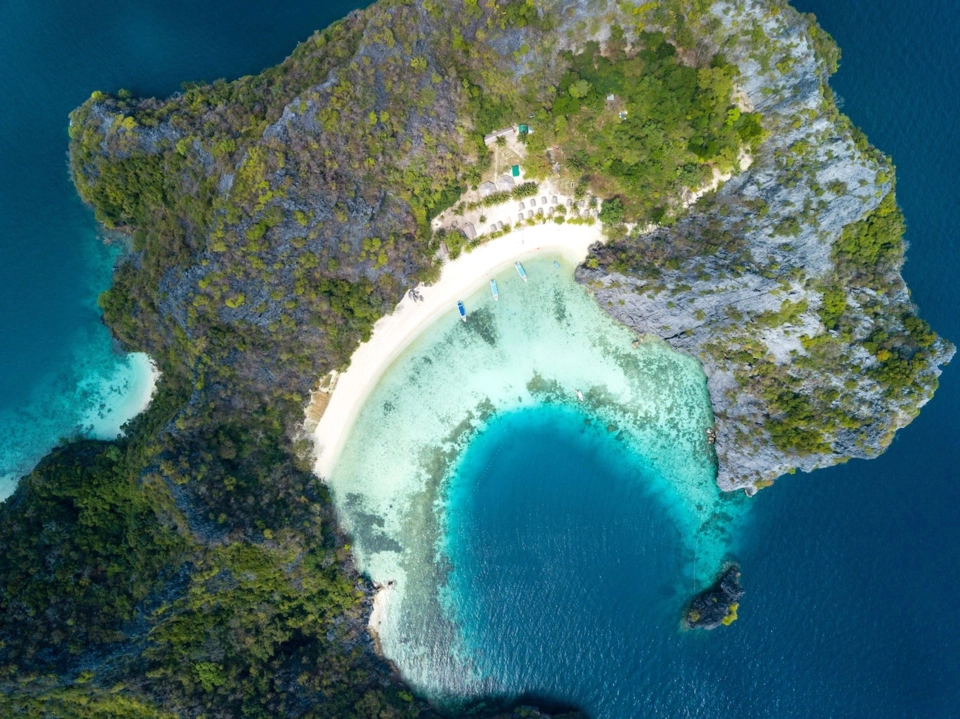


The Mergui Archipelago is one of the last genuinely untouched cruising grounds on the planet. Scattered across roughly 14,000 square kilometres of the Andaman Sea off the southern coast of Myanmar, this chain of over 800 islands stretches from the mainland port of Kawthoung northward to the town of Myeik (Mergui), spanning some 200 nautical miles of sheltered channels, mangrove-fringed bays and white-sand beaches that see barely a handful of visiting yachts each season. The islands are a mix of granite and limestone, cloaked in dense tropical rainforest that tumbles right down to the waterline, with rocky headlands giving way to hidden coves, turquoise lagoons and coral reefs so healthy they rival anything in the Maldives or Raja Ampat.
What makes the Mergui Archipelago extraordinary is not just its natural beauty but its radical isolation. The archipelago was closed to foreign visitors entirely until 1997, and even now access requires a government-issued cruising permit, a pre-approved itinerary and an official Myanmar guide aboard at all times. There are no resorts on most of the islands, no marinas, no other boats at anchor. The only permanent inhabitants are the Moken, a semi-nomadic seafaring people who have lived among these islands for centuries, fishing, free-diving and navigating by the stars. For charter guests accustomed to the polished anchorages of the Mediterranean or Caribbean, the Mergui Archipelago is something altogether different: a chance to explore a wilderness that feels genuinely undiscovered, with the comfort and security of a fully crewed luxury yacht as your floating base.
Most charters depart from Kawthoung, a small border town at Myanmar’s southernmost tip, just a 30-minute boat crossing from Ranong in Thailand. International guests typically fly into Phuket or Bangkok and transfer south. From Kawthoung, the archipelago opens up in every direction, south towards the Thai border islands, north towards Lampi Island Marine National Park and the remote northern reaches, and west towards open-ocean dive sites like Black Rock and Western Rocky. Whether your priority is world-class diving, pristine beaches, wildlife encounters or simply the rare luxury of total solitude, the Mergui Archipelago delivers on every count. Enquire with Boatcrowd for availability and pricing on our Mergui fleet.
Ready to plan your Mergui Archipelago charter?
Tell us your dates and party size, we'll match you with the right yacht and crew.
Why Charter a Yacht in the Mergui Archipelago
Over 800 Islands, Almost No Other Visitors
The Mergui Archipelago’s permit system and limited tourism infrastructure mean that even in peak season (December to April), the vast majority of these 800-plus islands see no visitors at all. Entire days pass without another vessel on the horizon. Your captain anchors in coves where the only footprints in the sand are yours, and the only sounds are birdsong and the lap of water against the hull. This is not a curated ‘exclusive experience’ marketed by a resort, it is genuine wilderness access, the kind of privacy that simply cannot be bought in more developed destinations. For guests who have cruised the BVI, the Amalfi Coast or the Greek islands, the Mergui Archipelago offers a fundamentally different proposition: the feeling of discovery.
World-Class Diving and Snorkelling in Pristine Waters
The archipelago’s marine environment is remarkable. Visibility regularly exceeds 30 metres in the dry season, and water temperatures hold at a comfortable 27 to 29°C year-round. The dive sites range from shallow coral gardens teeming with reef fish to dramatic granite pinnacles, underwater caves and open-ocean seamounts where manta rays, whale sharks and schools of mobula rays patrol the blue water. Black Rock, a solitary islet roughly 100 miles north-west of Kawthoung, is Myanmar’s premier manta ray hotspot, nearly 50 individually identified mantas have been catalogued there. Shark Cave, near Great Swinton Island, features a 20-metre tunnel where nurse sharks up to four metres long rest on the sandy bottom. Western Rocky, one of the southernmost dive sites in Myanmar waters, offers a tunnel that passes clean through the island and walls draped in soft coral and sea fans. For snorkellers, the shallow reefs around the inner islands offer equally stunning encounters, hawksbill turtles, cuttlefish, nudibranchs and clouds of tropical fish in water so clear you can see the seabed from the yacht’s flybridge.
The Moken: A Living Seafaring Culture
The Moken people have inhabited the Mergui Archipelago for an estimated 4,000 years, migrating between islands in hand-built wooden boats called kabang. They are expert free-divers, their children can see clearly underwater without goggles, a physiological adaptation documented by researchers, and their intimate knowledge of tides, currents and marine life is passed down orally through generations. Visiting a Moken village (always with your official guide and respectful of local customs) offers a window into a way of life that has almost vanished elsewhere in Southeast Asia. The Moken have no written language and no word for individual possession; their culture is built on sharing, storytelling and a deep, practical relationship with the sea. It is a profoundly humbling experience, and one that stays with charter guests long after they’ve returned home.
Lampi Island Marine National Park
Lampi Island, at 188 square kilometres, is the largest island in the archipelago and the centrepiece of Myanmar’s first marine national park, designated in 1996. The island rises to 270 metres above sea level, its interior cloaked in primary rainforest that supports macaque monkeys, flying foxes, hornbills, monitor lizards and wild boar. The coastline is a sequence of pristine bays, mangrove estuaries and coral reefs, your crew anchors in a sheltered cove and you can kayak through the mangroves in the morning, snorkel a reef in the afternoon and watch sea eagles hunting from the flybridge at sunset. Lampi feels like a place the modern world simply forgot to develop, and that is precisely its appeal.
Proximity to Thailand: Easy Access to a Remote Frontier
Despite its wild, end-of-the-world atmosphere, the Mergui Archipelago is surprisingly accessible. Kawthoung sits directly across the Kraburi River estuary from Ranong in southern Thailand, a 30-minute boat crossing. Phuket International Airport, with direct flights from Bangkok, Singapore, Hong Kong, Kuala Lumpur and major European hubs, is roughly a three-hour drive and boat transfer from Kawthoung. Your Boatcrowd charter specialist handles the cruising permit, the government guide and all border formalities, so the transition from international airport to yacht feels seamless. Several charter itineraries combine a few days in Thai waters (the Similan Islands or Phang Nga Bay) with a crossing into Myanmar for the Mergui portion, giving you the best of both countries in a single voyage.
Key Destinations in the Mergui Archipelago
-
Lampi Island (Lanbi Kyun), The archipelago’s largest island at 48 kilometres long, protected as Myanmar’s first marine national park since 1996. Dense primary rainforest, pristine beaches, mangrove estuaries and healthy coral reefs. Anchor in one of the sheltered western bays and spend a day kayaking through the mangroves, snorkelling the reef and hiking into the jungle interior. Macaque monkeys, hornbills and monitor lizards are regularly spotted from the shore.
-
Nyaung Oo Phee Island, A gem at the southern end of the archipelago, formerly known as McKenzie Island during British rule. Madame Beach is the showpiece, powdery white sand, crystal-clear shallows and a photogenic sea swing set in the lagoon. The surrounding reef offers excellent snorkelling in calm conditions. A popular first or last stop on itineraries departing from Kawthoung.
-
Bo Cho Island, South of Lampi Island, Bo Cho features a striking mile-long sandbank that emerges at low tide and a hilltop pagoda with panoramic views across the archipelago. The Ma Kyone Galet village on the island is a Moken (Salone) community where guests can observe traditional boat-building and fishing practices with their onboard guide. The surrounding waters are sheltered and ideal for paddleboarding.
-
Macleod Island, One of the most visually dramatic islands in the group, with jungle-clad hills rising above white-sand bays and clear turquoise water. The island hosts a small eco-resort, but most of its coastline remains completely wild. The snorkelling off the western beaches is outstanding, with healthy hard coral and regular turtle sightings.
-
115 Islands, A cluster of small islands roughly 40 nautical miles south of Lampi, named for their number on old Admiralty charts. The crystal-clear water around the coral reefs here is some of the best in the archipelago for snorkelling and macro diving. Jungle trekking on the larger islands reveals dense tropical forest, freshwater streams and birdlife.
-
Black Rock, A solitary 80-metre-wide islet standing alone in the open Andaman Sea, roughly 37 nautical miles north-west of Lampi Island. Myanmar’s premier big-animal dive site: manta rays, mobula ray schools, whitetip reef sharks, silvertip sharks and large pelagic fish congregate around the rock’s steep walls and nutrient-rich currents. Experienced divers only, and conditions must be right, your captain will assess the sea state on the day.
-
Shark Cave (Great Swinton Island), Three small islets roughly 75 kilometres from Kawthoung, with a ragged cave entrance on the north-west corner at 5 to 16 metres depth. The 20-metre tunnel at the canyon’s bottom leads to a lower cave where nurse sharks up to four metres long rest on the sand. Outside the cave, expect frogfish, ghost pipefish, harlequin shrimp and schools of trevally. A highlight of any multi-day diving itinerary.
-
Western Rocky, One of the southernmost dive sites in Myanmar waters, roughly 50 miles offshore. A dramatic tunnel passes clean through the island at 20 metres depth, opening onto walls covered in soft coral, sea fans and cuttlefish. The sloping wall on the opposite side descends to a sandy bottom at 30 metres, frequented by large pelagic species. Often combined with Black Rock on extended diving itineraries.
Best Time to Charter a Yacht in the Mergui Archipelago
Peak Season: December to February
The heart of the dry season brings the best conditions across the board: clear skies, calm seas, light winds and visibility that regularly exceeds 30 metres underwater. Air temperatures range from 27°C to 32°C, with water temperatures at a comfortable 27 to 28°C. Rainfall is minimal, a few brief showers at most. This is the prime window for diving, snorkelling and beach days, and it’s when the handful of charter vessels operating in the archipelago are busiest. Book well in advance for December and January departures, particularly over Christmas and New Year.
Shoulder Season: March to April and November
March and April remain dry and warm, though temperatures climb towards their annual peak (April averages around 34°C). The seas stay calm and visibility is excellent, making these months ideal for guests who prefer fewer vessels in the anchorages. Haze from agricultural burning on the mainland can occasionally reduce above-water visibility, but underwater conditions remain superb. November marks the tail end of the monsoon, rains taper off, seas settle and the islands are at their greenest and most lush. It’s a beautiful time to cruise, with very few other boats.
Monsoon Season: May to October
The south-west monsoon brings heavy rainfall (3,000 to 5,000 millimetres annually across the region), rough seas and reduced visibility. Most charter operations in the Mergui Archipelago close entirely during these months, and the government permit office typically does not issue cruising permits for the monsoon period. The islands are inaccessible for all practical purposes from late May through October. This enforced closure is part of what keeps the archipelago so pristine, the reefs, beaches and marine life get a full five months of uninterrupted recovery each year.
Signature Experiences
-
Manta Rays at Black Rock, Cruise out to this solitary open-ocean islet and descend along its steep walls into nutrient-rich currents. Nearly 50 individually identified manta rays have been catalogued here, and encounters with schools of mobula rays, whitetip sharks and silvertip sharks are common. Your dive guide briefs you on the morning’s conditions from the flybridge, and your chef has a hot lunch ready on the aft deck when you surface.
-
Kayaking Lampi’s Mangroves at Dawn, Launch the kayaks from the swim platform as the sun rises over Lampi Island’s primary rainforest. Paddle silently into the mangrove channels, where the root systems create a cathedral-like canopy over the water. Watch for macaque monkeys foraging on the shore, kingfishers darting between branches and juvenile reef fish sheltering among the roots. Return to the yacht for a full breakfast on the aft deck, the jungle sounds still carrying across the water.
-
Deserted Beach Barbecue, Your crew scouts an empty white-sand cove on one of the unnamed inner islands and sets up a full beach barbecue: freshly grilled prawns and fish, tropical salads, cold drinks and a firepit as the sun drops below the tree line. There are no other boats, no other people, no sound except the crackle of the fire and the soft lap of waves. After dinner, the lack of light pollution makes the stargazing extraordinary, the Milky Way stretches overhead in a way most guests have never seen.
-
Nurse Sharks in Shark Cave, Descend through the ragged cave entrance near Great Swinton Island and follow the 20-metre tunnel to the lower cave. Nurse sharks up to four metres long rest on the sandy bottom in the dim light, undisturbed and unhurried. Outside the cave, the canyon walls are covered in soft coral and home to frogfish, ghost pipefish and harlequin shrimp, a macro photographer’s dream.
-
Sundowner in a Volcanic Lagoon, Anchor in one of the archipelago’s hidden volcanic lagoons, sheer limestone walls rising from emerald water, jungle vines trailing to the surface. Your steward serves cocktails on the flybridge as the light shifts from gold to pink, the only other company a pair of white-bellied sea eagles circling the cliffs above. It is the kind of moment that makes the Mergui Archipelago impossible to forget.
-
Visiting a Moken Village, With your official Myanmar guide, tender ashore at one of the Moken stilt-house settlements. Watch traditional boat-building, the kabang, carved from a single tree trunk and expanded with fire and water, and learn about the Moken’s oral navigation traditions, their relationship with the tides and their extraordinary free-diving ability. Bring small gifts (rice, fishing line, children’s supplies) rather than cash, and follow your guide’s lead on etiquette. It is a genuinely humbling cultural encounter.
Yacht Types Available
The Mergui Archipelago is an emerging and exclusive charter destination. The fleet is deliberately small, limited by the government’s permit system and the archipelago’s lack of marina infrastructure. Most charter yachts are based seasonally, repositioning from Thailand or other Southeast Asian waters for the November to April season. Your Boatcrowd charter specialist sources the right vessel for your group, whether locally positioned or repositioned from Phuket or Langkawi.
-
Luxury Motor Yachts (78’-99’), The ideal platform for covering the archipelago’s vast distances in comfort. Cruising at 14 to 22 knots, a motor yacht can reach Black Rock from Kawthoung in a day and reposition between island groups without losing precious time at anchor. Accommodation for 6 to 8 guests in 3 to 4 en-suite cabins, with a crew of 4 to 6 including captain, chef, engineer and steward/ess. Full water-toy inventory: tenders, kayaks, paddleboards, snorkelling and diving equipment.
-
Superyachts (100’+), A small number of superyachts cruise the Mergui Archipelago each season, typically repositioning from Phuket. The absence of other vessels and the sheer scale of the wilderness make this one of the most extraordinary superyacht cruising grounds in Asia. Space for 10 to 12 guests in 5 to 6 en-suite staterooms, with crews of 8 to 15 and full amenities including on-deck jacuzzis, cinema systems and professional dive equipment.
-
Luxury Catamarans (55’+), Power catamarans offer exceptional stability in the Andaman Sea’s gentle swells and a shallow draft that allows access to the archipelago’s mangrove channels, lagoons and reef-protected bays. The wide beam provides generous deck space and comfortable cabins for 6 to 10 guests. Catamarans are particularly popular with families and multi-generational groups who appreciate the absence of rolling and easy swim-platform access.
Permits and Practicalities
Cruising the Mergui Archipelago requires a government-issued permit arranged through Myanmar Tours and Travels (MTT) in Yangon. Your Boatcrowd charter specialist handles the entire process, but it’s worth understanding how it works. Permits must be applied for at least 20 days before your departure date, with a detailed itinerary and passport information for all guests and crew. An official Myanmar guide joins the yacht for the duration of the charter, the guide ensures compliance with local regulations and facilitates visits to Moken villages and restricted areas.
Entry fees apply: approximately $120 per person for five days in the archipelago, with an additional $20 per person per day beyond that. A guide-arranging fee of roughly $30 per day for the yacht is paid to MTT. Immigration processing at Kawthoung takes around 30 minutes once your documentation is in order. Your crew provisions in Kawthoung or, more commonly, in Ranong (Thailand) before crossing, the selection of fresh produce, seafood and imported goods in Ranong is excellent.
One important note: the Mergui Archipelago was last fully surveyed by the British Admiralty in the 1930s, and uncharted rocks and coral heads exist throughout the area. Your captain will navigate conservatively, using local knowledge and up-to-date pilot guides. This is part of the adventure, and part of the reason so few vessels operate here.
Frequently Asked Questions
How much does a yacht charter in the Mergui Archipelago cost?
Charter pricing depends on yacht type, size, season and duration. All charters are fully crewed and most operate on MYBA terms, the base rate plus an Advance Provisioning Allowance covering fuel, food, drinks, dockage and permit fees. Crew gratuity is customarily 10 to 15%. The Mergui Archipelago’s permit fees (approximately $120 per person for five days, plus $20 per person per day thereafter, and a guide fee of $30 per day) are typically included in the APA. Enquire with Boatcrowd for a personalised quote based on your dates and group size.
Are luxury catamarans available for charter in the Mergui Archipelago?
Yes. Power catamarans in the 55’-80’ range are one of the most popular vessel types for the Mergui Archipelago, thanks to their shallow draft, stability in the Andaman Sea’s gentle swells and spacious deck layout. Their draft allows access to mangrove channels, shallow lagoons and reef-protected bays that deeper-hulled yachts cannot reach. Catamarans come fully crewed with captain, chef and steward/ess, and are particularly well suited to families and multi-generational groups. Boatcrowd’s fleet includes premium catamarans from builders like Sunreef and Lagoon.
Can I charter a yacht in the Mergui Archipelago for a film or content production?
Yes, and the Mergui Archipelago is an extraordinary location for it. The combination of pristine jungle-clad islands, crystal-clear water, dramatic rock formations and the absence of any modern development creates a visual backdrop unlike anything available in more commercialised destinations. Boatcrowd can arrange production-friendly charters with vessels that accommodate camera crews, lighting equipment and talent. Note that the mandatory government guide and permit system means your itinerary must be agreed in advance, and any drone use requires separate clearance from Myanmar aviation authorities. Allow at least four weeks for permit and production logistics.
Is the Mergui Archipelago suitable for a honeymoon or milestone celebration?
It is arguably one of the most romantic charter destinations in the world. The total privacy, deserted beaches, no other boats, no resort neighbours, creates an atmosphere that more established destinations simply cannot match. Your crew can arrange a sunset proposal on a white-sand beach with champagne arriving by tender, a candlelit dinner on the aft deck beneath a canopy of stars with zero light pollution, or a multi-day itinerary that combines diving, wildlife encounters and quiet anchorages. Milestone birthdays and anniversary voyages are equally spectacular, the novelty and exclusivity of the Mergui Archipelago make every celebration feel genuinely once-in-a-lifetime. Let Boatcrowd know the occasion when you enquire and we’ll ensure every detail is tailored.
Can I bring the whole family, including grandparents and young children?
Yes. Catamarans are the most popular choice for multi-generational groups, offering wide, stable platforms with easy swim-platform access and no rolling. The inner islands of the archipelago offer calm, sheltered anchorages ideal for young swimmers and beginner snorkellers, and the beaches are shallow, sandy and free of any commercial activity. Crews are experienced with guests of all ages: children get age-appropriate snorkelling instruction and adventurous menus, while grandparents appreciate the calm pace, attentive service and the novelty of exploring genuinely untouched islands. The onboard guide adds an educational dimension, children are fascinated by the Moken villages, the wildlife and the sheer remoteness.
Can I combine a Mergui Archipelago charter with Thailand?
Absolutely, and it’s one of the most popular ways to structure an itinerary. Kawthoung, the departure point for the Mergui Archipelago, sits directly across the Kraburi River from Ranong in Thailand, and Phuket is roughly three hours south by road and boat. Many guests begin with a few days cruising Thailand’s Similan Islands or Phang Nga Bay before crossing into Myanmar for the Mergui portion. The border crossing is handled entirely by your crew and your Boatcrowd charter specialist, immigration takes about 30 minutes at Kawthoung, and your Myanmar government guide boards at the same time. A 10-day itinerary splitting between Thailand and Myanmar gives you the best of both: polished Thai hospitality and world-class diving in the Similans, followed by the raw wilderness and total solitude of the Mergui Archipelago.
How remote is it really, will I have phone signal and internet?
The Mergui Archipelago is genuinely remote. Mobile phone coverage is limited to the waters immediately around Kawthoung and a few of the larger islands closest to the mainland. Beyond that, there is no reliable signal. Most charter yachts carry satellite communication equipment (Starlink or VSAT) for emergencies and basic connectivity, but this is not a destination for constant email and social media. For many guests, the digital disconnection is one of the greatest luxuries the Mergui Archipelago offers. Your Boatcrowd charter specialist can advise on the connectivity options available on your chosen yacht.
Ready to plan your Mergui Archipelago charter?
Tell us your dates and party size, we'll match you with the right yacht and crew.
Best time to charter Myanmar
Local knowledgeThe Mergui Archipelago is Asia's least-touched cruising ground: 800 islands opened to yachts only in the 1990s, still virtually empty.
