 Skip to content

 EN
EN  Deutsch
  Français
  Español
  Italiano
  日本語
日本語  Português


Martinique · In this guide
Martinique Guide: Luxury Yacht Charter in Martinique
Martinique is the Caribbean with a French accent. This 1,128-square-kilometre island in the Windward chain is a fully integrated French overseas department – the Euro is the currency, the boulangeries bake fresh croissants at dawn, and the cuisine blends Creole spice with the technical precision of classical French cooking. But step outside the bistro and you are unmistakably in the tropics: Mount Pelée, a 1,397-metre active volcano, dominates the northern skyline; dense rainforest cloaks the mountainous interior; and the southern coast unravels into a succession of sheltered bays, white-sand beaches and turquoise water that could have been designed for catamaran cruising. It is this collision of French sophistication and Caribbean wildness that makes Martinique unlike anywhere else in the region.
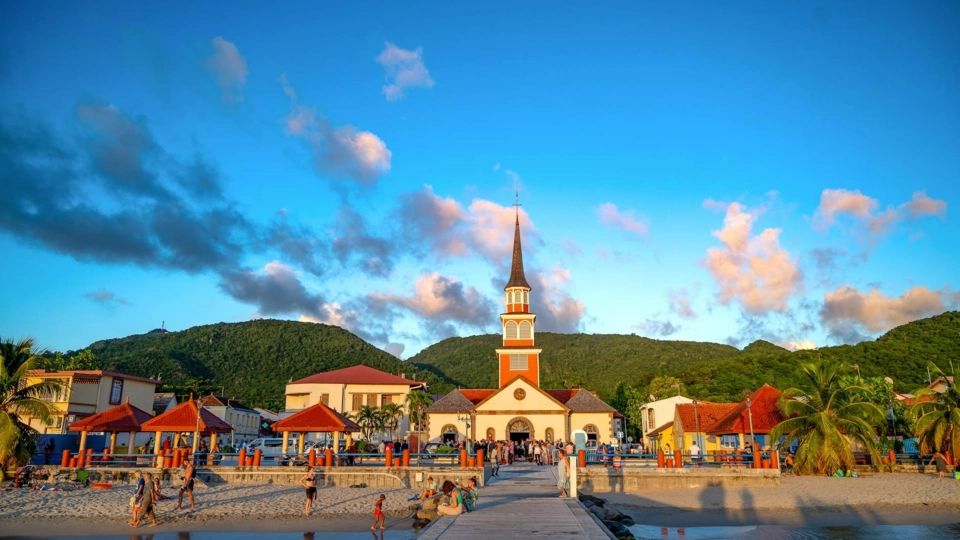
The island’s dual personality is reflected in its geography. The north is volcanic, mountainous and spectacularly lush – home to the ruins of Saint-Pierre, the “Caribbean Pompeii” destroyed in minutes by Mount Pelée’s pyroclastic flow in 1902, killing approximately 29,000 people in one of the deadliest volcanic disasters of the 20th century. Today the town has been partly rebuilt, and the Mémorial de la Catastrophe de 1902 preserves the story with haunting clarity. The south is drier, calmer and beach-fringed – Grande Anse des Salines near Sainte-Anne is regularly voted the finest beach in the French Caribbean, and Le Marin’s marina (over 830 berths) is one of the largest in the Caribbean, making it the island’s natural charter hub. Between north and south, the west coast offers a string of anchorages ideal for catamaran cruising: Les Anses-d’Arlet, where green turtles swim in the shallows below a picture-perfect Creole church; Diamond Rock, a dramatic volcanic pinnacle that the British Navy commissioned as HMS Diamond Rock in 1804; and Fort-de-France, the vibrant capital with its iconic Bibliothèque Schoelcher and bustling waterfront market.
Martinique is also the world’s only producer of AOC-certified rhum agricole – rum distilled from pure sugar-cane juice rather than molasses, with an appellation d’origine contrôlée designation that places it in the same quality category as Cognac or Champagne. Distillery tours at Clément, Trois Rivières and JM are essential charter experiences, combining rum tasting with plantation heritage and botanical gardens. Whether you’re planning a dedicated Martinique charter, a passage south to St Lucia and the Grenadines, or a cruise north to Dominica, this guide covers the cruising ground, the seasons, the experiences and the yachts best suited to these waters. Start planning your Martinique charter with Boatcrowd and let our team match you to the perfect vessel and itinerary.
Why Charter a Yacht in Martinique
French Gastronomy Meets Caribbean Soul
Martinique’s dining scene is in a class of its own. The island’s French heritage means that culinary standards are exceptionally high – even a roadside lunchtime restaurant (a “lolo”) serves accras de morue (salt-cod fritters), colombo de poulet (a Creole curry) and court-bouillon de poisson with a care and technique that reflect generations of Creole-French fusion. At the fine-dining end, La Table de Marcel Ravin in Fort-de-France offers a Michelin-quality experience: locally sourced ingredients elevated by classical French technique and presented with Caribbean flair. For charter guests, the combination of world-class restaurants, superb provisioning (the marchés sell fresh spices, tropical fruit and artisan cheese) and an AOC rum tradition creates a gastronomic experience unmatched in the Caribbean.
Rhum Agricole – The World’s Only AOC Rum
Martinique holds the world’s only Appellation d’Origine Contrôlée for rum. Rhum agricole is distilled from freshly pressed sugar-cane juice (vesou) rather than molasses, giving it a distinctive grassy, floral character that sets it apart from any other Caribbean spirit. Seven historic distilleries are open for tours and tastings: Clément, set in a restored plantation house surrounded by tropical gardens; Trois Rivières, with views across the cane fields to Diamond Rock; and JM, nestled in the northern rainforest at the foot of Mount Pelée. A distillery tour is an essential Martinique charter experience – the tasting of a well-aged rhum vieux rivals any fine Cognac.
Volcanic Drama and the Caribbean Pompeii
Mount Pelée’s catastrophic eruption on 8 May 1902 destroyed the city of Saint-Pierre in minutes, killing approximately 29,000 people and leaving only two survivors within the city limits. Today the ruins stand as a powerful memorial – the Mémorial de la Catastrophe de 1902 houses eruption artefacts, photographs and film, while the former theatre, prison and battery ruins can be explored on foot. Anchoring in Saint-Pierre’s bay, with the volcano looming above and the ruined city visible along the waterfront, is one of the most evocative experiences in Caribbean cruising. For the adventurous, the L’Aileron trail to Mount Pelée’s summit (approximately 4 hours round trip) rewards with panoramic views across the entire island chain.
Sheltered South-Coast Cruising
Martinique’s southern and western coasts are naturally sheltered from the Atlantic swell, creating calm conditions ideal for catamaran cruising. Le Marin, with over 830 berths and full-service facilities, is the natural charter hub, and the major anchorages – Sainte-Anne, Diamond Rock, Les Anses-d’Arlet, Fort-de-France – are spaced 5–15 nautical miles apart, ensuring short, comfortable passages. The catamaran’s shallow draft and stable platform are ideally suited to these waters, where you spend your time at anchor exploring rather than in transit.
Top Destinations Near Martinique
- Les Anses-d’Arlet – A cluster of colourful Creole fishing villages on the south-west coast, centred on the iconic church pier that has become one of Martinique’s most photographed landmarks. Anse Dufour, a small white-sand cove nearby, is the best spot on the island to swim with green sea turtles – they feed on seagrass in the shallows and are remarkably unperturbed by swimmers. Anchor in the calm bay, snorkel with turtles at dawn, and lunch at a waterfront Creole restaurant serving the freshest grilled fish on the island.
- Diamond Rock (Rocher du Diamant) – A dramatic 175-metre volcanic pinnacle rising from the sea off the south coast. In 1804, the British Navy occupied the rock, installed cannons and formally commissioned it as HMS Diamond Rock – a “stone frigate” manned by 120 sailors that harassed French shipping for 17 months. Today the rock is a marine reserve with outstanding snorkelling and diving on the leeward side – volcanic caves, colourful fish, turtles and rays in crystal-clear water. Circumnavigating Diamond Rock by catamaran, with the volcanic pinnacle towering above, is one of the most photogenic experiences in the Caribbean.
- Saint-Pierre – The “Caribbean Pompeii”, once the wealthiest city in the French Antilles before Mount Pelée’s 1902 eruption. Today a partially rebuilt town with a haunting atmosphere: ruined theatre, prison cells and battery fortifications stand alongside new buildings and waterfront restaurants. The Mémorial de la Catastrophe de 1902 is an essential visit. Anchor in the bay and spend a half-day exploring the ruins, the museum and the Musée Volcanologique. For the adventurous, the L’Aileron trail to Mount Pelée’s summit starts nearby.
- Grande Anse des Salines – Martinique’s finest beach, a 2-kilometre crescent of white sand and coconut palms on the south coast near Sainte-Anne. The water is shallow, calm and impossibly blue. Anchor offshore and dinghy to the beach for a day of swimming, snorkelling and beachside picnics – or have your chef prepare a Creole lunch on the aft deck with the palms swaying in the background. The beach receives over 2 million visitors a year, but by catamaran you arrive early and enjoy the morning tranquillity before the crowds.
- Fort-de-France – Martinique’s vibrant capital, centred on the waterfront park of La Savane and the iconic Bibliothèque Schoelcher – a Byzantine-domed library transported piece by piece from the 1889 Paris World Exposition. The covered market (Grand Marché) sells spices, tropical fruit, rum and Creole crafts. Anchor in the harbour or take the ferry from Les Trois-Îlets for a half-day cultural excursion. Fort-de-France is the most cosmopolitan port in the Eastern Caribbean – French boutiques, Creole bistros and a cultural depth that rewards exploration.
- Le Marin – The charter hub of the Eastern Caribbean. Le Marin Marina offers over 830 berths and 100 mooring buoys for yachts up to 60 metres, with full-service facilities including fuel, water, electricity, Wi-Fi, chandlery, restaurants and provisioning. The town itself has supermarkets, bakeries and marine-supply shops. Most Martinique charters begin and end at Le Marin, and its proximity to the south-coast beaches and Diamond Rock makes it an ideal first-night anchorage.
- Jardin de Balata – A 3-hectare botanical garden perched on the Route de Balata above Fort-de-France, with over 3,000 tropical plant species, 300 palm varieties and a suspended canopy walkway through the rainforest. The garden is a 30-minute taxi ride from any west-coast anchorage and makes a beautiful half-day shore excursion – a lush counterpoint to the coastal cruising.
Best Time to Charter a Yacht in Martinique
Peak Season: December to May
The Caribbean dry season delivers warm, settled weather with temperatures of 26–31°C, north-east trade winds of 15–20 knots and minimal rainfall. Water temperatures sit at a comfortable 26–27°C with excellent visibility. This is the most popular charter period, coinciding with the spectacular Martinique Carnival (typically mid-February) – one of the biggest in the Caribbean, with elaborate costumes, street parades and Creole music that rivals Rio. Charter rates peak during Christmas and Carnival week; book 4–6 months in advance for the best catamarans.
Shoulder Season: June and November
June marks the transition to the wetter season, but conditions remain warm (28–31°C) and largely sunny, with brief tropical showers that clear quickly. Charter rates drop by 20–35% compared to peak, and the south-coast anchorages are noticeably quieter. November brings settled weather at the tail end of hurricane season. The Tour des Yoles Rondes (late July/early August) – a traditional wooden-boat racing championship that is Martinique’s most iconic maritime event – adds spectacle to summer visits.
Hurricane Season: July to October
The official hurricane season runs from 1 June to 30 November, with peak risk in August and September. Martinique’s position in the central Windward Islands means it is occasionally affected by tropical storms, and most charter yachts limit availability during this period. Rainfall increases, particularly in the mountainous north, and trade winds become less predictable. Charter rates are at their lowest, and Le Marin’s sheltered harbour provides good protection for yachts that remain in the water.
Signature Experiences
- Snorkelling with Turtles at Anse Dufour – Anchor your catamaran off this small white-sand cove near Les Anses-d’Arlet and slip into the shallows for a morning swim with green sea turtles. The turtles feed on seagrass in 2–4 metres of water, surfacing to breathe within arm’s reach. The cove is calm, the visibility superb, and the experience ranks among the finest turtle encounters in the Caribbean.
- Rhum Agricole Distillery Tour – Visit one of Martinique’s seven AOC distilleries for a guided tour of the cane-to-glass process: harvesting, crushing, fermenting the vesou (fresh cane juice) and distilling in traditional copper columns. Clément, set in a restored plantation house with tropical gardens and an art gallery, is the most picturesque. Trois Rivières offers views of Diamond Rock from the tasting terrace. JM, in the rainforest foothills, is the most intimate. Allow 2–3 hours; combine with a Creole lunch at a nearby lolo.
- Saint-Pierre Volcano Ruins – Anchor in Saint-Pierre bay and tender ashore to explore the haunting ruins of the Caribbean’s Pompeii. Walk through the destroyed theatre, the prison where the sole city-centre survivor (Louis-Auguste Cyparis) was protected by his thick-walled cell, and visit the Mémorial de la Catastrophe de 1902. The experience is profoundly moving and unlike anything else in Caribbean cruising.
- Diamond Rock Circumnavigation – Cruise around this 175-metre volcanic pinnacle on a calm morning, learning the extraordinary story of HMS Diamond Rock – the British garrison that held the rock as a warship for 17 months. Snorkel on the leeward side among volcanic caves, colourful reef fish and passing turtles. The photographic opportunities are exceptional, particularly in the early morning light when the rock glows ochre against the blue sea.
- Creole Cooking Class – Book a cooking class at a plantation kitchen or local home and learn to prepare classic Martiniquais dishes: accras de morue (salt-cod fritters), colombo de poulet (Creole curry with a spice blend unique to the French Caribbean) and blanc-manger coco (coconut pudding). Classes typically include a market visit, hands-on cooking and a shared meal with rum punch. An immersive cultural experience that adds depth to any charter.
- Grande Anse des Salines Beach Day – Anchor off Martinique’s finest beach and spend a day in Caribbean perfection: 2 kilometres of white sand, coconut palms and shallow turquoise water. Snorkel along the rocky edges, paddleboard in the shallows, or simply float and watch the pelicans dive. Your chef prepares a Creole picnic on the aft deck – accras, grilled langouste and a chilled bottle of Martiniquais rosé.
Yacht Types Available
-
Luxury Catamarans (55’+) – The preferred vessel for Martinique charters. The south coast’s calm, sheltered bays and Le Marin’s world-class marina are tailor-made for catamaran cruising. Power catamarans of 55 feet and above offer the stability, deck space and shallow draft ideal for the island’s diverse anchorages – from the deep bays off Les Anses-d’Arlet to the shallow waters of Sainte-Anne. Weekly rates for crewed luxury catamarans start from approximately $24,500–$70,000, inclusive of crew but exclusive of fuel, food, beverages and mooring fees.
-
Motor Yachts (55’–99’) – Crewed motor yachts offer additional speed for guests combining Martinique with passages to St Lucia (25 nautical miles south) or Dominica (25 nautical miles north). Cruising speeds of 18–25 knots make either island a comfortable day’s cruise. Weekly rates range from $35,000–$105,000.
-
Superyachts (100’+) – Le Marin Marina accommodates yachts up to 60 metres, and larger superyachts anchor in the bay with tender access to the marina’s facilities. Fort-de-France harbour also accommodates larger vessels. Superyacht charters in Martinique typically range from $140,000–$560,000+ per week, with the island serving as an ideal waypoint on longer Windward Islands itineraries from Guadeloupe to the Grenadines.
Frequently Asked Questions
When is the best time to charter a yacht in Martinique?
December to May offers the best conditions: warm, dry weather, consistent trade winds and calm south-coast seas. Martinique Carnival (mid-February) is a highlight of the peak season – book early for the best catamarans. June and November offer good conditions at lower rates.
Do I need a visa to charter in Martinique?
Martinique is a French overseas department. EU/EEA citizens need only a valid identity card. Citizens of the United States, United Kingdom and Canada can enter visa-free with a valid passport for up to 90 days. Note that Martinique is not part of the Schengen Area – a standard Schengen visa is not sufficient; check specific requirements with the French consulate if in doubt.
What currency is used in Martinique?
The Euro (€) is the official currency, as Martinique is a fully integrated French department. ATMs are widely available, and major credit cards are accepted at most restaurants, shops and marinas. US dollars are not generally accepted – exchange or withdraw Euros before or upon arrival.
What language is spoken?
French is the official language, and Martiniquais Creole is widely spoken locally. English is understood at marinas, charter companies and most tourist-facing businesses, but some French is helpful – and deeply appreciated – when dining at local restaurants and visiting distilleries. Your charter crew will handle all communication on your behalf.
Is Martinique suitable for a family charter?
Very much so. The calm south-coast anchorages are ideal for children, the turtle encounters at Anse Dufour are safe and shallow, Grande Anse des Salines has gentle swimming, and the cultural experiences – cooking classes, distillery gardens, botanical walks – engage all ages. The French culinary tradition means that children’s menus are taken seriously, and the ice cream alone is worth the trip.
How do I get to Martinique?
Aimé Césaire International Airport (FDF) in Le Lamentin receives direct flights from Paris (Air France, Air Caraïbes, Corsair – approximately 8 hours), Miami (American Airlines) and seasonal services from other European and North American hubs. Inter-island flights and ferries connect Martinique to St Lucia, Dominica, Guadeloupe and other Windward Islands. The airport is approximately 30 minutes by taxi from Le Marin marina.
Why are catamarans recommended for Martinique?
Martinique’s south coast offers a succession of calm, sheltered bays perfectly suited to catamaran cruising. The catamaran’s wide, stable platform provides exceptional comfort at anchor, spacious deck areas for al fresco dining (essential in a gastronomic destination), and a shallow draft that allows access to the finest snorkelling spots and beach anchorages. Le Marin – the Caribbean’s largest marina – is the natural catamaran hub, with full-service facilities, provisioning and a central location for exploring both the south coast and the passage north to Saint-Pierre.
Ready to plan your Martinique charter?
Tell us your dates and party size – we'll match you with the right yacht and crew.
40–50 min by road to Le Marin Marina
Every yacht is chartered fully crewed with a professional captain and crew, so no licence or sailing experience is required — you simply step aboard.
Best time to charter Martinique
Local knowledgeRum distilleries, Mont Pelée's drama and a lee coast of easy anchorages make Martinique the refined gateway to the Windward Islands.
