 Skip to content

 EN
EN  Deutsch
  Français
  Español
  Italiano
  日本語
日本語  Português


Mallorca · In this guide
Mallorca Guide: Luxury Yacht Charter in Mallorca
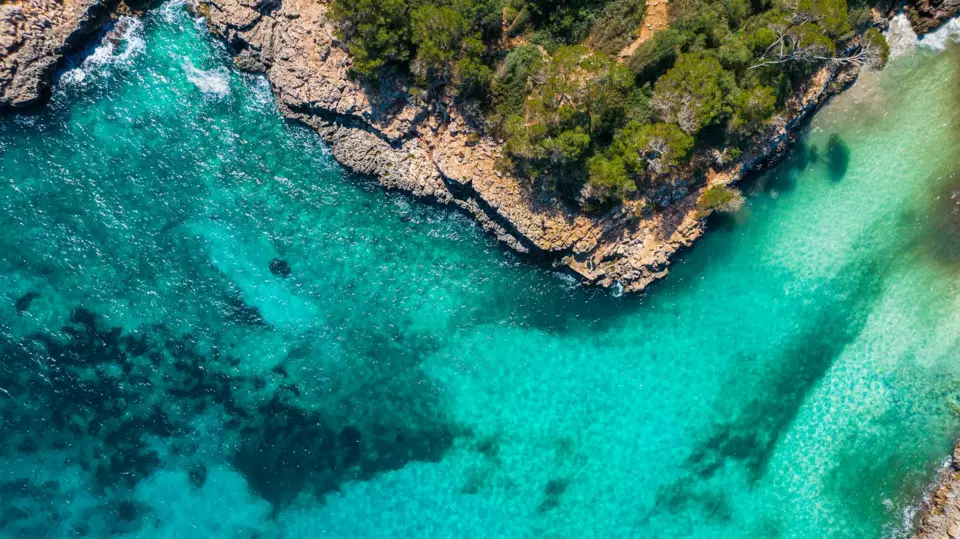

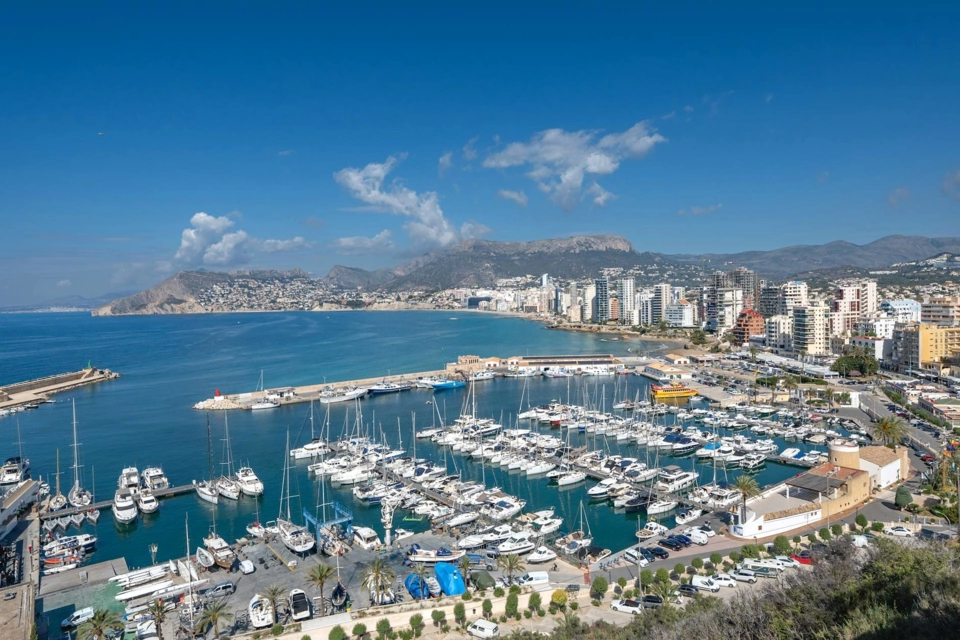
Mallorca is the Mediterranean’s great all-rounder. The largest Balearic island has a coastline that shifts from the vertiginous limestone cliffs of the Serra de Tramuntana in the north-west to the long white-sand beaches of the south and east, with more than 40 harbours, two world-class superyacht marinas and a cosmopolitan capital that punches well above its weight in dining, culture and architecture. For yacht charter guests, it offers a rare combination: dramatic natural scenery, first-rate infrastructure, a food scene that now runs to four Michelin stars, and enough variety to fill a fortnight without repeating a single anchorage.
Palma is where most charters begin and end, and it deserves more than a quick turnaround. The old town is one of the finest in the western Mediterranean, a maze of honey-coloured lanes anchored by La Seu, a Gothic cathedral whose nave soars 44 metres high (the eighth tallest in the world) and whose interior was partly redesigned by Antoni Gaudí between 1902 and 1914. Port Adriano (Philippe Starck, 2012) and Club de Mar offer berths for the world’s largest yachts, while Palma’s restaurants, galleries and boutiques rival Barcelona or the Côte d’Azur. The Santa Catalina neighbourhood, the “Soho of Palma”, has become one of Spain’s most exciting food quarters, with everything from buzzy tapas bars on Carrer d’Anníbal to innovative tasting menus at MOMBO and French gastronomy at OSMA.
But Mallorca’s real magic lies beyond the capital: the Tramuntana’s cliff-drop coves accessible only by sea, the Torrent de Pareis gorge (400 metres high, 30 metres wide), the protected marine paradise of Cabrera National Park, the traditional fishing villages of the east coast, and the crystalline calas of the south that fill postcards across Europe. Whether you’re planning a weekend escape from Palma or a full circumnavigation, this guide covers every coast, season and experience. Enquire with Boatcrowd for availability and pricing on our Mallorca fleet.
Ready to plan your Mallorca charter?
Tell us your dates and party size, we'll match you with the right yacht and crew.
Why Charter a Yacht in Mallorca
The Tramuntana Coast
Mallorca’s north-western shore is dominated by the Serra de Tramuntana, a UNESCO World Heritage Cultural Landscape (inscribed 2011) whose highest peak, Puig Major, rises to 1,436 metres. From the deck of a yacht, the coastline is breathtaking: sheer rock faces plunging into water so deep it looks like ink, tiny terraced villages clinging to impossible hillsides, and coves like Cala Deià (barely 70 metres wide, where Robert Graves swam every morning) and Sa Calobra (reachable only by boat or a mountain road with 12 hairpin bends) that can only be fully appreciated from the sea. The Tramuntana alone justifies a Mallorca charter.
Palma: A Capital Worth Exploring
Palma is no ordinary port city. La Seu cathedral towers over the waterfront, Modernista mansions line the Passeig des Born (the city’s tree-lined answer to La Rambla), and the old quarter hides four Michelin-starred restaurants, the Es Baluard contemporary art museum (housed in a 16th-century fortress, with works by Picasso, Miró, Magritte and Giacometti), and tapas bars in the Santa Catalina neighbourhood that locals have kept to themselves for generations. An evening in Palma, wandering the lamp-lit streets from your berth at Club de Mar, through a courtyard tapas bar on Carrer d’Anníbal, to a tasting menu at Marc Fosh, is one of the great pleasures of a Mediterranean charter.
Cabrera National Park
Roughly 30 nautical miles south of Palma (10 nautical miles from Mallorca’s nearest point), the Cabrera archipelago is a maritime-terrestrial national park with some of the clearest water and healthiest marine ecosystems in the western Mediterranean. The park limits access to 50 yachts at a time and requires advance mooring permits (anchoring is strictly prohibited). The Cova Blava (Blue Cave), where sunlight refracting through a submerged entrance paints the cave interior in electric shades of blue, is an unforgettable experience best timed for late afternoon. A 14th-century castle (built 1400, with a turbulent history including a pirate attack by Barbarossa in 1531 and use as a Napoleonic prison) crowns the harbour entrance.
Variety of Cruising Grounds
A full circumnavigation of Mallorca covers roughly 200 nautical miles and passes through at least five distinct coastal landscapes: the rugged Tramuntana west, the sandy bays of the north (Alcúdia, Pollença), the pine-fringed calas of the east (Cala Mondrago Natural Park, the Coves del Drac underground lakes), the long unspoilt beaches of the south (Es Trenc), and the resort-town coast heading back toward Palma. At a comfortable cruising speed with 4 to 5 hours underway per day and generous time at anchor, most motor yachts complete the circuit in 7 to 8 days.
Gastronomy
Mallorca’s food scene has blossomed into one of the Mediterranean’s best. Beyond the island’s beloved pa amb tomàquet (using the intensely flavoured tomàtiga de ramellet vine tomatoes native to Mallorca) and sobrasada (soft, paprika-cured sausage from the native black pig), Palma now boasts Marc Fosh (the first British chef to earn a Michelin star in Spain, cooking olive-oil-based Mediterranean tasting menus), Adrián Quetglas (a Michelin restaurant with five- and eight-course tasting menus overlooking the Torrent de Sa Riera), DINS Santi Taura and Zaranda. Outside Palma, Ca’s Patró March in Cala Deià (a clifftop seafood restaurant made famous by BBC’s The Night Manager) and Béns d’Avall (one Michelin star plus a Green star for sustainability, perched on the cliffs between Sóller and Deià with produce from its own kitchen garden) are worth planning your itinerary around. Local wines from the Binissalem DO (look for the Manto Negro grape) are earning international recognition.
Key Destinations Near Mallorca
- Palma de Mallorca, The island’s capital and main charter hub, with Club de Mar (575 berths, up to 135m) and Port Adriano (482 berths, up to 80m, Philippe Starck design). Gothic cathedral, four Michelin-starred restaurants, Es Baluard museum, Santa Catalina food quarter, and the Mercat de l’Olivar (Palma’s oldest food market, 115 stalls of fresh fish, local cheese, sobrasada and seasonal produce). The starting point for every Mallorca itinerary.
- Port de Sóller, A horseshoe harbour on the Tramuntana coast, surrounded by citrus groves and mountains. The only harbour on the north-west coast for 50 nautical miles. Connected to the town of Sóller by a vintage wooden tram running since 1913 (still using the original narrow-gauge cars, €10 one-way). A calm overnight anchorage and a scenic lunch stop, roughly 12 nautical miles from Palma.
- Cala Deià, A tiny turquoise cove barely 70 metres wide, set below the clifftop village of Deià where the poet Robert Graves lived and swam every day. Accessible by yacht (anchor offshore and tender in) and a scramble down the cliff path. Ca’s Patró March restaurant, famous from BBC’s The Night Manager, sits on the rocks above. One of Mallorca’s most photographed swimming spots.
- Pollença and Alcúdia, Twin bays on the northern tip, roughly 28 nautical miles from Palma. Port de Pollença is a charming sailing town with a waterfront promenade and boho-chic cafés; Alcúdia offers a Roman-walled old town and a long sandy beach backed by the S’Albufera wetland nature reserve.
- Cabrera National Park, Protected marine archipelago 30 NM south of Palma (10 NM from the nearest point). The Cova Blava (Blue Cave), a 14th-century castle, Eleonora’s falcons, Balearic shearwaters, and pristine underwater Posidonia meadows. Mooring permit required (max 50 yachts at a time; your crew arranges it).
- Es Trenc, Mallorca’s longest undeveloped beach: nearly 3 km of white sand backed by dunes and the Salines de Llevant salt pans on the southern coast. Not a single high-rise in sight. A favourite lunch anchorage, roughly 18 nautical miles south-east of Palma.
- Cala Mondrago Natural Park, A protected area on the south-east coast with crystal-clear waters, Posidonia meadows and snorkelling visibility that exceeds 20 metres on calm days. Bream, damselfish, red mullet and the occasional gilthead patrol the small underwater caves between S’Amarador and Cala Mondrago. Roughly 37 nautical miles from Palma.
Best Time to Charter in Mallorca
Peak Season: July and August
Temperatures hit 31 to 33°C (88 to 91°F), the sea is bathtub-warm at 26 to 27°C, and Mallorca’s beach bars, restaurants and festivals are in full flow. The Tramuntana coast and Cabrera are noticeably quieter than the south and east even at peak. Charter rates are at their highest, book 6 to 12 months ahead for the best yachts.
Shoulder Season: May to June and September to October
The best balance of warm weather, calm seas and uncrowded anchorages. Daytime temperatures of 23 to 29°C (73 to 84°F) and sea temperatures of 21 to 26°C. September is particularly fine: the sea retains its summer warmth, autumn colours begin to touch the Tramuntana, the olive and wine harvests are underway, and Palma’s restaurant scene is in top form after the August rush.
Early and Late Season: April and November
Pleasant for coastal exploring and gastronomy, with temperatures around 18 to 22°C. Palma’s cultural calendar is rich in spring (Easter processions, wine festivals in Binissalem), and November offers some of Mallorca’s most dramatic skies over the Tramuntana. Fewer yachts and a local feel. The Coves del Drac underground lakes in Porto Cristo, including a classical concert performed from illuminated boats on the 117-metre-long Lake Martel, are a year-round highlight.
Signature Experiences
- Tramuntana Coast Cruise, The 50-nautical-mile stretch from Port d’Andratx to Cap de Formentor is one of the Med’s great coastal passages. Sheer cliffs, the Torrent de Pareis gorge (400m high, 30m wide), hidden coves and terraced hillside villages visible only from the water. Your yacht covers it in a single extraordinary day.
- Cova Blava, Cabrera, Snorkel or tender into the Blue Cave at late afternoon, when sunlight refracting through a submerged entrance turns the interior electric sapphire. An experience available only by boat, in a national park that limits access to 50 yachts at a time.
- Palma Old Town Evening, Step off your yacht at Club de Mar and walk into the lamp-lit lanes of the old quarter. Tapas at a hidden courtyard bar in Santa Catalina, dinner at Marc Fosh or Adrián Quetglas, and a stroll beneath the floodlit cathedral. Palma after dark is one of the Mediterranean’s best-kept secrets.
- Sóller by Vintage Tram, Anchor in Port de Sóller and ride the 1913 wooden tram through citrus groves to the art-nouveau town of Sóller. Browse the Saturday market, sample freshly squeezed orange juice in the main square, and return to your yacht for a sunset swim as the Tramuntana mountains turn pink.
- Ca’s Patró March, Cala Deià, Tender ashore to this legendary clifftop restaurant (made famous by BBC’s The Night Manager), perched on the rocks above the tiny turquoise cove. Impeccably fresh Mallorcan seafood, a view that stops conversation, and a scramble down to the water for a post-lunch swim.
- Coves del Drac, Porto Cristo, An underground wonderland of stalactites and subterranean lakes, including the 117-metre-long Lake Martel (one of the world’s biggest underground lakes). The highlight: a live classical quartet performing from illuminated boats as you sit in the darkened cave. Your yacht anchors at Porto Cristo for a morning ashore.
Yacht Types Available
-
Motor Yachts (68’-98’), The workhorse of the Mallorca charter fleet. Fast enough to cover the Tramuntana coast in a day, shallow enough to tuck into the eastern calas. Full crew, water toys and flexible itinerary planning.
-
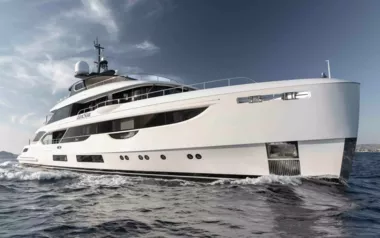
Superyachts (100’+), Palma’s Club de Mar and Port Adriano cater to the world’s largest yachts. A Mallorca superyacht charter pairs resort-level luxury with a coastline that demands to be explored from the water.
-
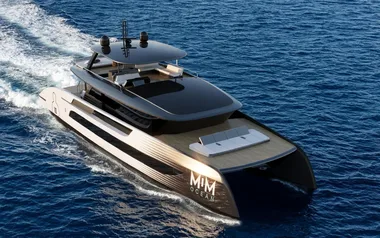
Luxury Catamarans (60’+), Stable and spacious, with a shallow draft ideal for the eastern calas and Cabrera’s crystal-clear moorings. Sunreef and Lagoon models in the 60’-80’ range offer exceptional deck space and family-friendly layouts.
Frequently Asked Questions
Where do yachts dock in Mallorca?
The primary charter marinas in Palma are Club de Mar (575 berths, accommodating yachts up to 135 metres, with a waiting dock for vessels up to 350 metres) and Port Adriano (482 berths, yachts up to 80 metres, designed by Philippe Starck in 2012, ISO 9001 and 14001 certified, with a 250-tonne travel lift). Around the island, Port de Pollença, Port de Sóller, Port d’Andratx and Port d’Alcúdia all offer sheltered berths and provisioning. Your Boatcrowd team will recommend the best base based on your yacht size and itinerary.
Can I visit Cabrera National Park on a charter?
Yes, and it’s one of the highlights of any Mallorca charter. Cabrera is a protected marine-terrestrial national park roughly 30 nautical miles south of Palma. Anchoring is strictly prohibited, your crew must book one of the 50 colour-coded mooring buoys in advance through the Balearic Islands Government website (3 to 20 days ahead, depending on season). The park issues permits for one day during peak season and up to seven days off-season. Boatcrowd handles the permit process as part of your itinerary planning.
How long does it take to cruise around Mallorca?
A full circumnavigation covers roughly 200 nautical miles. At a comfortable cruising speed of 12 to 15 knots, with 4 to 5 hours underway per day and generous time at anchor, most motor yachts complete the circuit in 7 to 8 days. A superyacht at higher speeds can do it in 5 to 6 days with longer stops. Your captain will plan the route to match your pace and priorities.
Is Mallorca’s food scene really that good?
It is, genuinely. Palma now has four Michelin-starred restaurants: Marc Fosh (the first British chef to earn a star in Spain, cooking clean Mediterranean flavours with olive oil instead of butter), Adrián Quetglas (five- and eight-course tasting menus that draw on Buenos Aires, Moscow and the Med), DINS Santi Taura, and Zaranda. Outside the capital, Ca’s Patró March in Cala Deià serves impeccable seafood on a clifftop, and Béns d’Avall (Michelin star since 2020 plus a Green star for sustainability) perches on the cliffs between Sóller and Deià with produce from its own kitchen garden. Traditional dishes are world-class too: sobrasada, ensaimada (the spiral pastry made with pork lard that is best from Horno Santo Cristo in Palma or Can Joan de S’Aigo, the oldest café on the island), tumbet, arros brut and frito mallorquín. Mallorca eats far, far better than most first-time visitors expect.
Can I combine Mallorca with Ibiza or Menorca on the same charter?
Absolutely. Palma to Ibiza Town is roughly 81 nautical miles (4 to 5 hours on a motor yacht). Mallorca’s northern coast to Menorca’s Mahón harbour is approximately 40 nautical miles (under 2 hours). A one-week charter can comfortably cover Mallorca and one neighbouring island; a 10-day voyage can take in all three. Your Boatcrowd specialist designs multi-island routes that maximise variety without wasting time on long crossings.
Ready to plan your Mallorca charter?
Tell us your dates and party size, we'll match you with the right yacht and crew.
15 to 20 min by road to Palma Marina
Every yacht is chartered fully crewed with a professional captain and crew, so no licence or sailing experience is required, you simply step aboard.
What a Charter in Spain Costs Today
The Monthly Price Index · October 2026, low season
Best time to charter Spain
Local knowledgeThe Balearics run on gentle thermal breezes: Mallorca and Menorca for coves and calm, Ibiza and Formentera for the season's social calendar.
