 Skip to content

 EN
EN  Deutsch
  Français
  Español
  Italiano
  日本語
日本語  Português


Iceland · In this guide
Iceland Guide: Luxury Yacht Charter in Iceland
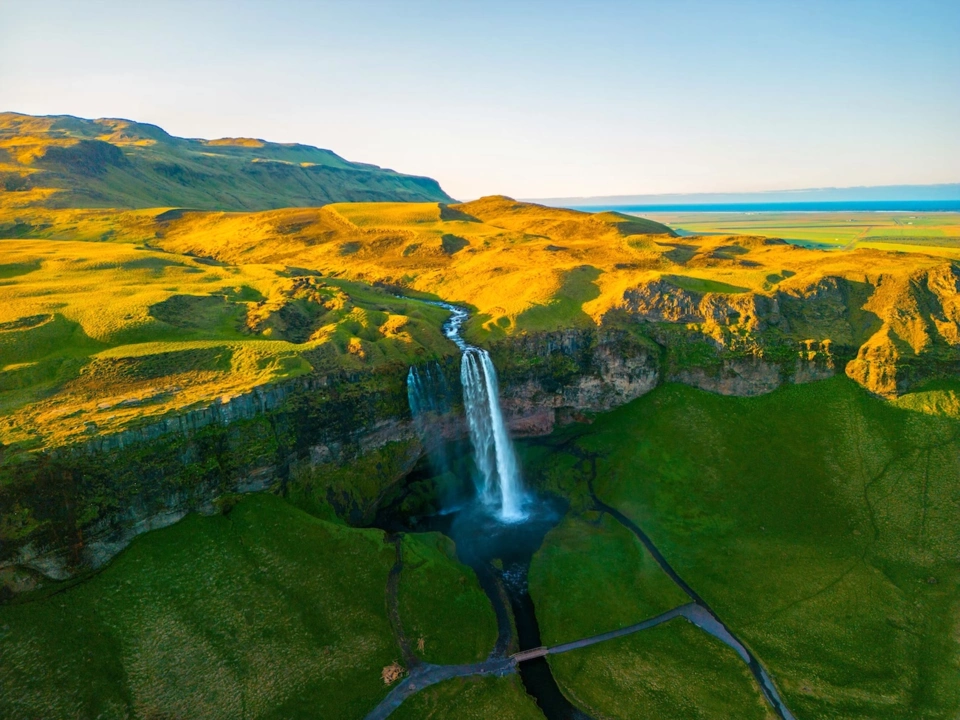
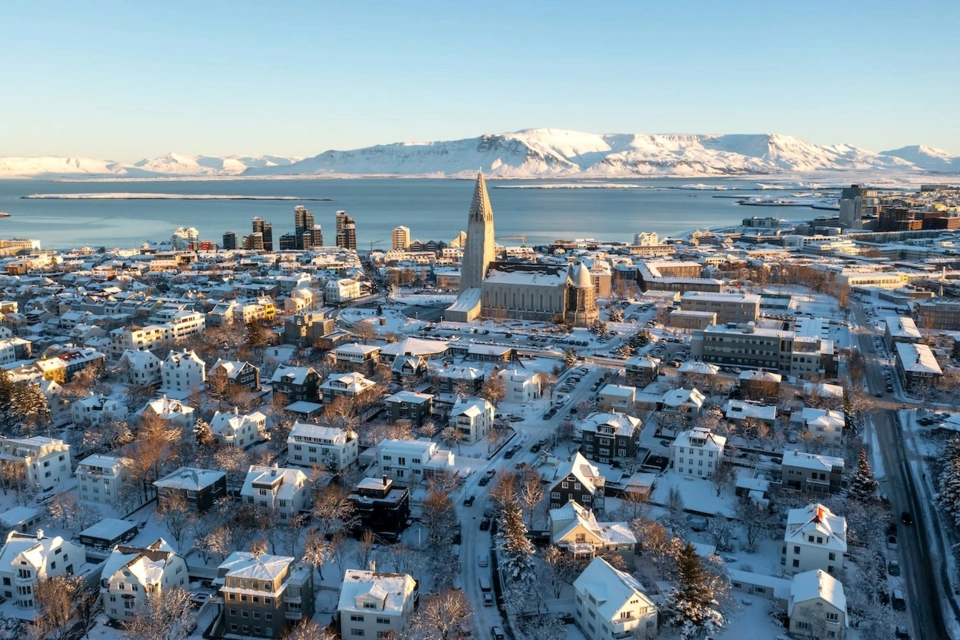
Iceland sits at the junction of the North Atlantic and Arctic oceans, a volcanic island of 103,000 square kilometres where glaciers, geysers, black-sand beaches and towering sea cliffs coexist in a landscape that feels genuinely primordial. The coastline stretches for roughly 4,970 kilometres, carved into deep fjords in the north and west, fringed by volcanic archipelagos in the south, and backed by the Vatnajökull ice cap – Europe’s largest glacier at 8,100 square kilometres, roughly three times the size of Luxembourg. For charter guests aboard an expedition yacht, Iceland delivers an experience that sits somewhere between the drama of Greenland and the cultural richness of northern Europe: breaching humpback whales in Húsavík’s Skjálfandi Bay, 1.1 million puffin pairs nesting on the Vestmannaeyjar cliffs, geothermal hot springs bubbling into the sea, and Viking-age sagas etched into every fjord and lava field.
What makes Iceland particularly compelling for yacht charter is the sheer variety packed into relatively compact distances. Reykjavik to the Snæfellsnes Peninsula – Jules Verne’s gateway to the centre of the earth – is roughly 85 nautical miles. The Westfjords, Iceland’s wildest and least-visited region, begin around 150 nautical miles north-west. Húsavík, Europe’s whale-watching capital, sits on the northern coast, roughly 250 nautical miles from Reykjavik by the coastal route. A full circumnavigation of the island covers approximately 1,100 nautical miles and can be achieved in 10 to 14 days at a comfortable expedition pace, visiting glacial lagoons, puffin colonies, volcanic islands and some of the most remote fjord anchorages in the North Atlantic.
Whether you’re planning a 10-day circuit of Iceland’s western and northern coasts, a full 14-day circumnavigation, or a focused week exploring the Westfjords and Snæfellsnes, this guide covers every region in detail – seasons, wildlife, distances, cultural highlights and the vessels best suited to these extraordinary waters. Start planning your Iceland charter with Boatcrowd and let our team match you to the perfect yacht and route.
Why Charter a Yacht in Iceland
A Volcanic Island Unlike Anywhere Else on Earth
Iceland straddles the Mid-Atlantic Ridge, the tectonic boundary where the North American and Eurasian plates pull apart at roughly two centimetres per year. The result is a landscape of active volcanoes, lava fields, geothermal springs and glacial rivers visible from the sea along virtually the entire coastline. Surtsey, a UNESCO World Heritage Site, rose from the ocean floor during a volcanic eruption that lasted from 1963 to 1967 and remains one of the youngest islands on earth. The Vestmannaeyjar (Westman Islands) experienced their own eruption in 1973, when the volcano Eldfell buried a third of the town of Heimaey under lava. From the deck of your yacht, Iceland’s geology is not academic – it is immediate, dramatic and constantly evolving.
World-Class Whale Watching
Iceland’s nutrient-rich waters support 23 species of cetacean, and the waters around Húsavík on the northern coast have earned the title ‘Whale-Watching Capital of Europe.’ Humpback whales are the headline species, with sighting rates of 95–99% during the peak summer months (June–August) in Skjálfandi Bay. Minke whales, white-beaked dolphins and harbour porpoises are regular companions on coastal passages. Blue whales – the largest animal ever to have lived – are occasionally spotted near Húsavík, particularly in June. Orcas hunt around the Snæfellsnes Peninsula from February to June, often visible from shore. From a yacht, whale encounters become personal rather than crowded: your captain reads the surface for blow spouts and fluke prints, positions the vessel at a respectful distance, and you watch from the aft deck with a coffee in hand and no other boat in sight.
The Largest Atlantic Puffin Colony on Earth
The Vestmannaeyjar (Westman Islands), an archipelago of 15 islands off Iceland’s south coast, host the world’s largest Atlantic puffin colony: roughly 1.1 million breeding pairs, representing around 20% of the global population. During the nesting season (May–August), the sea cliffs of Heimaey are covered with puffins shuttling back and forth with beaks full of sand eels. Stórhöfði, at Heimaey’s southernmost point, provides an observation platform 120 metres above the sea. Each August and early September, Heimaey’s children participate in the ‘puffling rescue’ – young puffins disorientated by the town’s lights are gently collected and returned to the sea. For wildlife-loving charter guests, the Vestmannaeyjar are an essential stop.
Geothermal Wonders Accessible by Yacht
Iceland’s geothermal activity extends to its coastline. Hot springs bubble into the sea at several points along the coast, and your crew can arrange zodiac excursions to natural thermal pools accessible only from the water. The famous Blue Lagoon (50 kilometres from Reykjavik, water temperature 37–39°C) is the most visited, but Iceland has over 45 natural hot springs and 120+ geothermal swimming pools scattered across the island. A yacht charter combines the best of both worlds: glacier views from the foredeck in the morning, a soak in a steaming natural pool by afternoon.
The Midnight Sun and Northern Lights
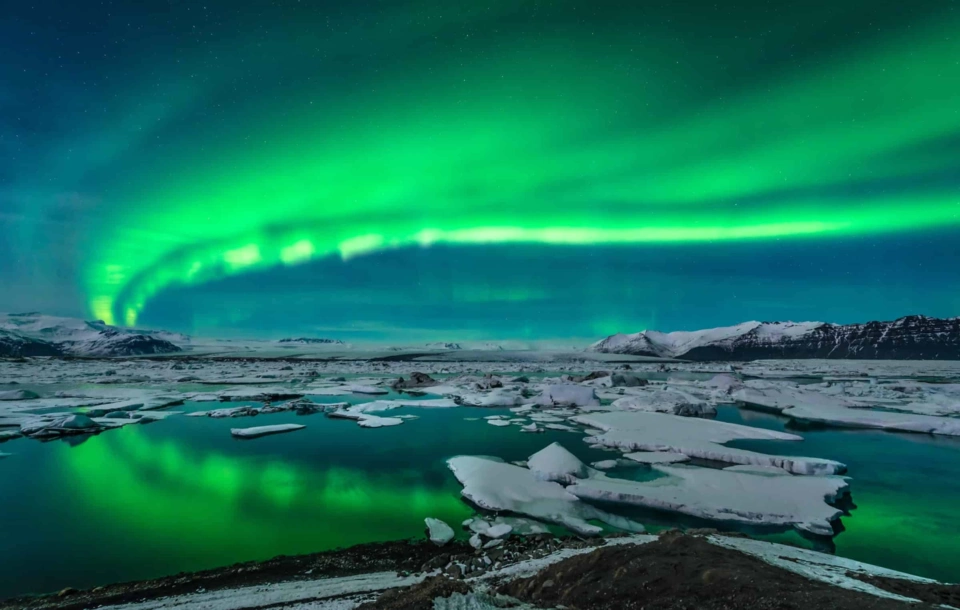
Iceland’s latitude (63°–66°N) delivers both of nature’s great light shows depending on season. From mid-May through early August, the midnight sun stretches daylight past 20 hours – on the summer solstice (21 June), Reykjavik receives approximately 21 hours of direct sunlight, with only a brief twilight between sunset and sunrise. This extended light allows for extraordinary whale-watching and coastal cruising at hours when most of the world is asleep. From September through April, the same skies host the aurora borealis, with the darkest months (November–January) offering the most vivid displays. A September charter captures the transition: lingering evening light, the first auroral curtains, and active whale watching.
Top Destinations in Iceland
-
Vestmannaeyjar (Westman Islands) – An archipelago of 15 volcanic islands 10 kilometres off the south coast. Home to the world’s largest Atlantic puffin colony (1.1 million pairs), the 1973 Eldfell lava fields, and the town of Heimaey – the only inhabited island. Approach by yacht through the narrow harbour entrance for one of Iceland’s most dramatic arrivals.
-
Snæfellsnes Peninsula – Known as ‘Iceland in Miniature’ for its diverse landscapes: the Snæfellsjökull glacier-capped volcano (1,446 metres, Jules Verne’s gateway to the centre of the earth), black-sand beaches, lava fields, fishing villages and sea cliffs. The Kirkjufell mountain near Grundarfjörður is Iceland’s most photographed peak.
-
Westfjords – Iceland’s most remote and least-visited region, a mountainous peninsula of deep fjords, towering sea cliffs and virtually no other vessels. Hornstrandir Nature Reserve – accessible only by boat from Ísafjörður – is home to Iceland’s only protected Arctic fox population. The Westfjords account for 50% of Iceland’s coastline but receive a tiny fraction of its visitors.
-
Húsavík and Skjálfandi Bay – Europe’s whale-watching capital on the northern coast. Humpback whale sightings approach 99% in summer. The town’s Whale Museum is one of the finest in Europe, and the warm, nutrient-rich waters of Skjálfandi Bay attract up to 15 cetacean species.
-
Eyðafjörður and Akureyri – Iceland’s longest fjord at 60 kilometres, with Akureyri (population 19,000) – the ‘Capital of the North’ – at its head. Botanical gardens at 65°N, a lively restaurant scene, and Hrísey Island (the ‘Pearl of Eyðafjörður’) for birdwatching.
-
Brðeiðafjörður Bay – A 125-kilometre-long, 50-kilometre-wide bay between the Westfjords and Snæfellsnes, scattered with thousands of small islands and rich in birdlife. The waters support white-tailed eagles, seals and one of Iceland’s most productive marine ecosystems.
-
Grímsey Island – Iceland’s northernmost territory, straddling the Arctic Circle 40 kilometres off the mainland. A small community of roughly 60 residents, abundant birdlife (including puffins and Arctic terns), and the bragging rights of crossing the Arctic Circle by yacht.
Best Time to Charter a Yacht in Iceland
Peak Season: June to August
Iceland’s summer brings the warmest weather (9–15°C, occasionally reaching 20°C), the midnight sun, and the highest concentration of marine wildlife. Whale-watching success rates peak at 95–99% for humpbacks in Skjálfandi Bay. Puffins are nesting across the island. The seas are at their calmest, though Atlantic weather remains changeable at any time. July is the warmest month, but June offers the longest light and fewer visitors. August sees the puffling season on the Vestmannaeyjar and the beginning of Arctic tern migration.
Shoulder Season: May and September
May marks the return of the puffins and the beginning of whale-watching season. Daylight is already long (18–20 hours), and the landscapes are emerging from winter with vivid greens and snowmelt-fed waterfalls. September is arguably Iceland’s most rewarding charter month: the Northern Lights begin to appear, whale watching remains excellent, the autumn colours are striking, and charter rates are typically 15–25% lower than peak summer. The equinox in late September brings increased geomagnetic activity, improving aurora chances.
Northern Lights Season: October to March
For guests focused on the aurora borealis, Iceland’s winter season offers the darkest skies (November–January receive as little as four hours of daylight in the south) and the most vivid displays. Expedition yachts with heated interiors, stabilisers and experienced Arctic crews make winter chartering comfortable. Orca sightings increase around Snæfellsnes from November onward. Geothermal hot springs provide natural warmth between auroral displays.
Signature Experiences
-
Whale Watching in Skjálfandi Bay – Your captain navigates the nutrient-rich waters off Húsavík as humpback whales surface, blow and dive around the yacht. With 95–99% summer sighting rates, encounters are virtually guaranteed. Blue whales, minke whales and white-beaked dolphins often join the show.
-
Puffin Cliffs at Vestmannaeyjar – Cruise to Heimaey and anchor in the harbour. Take the tender to Stórhöfði, where 1.1 million puffin pairs nest on the sea cliffs. The birds are remarkably unperturbed by respectful visitors, shuttling back and forth with beaks full of sand eels.
-
Zodiac Cruise Among Icebergs – From the yacht anchored offshore, board a zodiac for a water-level tour of the icebergs calved from Vatnajökull’s glacier tongues. Electric-blue ice towers, glacier calving sounds, and curious harbour seals surfacing beside the inflatable.
-
Geothermal Hot Spring Soak – Your crew guides you by tender to a coastal hot spring accessible only from the water. Soak at 38–40°C in a natural rock pool while icebergs drift past in the distance and steam rises around you. A uniquely Icelandic experience.
-
Midnight Sun Sailing – In late June, set course along the northern coast beneath a sun that barely touches the horizon. The golden light stretches across the water for hours, transforming the fjords into a landscape of endless twilight. Whale spouts catch the low light like fountains of gold.
-
Hornstrandir Nature Reserve – Accessible only by boat, this abandoned peninsula in the Westfjords is home to Iceland’s friendliest Arctic foxes (fully protected from hunting here), nesting seabirds and some of the most dramatic sea cliffs in the North Atlantic. Hike the coastal trails with no one else in sight.
-
Arctic Circle Crossing at Grímsey – Sail to Grímsey, Iceland’s northernmost island, and cross the Arctic Circle (66°33’N) by yacht. A small community of roughly 60 residents, abundant puffins and Arctic terns, and a certificate to mark the occasion.
Yacht Types Available
-
Expedition Yachts (120’+) – The ideal choice for Iceland’s challenging waters. Ice-strengthened hulls, extended fuel range, zero-speed stabilisers and heated observation lounges ensure comfort in all conditions. Accommodation for 8–12 guests with crews of 8–15 including expedition leaders. Weekly rates typically start from €90,000–€155,000 on MYBA terms plus Advance Provisioning Allowance (30–35%). Crew gratuity 10–15%.
-
Superyachts (120’+) – For guests seeking the ultimate in luxury amid raw landscapes. Modern superyachts with dynamic positioning hold station in exposed anchorages, and their extensive tender fleets (zodiacs, landing craft, sea kayaks) enable shore excursions in the most remote locations. Weekly rates from €120,000–€250,000+.
-
Luxury Catamarans (55’+) – Stable platforms ideal for whale watching and photography in Iceland’s sometimes lively seas. Generous deck space and shallow drafts access anchorages closer to shore. Weekly rates from approximately €40,000–€60,000.
Frequently Asked Questions
How much does a yacht charter in Iceland cost?
Expedition yacht charters (120’+), the most popular choice for Icelandic waters, typically start from €90,000–€155,000 per week on MYBA terms, plus an Advance Provisioning Allowance of 30–35% covering fuel, food, beverages and port fees. Superyachts in the 40–60-metre range start from roughly €120,000–€250,000 per week. Luxury catamarans from approximately €40,000–€60,000. Shoulder-season rates (May and September) are typically 15–25% softer than peak. Crew gratuity is customarily 10–15%. Enquire with Boatcrowd for a personalised quote based on your dates and itinerary.
Are luxury catamarans available for charter in Iceland?
Yes. Boatcrowd offers crewed catamarans from premium builders like Sunreef and Lagoon for Icelandic waters. Their twin-hull stability is a genuine advantage in the North Atlantic, where swells and cross-winds can make traditional monohull yachts uncomfortable. Catamarans provide a steadier platform for whale photography, more deck space for wildlife watching, and shallow drafts for anchorages closer to volcanic shorelines. Most operate with a crew of 3–4 on an all-inclusive or MYBA basis.
Can I charter a yacht in Iceland for a film or TV production?
Iceland has been a favourite of filmmakers for decades. Game of Thrones shot extensively across the island (including north of the Wall scenes at Mývatn and Dimmuborgir). Interstellar, Prometheus and The Secret Life of Walter Mitty all used Icelandic locations. Bond film Die Another Day featured the Jökulsárlón glacier lagoon. Boatcrowd can arrange production-friendly charters with vessels that accommodate camera crews and equipment. With the midnight sun providing up to 21 hours of natural light in June, Iceland is a filmmaker’s paradise for extended shooting days.
Is Iceland a good destination for a proposal, honeymoon or milestone event?
Few places on earth match Iceland’s capacity for dramatic, once-in-a-lifetime moments. Imagine a proposal beneath the Northern Lights reflected in a glass-calm fjord, a honeymoon with midnight sun whale watching and geothermal hot spring soaks, or a birthday dinner on the aft deck as a glacier calves icebergs into the sea beside you. Your crew orchestrates every detail. Let Boatcrowd know the occasion when you enquire.
Can I bring the whole family, including grandparents and young children?
Iceland’s wildlife encounters are wonderfully suited to multi-generational groups. Children are captivated by puffins, whale spouts and zodiac adventures. Grandparents appreciate the geological drama visible from the comfort of the yacht’s observation lounge, the gentle pace of fjord cruising, and the warmth of geothermal pool visits. Expedition yachts and catamarans offer flexible cabins for 8–12+ guests, and crews tailor activities to all ages and energy levels.
Can I combine Iceland with other destinations in one charter?
Yes. Iceland’s position in the North Atlantic makes it a natural connecting point for extended expeditions. A two-to-three-week charter could combine Iceland with Greenland, the Faroe Islands or northern Norway. Ice-class expedition yachts are equipped for the open-ocean crossings required, and your Boatcrowd charter specialist will design a route that maximises variety while respecting weather windows and passage times.
Ready to plan your Iceland charter?
Tell us your dates and party size – we'll match you with the right yacht and crew.
45–50 min by road to Reykjavík Old Harbour
Every yacht is chartered fully crewed with a professional captain and crew, so no licence or sailing experience is required — you simply step aboard.
Best time to charter Iceland
Local knowledgeA short, extraordinary window – puffin cliffs, geothermal harbours and 24-hour daylight around the Westfjords.
