 Skip to content

 EN
EN  Deutsch
  Français
  Español
  Italiano
  日本語
日本語  Português


Greenland · In this guide
Greenland Guide: Luxury Yacht Charter in Greenland
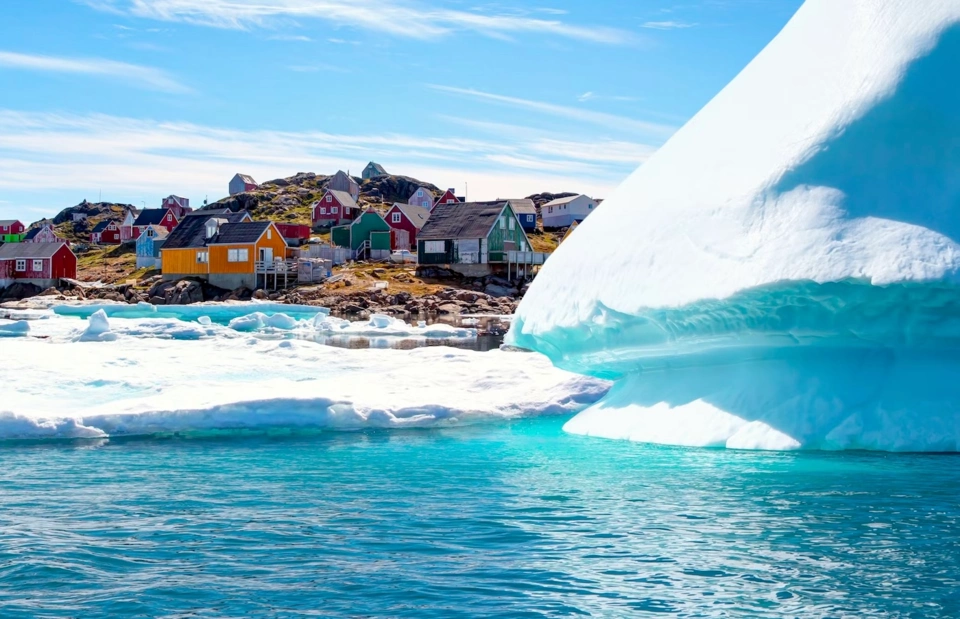

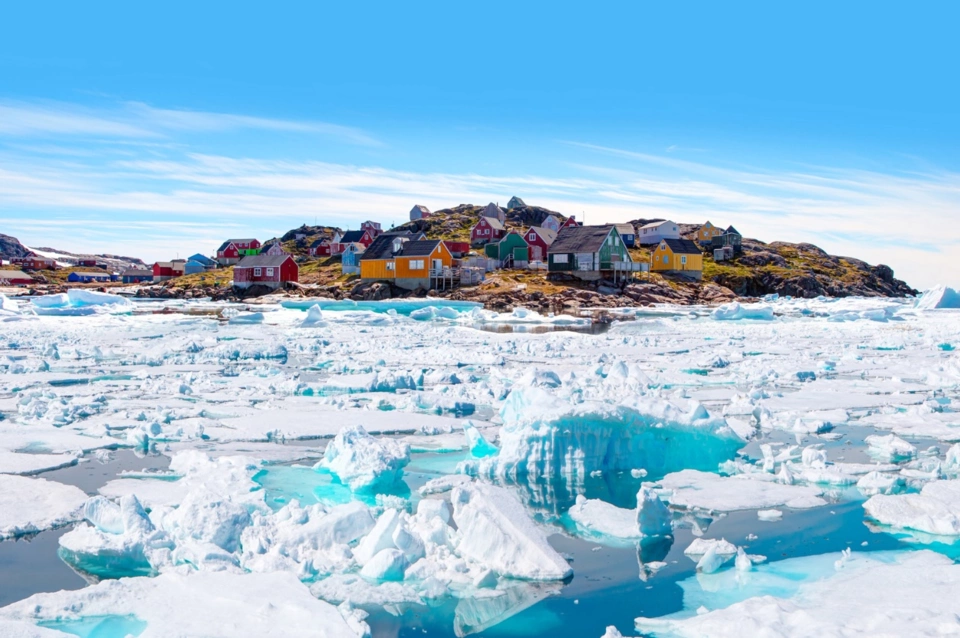
Greenland is the world’s largest island and one of its last true frontiers. Stretching from 60°N to almost 84°N, this 2.16-million-square-kilometre landmass is roughly six times the size of Germany, yet home to fewer than 57,000 people, most of them living in brightly painted coastal towns scattered along the ice-free western shore. The interior is buried beneath the Greenland Ice Sheet, a body of ice up to 3,400 metres thick that holds roughly 10% of the world’s freshwater. Where the ice meets the sea, it calves cathedral-sized icebergs into fjords of staggering depth and stillness. The coastline is a maze of over 44,000 kilometres of fjords, rocky headlands, sheltered bays and uninhabited islands, terrain that is simply inaccessible by road and only occasionally served by helicopter or coastal ferry. A yacht is, for many of these places, the only practical way in.
For charter guests, Greenland offers an expedition experience unlike anything else on the water. The western coast from Nuuk north to Disko Bay is the most established cruising ground, with the UNESCO-listed Ilulissat Icefjord as its centrepiece, a 40-kilometre channel through which the Sermeq Kujalleq glacier discharges more than 35 cubic kilometres of ice a year, filling the bay with blue-streaked icebergs the size of apartment blocks. South Greenland brings a softer landscape of green valleys, Norse ruins dating to Erik the Red’s 10th-century settlement, and the natural hot springs of Uunartoq, where you soak at 38°C while icebergs drift past in the neighbouring fjord. East Greenland, remote, seldom visited and staggeringly beautiful, is home to Scoresby Sund, the world’s longest fjord system at 350 kilometres, where musk oxen graze on tundra slopes and narwhals surface between ice floes.
Whether your ambitions run to photographing calving glaciers beneath the midnight sun, kayaking among humpback whales off Disko Island, walking the 14th-century stone walls of Hvalsey Church, or simply anchoring in a fjord so remote that the only sound is meltwater trickling from the rock face, Greenland rewards those who arrive by sea. Start planning your Greenland charter with Boatcrowd and let our team match you to the right vessel and route.
Ready to plan your Greenland charter?
Tell us your dates and party size, we'll match you with the right yacht and crew.
Why Charter a Yacht in Greenland
The Ultimate Expedition Frontier
Greenland’s western coastline alone stretches for thousands of kilometres, threaded with fjords that reach 100 kilometres or more inland. Most of this coast has no roads, no airports and no scheduled ferry service. Chartering a yacht, specifically an ice-class expedition motor yacht or explorer catamaran, is the only way to reach many of the island’s most compelling anchorages: glacier-fed bays where humpback whales bubble-net feed metres from the hull, uninhabited islands carpeted in Arctic wildflowers during the brief summer, and Inuit settlements of 50 or 60 people reachable only by sea or dog sled. For travellers who have already cruised the Mediterranean, the Caribbean, Southeast Asia and the South Pacific, Greenland represents a genuinely new category of experience, raw, unpredictable, humbling and utterly unforgettable.
Icebergs and Glaciers on a Scale That Defies Belief
The Ilulissat Icefjord is a UNESCO World Heritage Site and one of the natural wonders of the northern hemisphere. The Sermeq Kujalleq glacier, one of the fastest-moving glaciers outside Antarctica, advancing at roughly 40 metres per day, feeds icebergs into Disko Bay that can stand 100 metres above the waterline and extend several hundred metres below. From the deck of your yacht, you watch these sculptured towers of compressed ice rotate, fracture and calve with thunderous reports that echo off the fjord walls. Beyond Ilulissat, the Eqip Sermia glacier (roughly 50 nautical miles to the north) offers even more dramatic calving events in a more intimate, less-visited setting. No photograph or film adequately captures the scale. You have to be there, close enough to feel the cold air rolling off the ice face.
Wildlife Encounters in Pristine Waters
Greenland’s waters support 15 species of whale. Humpbacks are the most commonly sighted, particularly in Disko Bay and the fjords around Nuuk and Maniitsoq from June through September, when they come to feed on the rich krill and capelin stocks. Minke whales and fin whales are regular companions on coastal passages. Narwhals, the ‘unicorn of the sea,’ with their distinctive spiral tusks reaching up to three metres in length, are found in the fjords of northwest Greenland and along the east coast. Bowhead whales, belugas and the occasional blue whale round out the cetacean list. On land and ice, look for musk oxen (especially in East Greenland and Kangerlussuaq), Arctic foxes, Arctic hares and, in the far north, polar bears. The birdlife includes white-tailed eagles, gyrfalcons, puffins, and vast colonies of kittiwakes and Arctic terns.
A Living Inuit Culture
Greenland’s population is predominantly Inuit, and the culture is not a museum exhibit, it is alive, evolving and deeply welcoming to visitors who arrive with curiosity and respect. In Ilulissat, Restaurant Ulo at Hotel Arctic serves a 15-course tasting menu built around local ingredients: reindeer, musk ox, halibut, ptarmigan and crowberries foraged from the surrounding tundra. In Nuuk, the capital, Restaurant Sarfalik and Cafétuaq at the striking Katuaq Cultural Centre offer contemporary takes on Greenlandic cuisine alongside exhibitions, live music and film screenings. Smaller settlements like Uummannaq, Saqqaq and Ittoqqortoormiit offer genuine encounters with traditional ways of life, fishing, hunting, kayak-building, drum dancing, that no resort experience can replicate. Your crew coordinates onshore excursions with local guides who share their knowledge of the land, the ice and the seasons.
Norse History and UNESCO Heritage
Erik the Red arrived on Greenland’s southern coast around 985 AD with a fleet of 25 ships and roughly 700 settlers. The Norse Eastern Settlement, centred near modern-day Qaqortoq, grew to some 500 farms, a cathedral and a bishop’s seat before vanishing mysteriously in the 15th century. Today, the ruins are scattered across green valleys that look more Icelandic than Arctic. Hvalsey Church, built in the 14th century near Qaqortoq, is the best-preserved Norse ruin in Greenland, its stone walls still stand 5 to 6 metres high, and it was the site of the last recorded event in Norse Greenland: a wedding on 16 September 1408. At Brattahlíd (modern Qassiarsuk), a short boat ride from Narsarsuaq, you can walk the footprint of Erik the Red’s longhouse and visit the reconstruction of Tjodhilde’s Church, believed to be the first Christian church built on the North American continent. These sites, combined with the Ilulissat Icefjord, give Greenland a UNESCO heritage profile that adds cultural depth to the expedition experience.
Key Destinations in Greenland
-
Ilulissat and the Icefjord, The jewel of West Greenland, roughly 69°N. Ilulissat (population c. 4,700) sits at the mouth of the 40-kilometre Ilulissat Icefjord, a UNESCO World Heritage Site since 2004. The Sermeq Kujalleq glacier at its head is one of the most productive calving glaciers in the northern hemisphere, feeding icebergs into Disko Bay that tower above the waterline and drift slowly seaward over days and weeks. The town itself offers colourful wooden houses, the Icefjord Centre (designed by Dorte Mandrup), Restaurant Ulo’s 15-course tasting menu, and marked hiking trails along the fjord edge with views over the ice.
-
Disko Bay and Disko Island, Disko Bay is the broad body of water into which the Ilulissat Icefjord empties, creating one of the most visually dramatic seascapes on Earth. Disko Island (Qeqertarsuaq), roughly 8,578 square kilometres, sits in the northern part of the bay. The island’s volcanic basalt columns, hot springs at Kuannersuit and the small settlement of Qeqertarsuaq (population c. 800) offer a quieter counterpoint to Ilulissat. Disko Bay is one of the best locations in Greenland for whale watching, humpbacks, minke and fin whales are regular visitors from June through September, and bowhead whales are occasionally sighted.
-
Nuuk, Greenland’s capital (population c. 19,000) sits at the mouth of the Nuup Kangerlua fjord on the south-western coast. The city blends modern Nordic architecture (including the Katuaq Cultural Centre) with colourful colonial-era buildings, a bustling harbour and the excellent Greenland National Museum, which houses the famous Qilakitsoq mummies, six naturally preserved Inuit mummies dating to approximately 1475 AD. Restaurants like Sarfalik and Hereford Beefstouw serve Greenlandic ingredients alongside European techniques. The surrounding fjord system offers outstanding whale watching, and the Nuuk Icefjord (Kangia) is a dramatic day trip by tender.
-
Eqip Sermia Glacier, Approximately 50 nautical miles north of Ilulissat, this actively calving glacier is one of Greenland’s most spectacular ice experiences. The glacier front, roughly 5 kilometres wide and rising 200 metres above the fjord, calves regularly with a violence that sends waves rolling across the water. Your captain holds a safe distance while you watch ice towers fracture and collapse in real time. The setting is utterly remote, no settlement, no infrastructure, just ice, rock and silence between the calving events.
-
Uunartoq Hot Springs, On an island roughly 65 kilometres south of Qaqortoq in South Greenland, these natural hot springs maintain a year-round temperature of 38°C. The springs are not volcanic in origin, the heat rises from deep within the Earth’s mantle through ancient rock fissures. You soak in a stone-lined pool while icebergs drift past in the neighbouring fjord and mountains rise on every horizon. The two-hour boat journey from Qaqortoq passes through waters dotted with icebergs and seals.
-
Qaqortoq and the Norse Ruins, South Greenland’s largest town (population c. 3,000) is the gateway to the Norse Eastern Settlement. The town itself is charming, colourful houses cascading down to the harbour, the Stone and Man outdoor sculpture trail, and a fountain that is the only one in Greenland. A short boat ride brings you to Hvalsey Church, whose 14th-century stone walls remain standing to their full height, and to Brattahlíd at Qassiarsuk, where Erik the Red established his homestead in 985 AD.
-
Scoresby Sund (East Greenland), The world’s longest and largest fjord system, extending 350 kilometres inland from the east coast. Accessible only from late July through early October when the sea ice clears from its mouth, Scoresby Sund is a destination for experienced expedition yachts with ice-class certification. The fjord branches into a labyrinth of side-channels flanked by towering basalt cliffs, glacier tongues and tundra plateaux where musk oxen graze. The Inuit settlement of Ittoqqortoormiit (population c. 450) at the fjord’s entrance is one of the most remote inhabited places on Earth. Narwhals, polar bears and vast seabird colonies inhabit the system.
-
Sisimiut, Greenland’s second-largest town (population c. 5,600), located roughly 160 nautical miles south of Ilulissat. Sisimiut sits just north of the Arctic Circle and serves as a popular starting or ending point for coastal itineraries. The town has a well-preserved colonial centre with an 18th-century church, a regional museum and an adventurous culinary scene. The surrounding coastline is a mosaic of islands, rocky skerries and sheltered bays ideal for kayaking and exploring by tender.
Best Time to Charter a Yacht in Greenland
Peak Season: Late June to August
This is the heart of the Greenland charter season. The midnight sun bathes the western coast in near-continuous daylight north of the Arctic Circle, with the sun not setting at all in Ilulissat from late May through late July. Air temperatures along the west coast range from 5°C to 15°C (occasionally reaching 20°C on calm, sunny days), and sea-surface temperatures sit at 0°C to 5°C, cold enough for icebergs to persist but warm enough for protected anchorages to be comfortable from the deck. Fjords are at their most navigable, glacier calving is at its most active, and humpback whales fill Disko Bay. This is the busiest period for charter traffic, though ‘busy’ in Greenland means you might see one or two other vessels in a day. July and August offer the warmest, most settled conditions and the widest choice of itinerary options, including crossings to East Greenland’s Scoresby Sund (accessible from late July).
Shoulder Season: September
September brings shorter days, cooler temperatures (2°C to 8°C) and the first hints of the aurora borealis dancing above the fjords. The tundra turns gold, russet and crimson across the hillsides, a brief but vivid Arctic autumn that transforms the landscape. Whale watching remains excellent, with humpbacks and minke whales still feeding before their southward migration. Fewer vessels operate in September, meaning even greater solitude in the anchorages. Sea ice begins to form at the mouths of some northern fjords by late September, so routing requires careful planning, but for photographers, aurora enthusiasts and guests who prefer solitude, this is an exceptional window.
Early Season: Late April to Mid-June
The spring thaw brings dramatic scenery: waterfalls cascade from melting snowfields, icicles hang from cliff faces, and the light shifts through long, golden-hour days. Sea ice is still retreating, which limits access to some fjords (particularly in East Greenland), but the western coast from Nuuk to Disko Bay is generally navigable from late May. Dog-sled excursions, heli-skiing on untouched Arctic peaks and photography of the spring ice breakup are the main draws. Availability of expedition vessels is at its widest before the July to August rush.
Winter and Off-Season: October to April
Greenland’s charter season effectively closes in October as sea ice extends, daylight shortens dramatically and temperatures plunge below -20°C through the polar winter. While specialist vessels do operate in winter for northern-lights expeditions and ice-sheet crossings, conventional luxury charter is not practical. If the aurora borealis is your primary goal, September offers the best overlap between navigable waters and dark skies.
Signature Experiences
-
Sunrise Among the Icebergs of Disko Bay, During the midnight-sun weeks of late June and July, the light never fully fades. Have your captain position the yacht among the icebergs that drift from the Ilulissat Icefjord into the bay. At 2 a.m., the low-angle Arctic light paints the ice in shades of gold, rose and cobalt blue. The silence is extraordinary, broken only by the occasional groan and crack of ice shifting. Your chef has coffee, fresh pastries and Arctic char waiting on the aft deck as you watch from the flybridge in a down jacket and the soft glow of a sun that never quite sets.
-
Whale Watching from the Swim Platform, Disko Bay is one of the finest whale-watching grounds in the North Atlantic. From June through September, humpback whales feed on the krill and capelin that congregate near the glacier outflows. Your captain reads the surface signs, blow spouts, fluke prints, diving patterns, and positions the yacht at a respectful distance. On calm mornings, you can sit on the swim platform just above the waterline and hear the whales exhale before you see them surface. Minke whales, fin whales and, with luck, bowhead whales complete the picture.
-
Soaking in Uunartoq Hot Springs with Icebergs Drifting Past, Tender from your yacht to the island of Uunartoq in South Greenland and ease into the natural hot springs, 38°C water in a stone-lined pool surrounded by Arctic tundra. In one direction, snow-dusted mountains; in the other, icebergs calved from the nearby glacier float slowly through the fjord. There are no other facilities on the island, no buildings, no other visitors on a quiet morning. Your steward sets up towels and a flask of hot chocolate on the rocks.
-
Walking the Norse Ruins at Hvalsey, Tender ashore near Qaqortoq and walk to the 14th-century Hvalsey Church, whose stone walls still stand 5 to 6 metres high in a green valley overlooking a fjord. This is the site of the last written record of the Norse Greenlanders, a wedding on 16 September 1408. The silence, the quality of the light on the old stone, and the sheer age of the place are deeply moving. Your guide explains the mystery of the Norse disappearance while sheep graze in the surrounding meadow, exactly as they might have done 600 years ago.
-
Kayaking Beneath the Eqip Sermia Glacier, Your crew launches sea kayaks from the yacht’s tender platform in the fjord below Eqip Sermia, one of Greenland’s most actively calving glacier fronts. Paddle among brash ice and smaller bergs while the 200-metre-high glacier face groans and cracks above you. The guide keeps a safe distance from the face (calving events produce large waves), but the proximity is extraordinary, you feel the cold air rolling off the ice and hear the deep, resonant booms echoing through the fjord. Return to the yacht for hot soup and blankets on the aft deck.
-
Dining at Restaurant Ulo, Ilulissat, Tender ashore for dinner at Hotel Arctic’s Restaurant Ulo, where the kitchen builds a 15-course tasting menu around Greenlandic ingredients: air-dried halibut, reindeer tartare, ptarmigan with crowberry, musk ox with fermented root vegetables. The restaurant takes its name from the ulu, the traditional curved Inuit women’s knife. Floor-to-ceiling windows look out over Disko Bay and the icebergs drifting in the late-evening light. It is one of the most singular dining experiences in the Arctic.
Yacht Types Available
Greenland is an expedition destination, and the fleet reflects that reality. Vessels operating here are purpose-built or reinforced for ice navigation, equipped with advanced radar, sonar and satellite communications, and crewed by captains and officers with polar experience. Unlike tropical charter grounds, Greenland does not have a large locally based fleet, most yachts reposition from Northern Europe or Iceland for the summer season, so early booking is essential.
-
Expedition Motor Yachts and Explorer Vessels (65’-200’+), The dominant vessel type for Greenland charters. These are steel- or aluminium-hulled motor yachts with ice-class certification (typically Polar Code Category B or C, or Lloyd’s Ice Class 1C), long-range fuel capacity (3,000 to 5,000+ nautical miles), and a full complement of expedition equipment: rigid-hull inflatable tenders, sea kayaks, dive gear, drones and sometimes a helicopter pad. Interiors range from expedition-rugged to full superyacht luxury, with 4 to 8 guest cabins, a professional galley and crew quarters for 8 to 20. Speed is typically 10 to 15 knots cruising, allowing comfortable passages between fjord systems.
-
Expedition Superyachts (100’+), A growing number of superyachts in the 40-metre to 65-metre range now carry ice-class notation and operate summer seasons in Greenland and the wider Arctic. These vessels combine the luxury of a five-star superyacht, spa, gym, cinema, multiple salons, Michelin-level galley, with expedition capability: reinforced hull, zero-speed stabilisers for comfort at anchor, extended-range fuel tanks and a crew experienced in polar operations. Helipads allow scenic flights over the ice sheet. The Advance Provisioning Allowance (APA) for Greenland is calculated as a percentage of the charter fee, reflecting the remote provisioning and high fuel costs of Arctic cruising.
-
Luxury Expedition Catamarans (60’+), A smaller but growing category of power catamarans designed for high-latitude cruising. Builders like Sunreef and Lagoon now offer ice-reinforced catamaran models with long-range capability, shallow draft (ideal for nosing into fjord shallows and coastal skerries) and exceptional stability in open-water crossings. The twin-hull design virtually eliminates rolling, a significant comfort advantage on the Davis Strait crossing from Iceland or on exposed stretches of the Greenland coast. Catamarans accommodate 6 to 10 guests in 3 to 5 cabins and carry a crew of 4 to 6. Rates depend on vessel and season.
Frequently Asked Questions
How much does a yacht charter in Greenland cost?
Greenland is a premium expedition destination, and charter pricing reflects the specialised vessels required. Most Greenland charters operate on MYBA terms, with the base rate plus an Advance Provisioning Allowance (APA) covering fuel, food, beverages, permits, port fees and any excursion costs. Fuel is the largest APA component in the Arctic, vessels consume significantly more fuel than in temperate waters due to longer passages and the need to run generators and heating systems continuously. Crew gratuity is customarily 10 to 15%. Enquire with Boatcrowd for a personalised quote based on your dates, group size and preferred itinerary.
Are luxury catamarans available for charter in Greenland?
Yes, though the selection is more limited than in tropical charter grounds. A growing fleet of ice-reinforced power catamarans operates in Greenland during the summer season (late June to September), offering exceptional stability, shallow draft for exploring coastal skerries and fjord shallows, and generous living space. Their twin-hull design virtually eliminates rolling on open-water passages, a meaningful comfort advantage on the Davis Strait or on exposed stretches of the west coast. Catamarans come fully crewed with captain, chef and deckhand/steward. They are particularly well suited to the sheltered waters of Disko Bay and the inner fjords around Nuuk, though they may not carry the ice-class notation required for East Greenland or Scoresby Sund. Your Boatcrowd charter specialist will match the right vessel to your preferred route and risk profile.
Can I charter a yacht in Greenland for a film or documentary production?
Greenland is increasingly popular as a filming location for luxury lifestyle content, nature documentaries, fashion editorials and branded expedition features. The combination of towering icebergs, pristine fjords, midnight-sun light and the visual drama of the ice sheet creates a backdrop that is virtually impossible to replicate elsewhere. Boatcrowd can arrange production-friendly charters aboard expedition yachts with deck space for camera rigs, drone launch platforms, stable generator power and accommodation for crew and talent. Greenland does not have a formal film-permit system for most locations, though filming within certain protected areas (including the Ilulissat Icefjord UNESCO zone) may require advance notification. A local fixer or guide is strongly recommended for logistics, cultural sensitivity and access to more remote settlements.
Is Greenland a good destination for a proposal, milestone birthday or honeymoon?
Greenland is extraordinary for milestone celebrations. Imagine a proposal on the aft deck as icebergs drift past in the golden light of a midnight sun, with champagne chilling and your crew discreetly disappearing below. A honeymoon itinerary might include soaking together in the Uunartoq hot springs with only icebergs for company, a private dinner prepared by your onboard chef using Greenlandic reindeer and Arctic char, and waking each morning to a fjord view that no hotel on Earth can match. Milestone birthdays and anniversary voyages are equally well catered for, a multi-day expedition to Ilulissat and Disko Bay for a 50th, a small-group aurora voyage in September for a 60th, or a family reunion aboard a large expedition yacht with sea kayaks, whale watching and a glacier hike for the adventurous. Let Boatcrowd know the occasion when you enquire and we’ll ensure every detail is tailored to the moment.
Can I bring the whole family, including children and grandparents?
Greenland expedition charters are well suited to multi-generational groups, provided you choose the right vessel and itinerary. Expedition motor yachts and larger catamarans offer spacious interiors, stabilised platforms and multiple cabin configurations that comfortably accommodate grandparents, parents and children. Onshore activities can be tailored by fitness level, gentle walks along marked trails at Ilulissat, zodiac cruises among icebergs (suitable for all ages), and visits to colourful Greenlandic towns, while more active family members can kayak, hike to glacier viewpoints or join guided Zodiac excursions to remote bays. Crews on expedition vessels are experienced with guests of all ages and can provide age-appropriate briefings, flexible meal times and warm layering advice. The sheltered inner fjords around Disko Bay and Nuuk offer calmer conditions for families, while the open-water crossings can be scheduled during settled weather windows.
Can I combine Greenland with Iceland or other Arctic destinations in one charter?
Yes, and it’s one of the most rewarding expedition routes in the North Atlantic. The Denmark Strait crossing from eastern Iceland (Akureyri or Húsíavik) to Greenland’s east coast is approximately 180 nautical miles, or roughly 12 to 18 hours at expedition cruising speed depending on sea conditions and ice. Many charter guests begin in Iceland, cross to East Greenland for Scoresby Sund, then work south or west along the coast before ending in Nuuk or Ilulissat. Alternatively, vessels can cross from Reykjavík to South Greenland (roughly 700 nautical miles, 2 to 3 days) for a more leisurely coastal cruise northward. Greenland can also be combined with Svalbard, Jan Mayen or the Faroe Islands for a grand Arctic circuit of three to four weeks. Your Boatcrowd charter specialist will design a multi-destination route that balances passage time with exploration days.
Do I need special permits or visas to charter in Greenland?
Greenland is an autonomous territory of the Kingdom of Denmark, and most nationalities that can enter Denmark visa-free can also enter Greenland without a separate visa. Citizens of the EU, EEA, the United States, Canada, Australia, the United Kingdom and most Commonwealth nations do not require a visa for tourist stays of up to 90 days. Your charter vessel’s captain and management company handle port clearances, pilotage requirements and any permits for anchoring in protected areas (such as the Ilulissat Icefjord zone or the Northeast Greenland National Park). Pleasure yachts of 300 GT and above are subject to Polar Code requirements, including a Polar Ship Certificate and voyage planning obligations, all of which are the responsibility of the vessel operator. Boatcrowd works exclusively with operators whose vessels and crews meet or exceed these standards.
Ready to plan your Greenland charter?
Tell us your dates and party size, we'll match you with the right yacht and crew.
10 to 15 min by road to Nuuk Small Craft Harbour
Every yacht is chartered fully crewed with a professional captain and crew, so no licence or sailing experience is required, you simply step aboard.
Best time to charter Greenland
Local knowledgeExpedition yachting at its purest, threading Disko Bay's cathedral icebergs under a sun that barely sets.
