 Skip to content

 EN
EN  Deutsch
  Français
  Español
  Italiano
  日本語
日本語  Português


Corsica · In this guide
Corsica Guide: Luxury Yacht Charter in Corsica
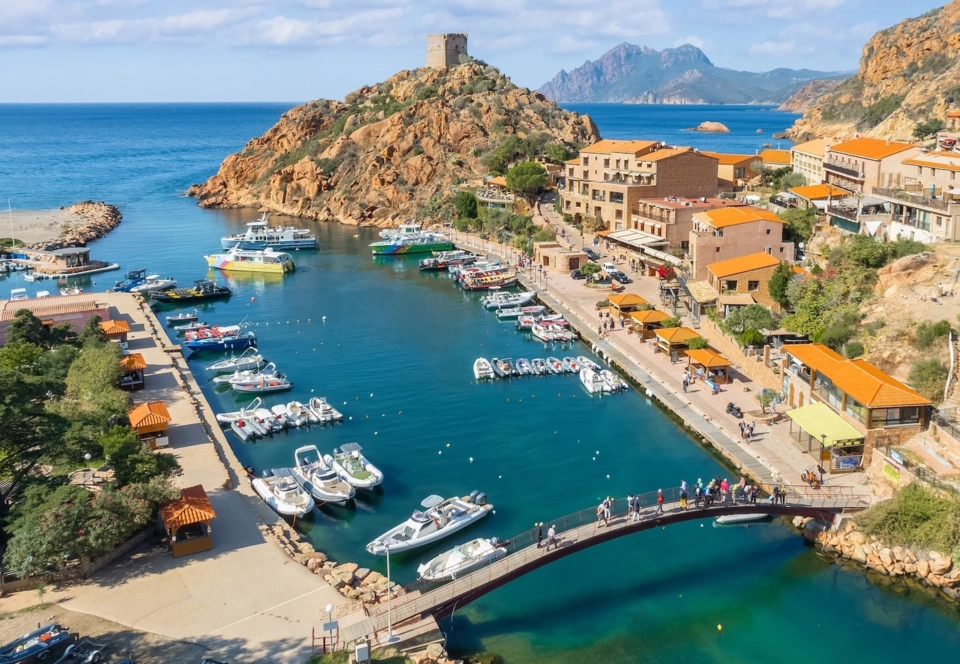

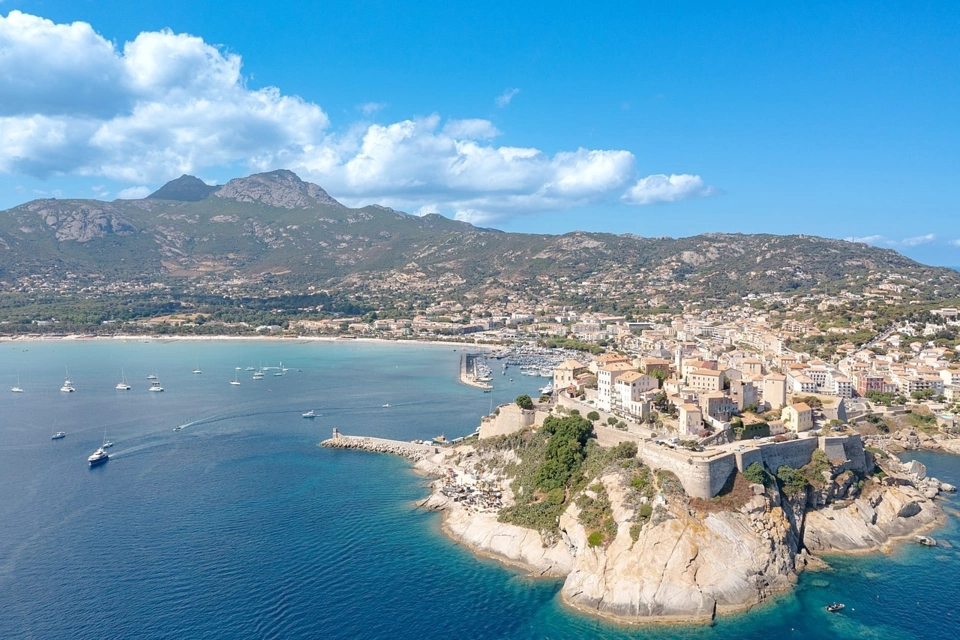
Corsica is the Mediterranean’s great surprise. Sitting roughly 100 nautical miles south of the French Riviera and just 7 nautical miles north of Sardinia across the Strait of Bonifacio, France’s island department offers a cruising experience that is dramatically different from the Côte d’Azur. Where the Riviera delivers polished glamour and superyacht culture, Corsica serves raw, untamed beauty: 300 nautical miles of coastline that encompass two UNESCO World Heritage Sites (the Scandola Nature Reserve and the Gulf of Porto, including the Calanques de Piana), the white limestone fortress of Bonifacio perched on sheer cliffs above a fjord-like harbour, the granite Lavezzi Islands with water clarity that rivals the Caribbean, and a mountainous interior that rises to 2,706 metres at Monte Cinto and is covered in fragrant maquis shrubland. The Corsicans call their island the Île de Beauté – the Island of Beauty – and from the deck of a yacht, it is easy to see why.
For charter guests, Corsica offers something increasingly rare in the western Mediterranean: genuine solitude. The island’s west coast, between Calvi and Bonifacio, is one of the least developed stretches of coastline in the region. The Scandola Reserve is accessible only by sea, and anchoring is strictly prohibited in the integral protection zone – you explore by tender and snorkel while your captain holds position offshore. Girolata, a tiny fishing hamlet with a Genoese watchtower, can only be reached by boat or a long mountain hike. The Calanques de Piana are red granite needles rising from the sea like a natural cathedral, best viewed from the water at sunset. And at the southern tip, Bonifacio’s harbour is one of the most dramatic arrivals in the Mediterranean – navigating the narrow entrance between limestone walls, with the old town hanging impossibly over the cliff edge above.
Corsica’s marinas at Calvi, Ajaccio, Porto Vecchio and Bonifacio welcome superyachts and luxury catamarans alike – and the island has become France’s premier destination for luxury catamaran charters. The shallow, sheltered anchorages, crystal-clear shallows and exposed overnight positions favour the catamaran’s stability and draft, and Boatcrowd’s Corsica fleet features the highest concentration of premium catamarans in the country. The island also has a rich food culture built on wild boar, chestnut flour, brocciu cheese, Corsican charcuterie and fresh seafood. Whether you choose a luxury catamaran for the ultimate Corsican beach-hopping experience or a motor yacht for speed and range, a Corsica charter transforms a Riviera trip into a genuine adventure that few of your friends will have experienced. Enquire with Boatcrowd for availability and pricing on our Corsica fleet.
Why Charter a Yacht in Corsica
Two UNESCO World Heritage Sites from the Water
Corsica’s west coast is home to two sites that can only be properly appreciated from a yacht. The Scandola Nature Reserve, inscribed by UNESCO in 1983, protects a peninsula of volcanic red rock, sea caves, and an exceptionally rich marine ecosystem – ospreys nest on the cliffs (one of the few Mediterranean populations), bottlenose dolphins patrol the offshore waters, and the underwater world supports more than 450 species of algae and a dense concentration of grouper, barracuda and moray eels. Immediately south, the Gulf of Porto and the Calanques de Piana (also UNESCO-listed) present a forest of red granite pillars, arches and spires rising from the sea in formations that shift from gold to crimson as the light changes. Both sites are at their most spectacular viewed from the water, and your captain can time the visit for the late-afternoon light when the colours are most vivid.
Bonifacio: The Mediterranean’s Most Dramatic Harbour
Approaching Bonifacio by yacht is an experience unlike any other. The harbour entrance is a narrow, fjord-like channel cut between walls of white limestone, leading to a sheltered inner harbour below a medieval citadel that appears to hang over the cliff edge 70 metres above. The upper town dates to the 9th century, with Genoese fortifications from the 12th century, a drawbridge from 1598 that still operates on its original system of weights and pulleys, and narrow medieval lanes that open onto sudden views of the sea far below. The Escalier du Roi d’Aragon – 187 steps carved into the cliff face, reputedly in a single night during the 1420 siege (more likely over many years) – is one of Corsica’s most famous landmarks. From the harbour, the Lavezzi Islands are just 7 nautical miles south.
The Lavezzi Islands: Crystal Water and Granite Wonderland
The Lavezzi archipelago sits in the Strait of Bonifacio, halfway between Corsica and Sardinia, within the Bouches de Bonifacio Marine Park. These uninhabited granite islets are a natural wonder: wind-sculpted rock formations in shapes that look almost designed, surrounded by water so clear it barely registers as being there. The snorkelling is outstanding – the marine reserve status means fish are larger and more abundant than elsewhere, and the underwater landscape of granite boulders, Posidonia meadows and sandy channels is genuinely world-class. Your crew anchors in one of the sheltered coves and sets up the snorkelling and paddleboarding gear for a morning that feels more like the Seychelles than the Mediterranean.
Wild West Coast and Untouched Anchorages
Corsica’s western coastline between Calvi and Bonifacio is one of the least developed in the Mediterranean. The road network barely reaches the coast for long stretches, meaning many anchorages are accessible only by sea. Girolata sits in a sheltered bay at the edge of the Scandola Reserve, reachable only by boat or a mountain hike – a tiny hamlet with a Genoese tower, a handful of restaurants and a pace of life that has barely changed in centuries. The gulfs of Porto, Sagone and Valinco offer wide, sheltered bays with sandy beaches and no crowds. For guests who have done the Riviera and want something genuinely different, Corsica’s west coast is a revelation.
France’s Premier Luxury Catamaran Destination
Corsica has quietly become the luxury catamaran capital of France. The island’s cruising ground is almost uniquely suited to catamarans: shallow, sandy anchorages where a catamaran’s 1.2–1.5-metre draft allows you to anchor within wading distance of the beach; granite-fringed bays where the twin-hull stability keeps the vessel rock-steady at anchor even in the open Strait of Bonifacio; and crystal-clear shallows around the Lavezzi Islands where deeper-keeled motor yachts must hold off further from shore. Boatcrowd’s Corsica fleet reflects this: the island has the highest concentration of premium charter catamarans in the country, from Sunreef 60s and 80s to Lagoon Sixty 5s and Fountaine Pajot Power 67s. The generous beam of a modern power catamaran delivers deck space and saloon volume that rival motor yachts 20 feet longer, while the virtually roll-free ride makes overnighting at anchor a pleasure rather than an endurance test. For families, the low freeboard and dual swim platforms make water access effortless for children. For couples and groups, the elevated flybridge offers panoramic views of Corsica’s dramatic coastline. If you’re considering a Corsica charter, a luxury catamaran should be your first conversation with your Boatcrowd specialist.
Corsican Cuisine: Mountain Meets Sea
Corsica’s food is unlike anything else in France. The island’s charcuterie – lonzu (cured pork loin), coppa, prisuttu (air-dried ham) and figatellu (liver sausage smoked over chestnut wood) – comes from free-range black pigs that feed on chestnuts and acorns in the maquis. Brocciu, a fresh ewe’s-milk cheese with AOC status, appears in everything from omelettes to fiadone (a brocciu-and-lemon cheesecake). The chestnut flour from the Castagniccia region makes dense, fragrant polenta and cakes. And the seafood – red mullet, langoustines, sea urchins in season – is superb. Corsican wines from the Patrimonio and Ajaccio appellations (look for the indigenous Nielluccio and Sciacarello grapes) are increasingly respected. Your onboard chef can source all of this from the markets in Ajaccio, Calvi and Bonifacio.
Key Destinations in Corsica
-
Bonifacio – The clifftop citadel at Corsica’s southern tip. A dramatic harbour entrance between white limestone walls, medieval Genoese old town, the Escalier du Roi d’Aragon carved into the cliff face, and the gateway to the Lavezzi Islands (7 NM south) and Sardinia’s La Maddalena (7 NM south-east).
-
Calvi – A 13th-century Genoese citadel overlooking a wide, sandy bay on the north-west coast. Calvi claims to be the birthplace of Christopher Columbus (disputed, but a plaque marks the supposed site). The Balagne region behind the town is known as the Garden of Corsica – olive groves, vineyards and hilltop villages. Calvi’s marina accommodates superyachts and makes an excellent starting point for west-coast exploration.
-
Porto Vecchio – Sometimes called the St Tropez of Corsica, this fashionable port on the south-east coast is surrounded by some of the island’s best beaches: Palombaggia (fine white sand, turquoise water, umbrella pines) and Santa Giulia (a wide, sheltered bay ideal for families). The old town, built by the Genoese in 1539, has attractive restaurants and bars within its fortress walls.
-
Ajaccio – Corsica’s capital and the birthplace of Napoleon Bonaparte (born 1769). The Maison Bonaparte museum, the cathedral where he was baptised, and the Musée Fesch (one of the most important collections of Italian painting in France, assembled by Napoleon’s uncle Cardinal Fesch) are the highlights. Ajaccio’s port accommodates large yachts, and the central market is the best place to provision for Corsican specialities.
-
Scandola Nature Reserve – UNESCO-listed since 1983, accessible only by sea. Red volcanic cliffs, sea caves, ospreys, dolphins and exceptional marine biodiversity. No anchoring in the integral zone – explore by tender from outside the boundary. Best visited in the late afternoon when the light turns the red rock to fire.
-
Calanques de Piana – UNESCO-listed red granite formations on the Gulf of Porto. Pillars, arches and spires rising from the sea, shifting colour throughout the day. Best seen from the water at sunset. Your captain positions the yacht for the optimal view while your crew serves dinner on the aft deck.
-
Girolata – A tiny fishing hamlet on the edge of the Scandola Reserve, accessible only by sea or a mountain hike. A Genoese watchtower, a handful of restaurants, crystal-clear anchorage, and genuine solitude. One of Corsica’s most memorable stops.
-
Lavezzi Islands – Uninhabited granite islets in the Strait of Bonifacio within a marine park. Wind-sculpted rock formations, crystal-clear water, world-class snorkelling, and complete privacy. A 30-minute cruise from Bonifacio.
Best Time to Charter in Corsica
Peak Season: July and August
The warmest months (28–32°C / 82–90°F), with sea temperatures of 23–26°C. The west coast is noticeably less crowded than the Riviera even at peak, though Bonifacio, Porto Vecchio and Calvi attract summer visitors. The Strait of Bonifacio can see strong westerly winds (the Libeccio), so your captain plans passages around the forecast. Charter rates are at their highest. Book early for the best yachts.
Shoulder Season: May–June and September
The ideal months for Corsica. Warm days (22–28°C), calm seas, and far fewer boats at the anchorages. June is particularly fine – the maquis is in bloom (wild rosemary, lavender, cistus), the water is warming to swimmable temperatures (20–23°C), and the days are long. September retains summer warmth in the sea (23–25°C) and on land, with softer rates and empty anchorages. These are the months Corsica insiders choose.
Early and Late Season: April and October
Mild days (16–22°C) and quiet anchorages. The sea is cool for extended swimming but pleasant for on-deck dining and coastal exploring. Corsica’s spring wildflowers are spectacular, and the autumn mushroom and chestnut seasons bring special flavours to the table. Both months suit guests who prioritise landscape, gastronomy and uncrowded harbours.
Signature Experiences
- Entering Bonifacio Harbour – The approach by yacht is unforgettable: navigating a narrow channel between sheer white limestone walls into a sheltered inner harbour, with the medieval citadel hanging over the cliff edge 70 metres above. Few arrivals in the Mediterranean are more dramatic.
- Snorkelling the Lavezzi Islands – Anchor among the wind-sculpted granite islets and slip into water so clear it barely looks real. The marine reserve supports abundant fish life – grouper, sea bream, wrasse – and the underwater landscape of granite boulders and Posidonia meadows is world-class.
- Scandola by Tender – Enter the UNESCO-listed reserve by tender (anchoring is prohibited in the integral zone) and cruise past red volcanic cliffs, sea caves and osprey nests. The marine life visible from the surface – schools of fish, the occasional dolphin – gives a hint of the richness below.
- Sunset at the Calanques de Piana – Position the yacht off the Gulf of Porto as the late-afternoon light transforms the red granite formations from gold to deep crimson. Your crew serves dinner on the aft deck as the rock spires glow against the darkening sky. This is Corsica’s most spectacular sunset.
- Palombaggia Beach Day – Anchor off this postcard-perfect beach near Porto Vecchio: fine white sand, turquoise water, umbrella pines leaning toward the sea. Paddle, swim and snorkel, then lunch on the aft deck or at one of the beachside restaurants.
- Corsican Charcuterie and Wine Tasting – Your chef sources lonzu, coppa, prisuttu and brocciu from the markets in Ajaccio or Bonifacio, paired with Patrimonio or Ajaccio wines from the indigenous Nielluccio and Sciacarello grapes. A Corsican tasting menu on deck is a highlight of any charter.
- Girolata Overnight – Anchor in the bay of this car-free hamlet at the edge of the Scandola Reserve. Dine at one of the handful of waterside restaurants (fresh fish, simply grilled), then return to the yacht for a night of absolute silence under a sky full of stars. No road noise, no light pollution, no other sounds but the water.
Yacht Types Available
-
Luxury Catamarans (55’+) – The Standout Choice for Corsica – Corsica has the highest concentration of luxury charter catamarans in France, and for good reason. The island’s cruising ground – shallow sandy bays, granite-fringed anchorages, and the crystal shallows of the Lavezzi Islands – is tailor-made for the catamaran’s shallow draft. Premium power catamarans from Sunreef, Lagoon and Fountaine Pajot in the 55’–80’ range draw just 1.2–1.5 metres, allowing you to anchor within wading distance of beaches like Palombaggia and Rondinara where deeper-keeled motor yachts must sit further offshore. The twin-hull design virtually eliminates rolling – critical for comfort at anchor in the exposed Strait of Bonifacio – and the generous beam delivers deck space that rivals yachts 20 feet longer. For families, the stability and ease of water access (swim platforms on both transoms) make catamarans the obvious choice. For couples and groups, the elevated flybridge gives panoramic views of Corsica’s dramatic coastline that you simply don’t get from a lower-profile motor yacht. Expect a crew of 3–4, a full complement of water toys (jet ski, seabobs, paddleboards, snorkelling gear), and provisioning from Corsica’s outstanding markets. Weekly rates start from approximately $35,000–$55,000 depending on season and model.
-
Motor Yachts (55’–99’) – The faster option for Corsican circumnavigations and for guests combining Corsica with a Riviera charter. Cruising speeds of 18–28 knots cover the longer west-coast passages comfortably in half a day. Full crew, water toys and flexible routing. Weekly rates from approximately $40,000–$60,000 during shoulder season.
-
Superyachts (100’+) – Corsica’s main marinas (Bonifacio, Calvi, Ajaccio, Porto Vecchio) accommodate superyachts up to 60–70 metres, with larger vessels anchoring in the bays. A superyacht charter in Corsica pairs resort-level luxury with genuinely wild, uncrowded anchorages – a combination that is increasingly rare in the western Mediterranean.
Frequently Asked Questions
How much does a yacht charter in Corsica cost?
Luxury catamarans – the most popular charter choice in Corsica – start from roughly $35,000–$55,000 per week depending on season and model. Crewed motor yachts (55’–99’) start from around $40,000–$60,000 per week. Superyachts (100’+) typically range from $90,000–$250,000+ per week on MYBA terms. Corsica rates are generally comparable to the Riviera, though shoulder-season savings of 15–25% are common. Enquire with Boatcrowd for a personalised quote.
How do I get to Corsica by yacht?
From the French Riviera, the most common crossing is Nice to Calvi (roughly 100 NM, 6–7 hours on a motor yacht at 16–18 knots) or Cannes to Calvi (roughly 120 NM). Some guests prefer an overnight passage, departing in the evening and arriving at dawn. Alternatively, charter directly from Corsica – fly into Ajaccio, Calvi, Bastia or Figari (near Bonifacio) and board your yacht on the island. Your Boatcrowd specialist will recommend the best option based on your itinerary.
Can I combine Corsica with Sardinia?
Absolutely. Bonifacio to La Maddalena in northern Sardinia is just 7 nautical miles – a 20-minute cruise. The La Maddalena archipelago (a national park with granite islands, pink-sand beaches and crystalline water) pairs perfectly with a Corsica charter. A 10-day or two-week itinerary can comfortably cover Corsica’s west coast, Bonifacio, the Lavezzi Islands, La Maddalena, and the Costa Smeralda. Your Boatcrowd specialist designs cross-border routes that maximise variety.
Is Corsica suitable for families?
Very much so. The east coast beaches (Palombaggia, Santa Giulia, Rondinara) offer calm, shallow water ideal for children. The Lavezzi Islands are a natural playground of granite pools and snorkelling spots. The mountain villages, Genoese watchtowers and Bonifacio’s citadel provide engaging excursions for older children. Crews on Corsica charters are experienced with families and tailor activities, menus and pacing accordingly.
What about wind conditions in Corsica?
Corsica’s west coast sees prevailing westerly winds of Force 3–6, which can be stronger in the Strait of Bonifacio due to funnelling between the mountains. Your captain monitors forecasts closely and plans passages to take advantage of morning calms. The east coast is generally more sheltered. Summer conditions (June–September) are typically the calmest, with sea breezes building gently through the morning and easing by late afternoon. A good captain makes all the difference in Corsica, and Boatcrowd ensures your crew knows these waters thoroughly.
Why are luxury catamarans so popular in Corsica?
Corsica’s cruising ground is tailor-made for catamarans. The island’s best anchorages – the Lavezzi Islands, Palombaggia, Rondinara, Santa Giulia – are shallow, sandy and sheltered, and a catamaran’s draft of 1.2–1.5 metres lets you anchor far closer to the beach than a motor yacht. The twin-hull stability is a genuine advantage at anchor in the Strait of Bonifacio, where wind can funnel between Corsica and Sardinia. The generous deck space and roll-free ride also make catamarans exceptionally comfortable for families and for extended anchorage-hopping itineraries. Corsica has the largest luxury catamaran fleet in France – ask your Boatcrowd specialist about our Sunreef, Lagoon and Fountaine Pajot options.
Is there nightlife in Corsica?
Corsica’s evening scene is relaxed rather than raucous. Porto Vecchio has the liveliest nightlife, with bars and clubs in the old town and along the port that attract a fashionable summer crowd. Calvi’s harbour has atmospheric bars and restaurants. Bonifacio’s old town is magical at night, with candlelit restaurant terraces and views from the ramparts. But the real evening experience in Corsica is dinner on the aft deck in a quiet anchorage, under a sky full of stars, with no light pollution and no sound but the water.
Ready to plan your Corsica charter?
Tell us your dates and party size – we'll match you with the right yacht and crew.
25–35 min by road to Port Vauban, Antibes
Every yacht is chartered fully crewed with a professional captain and crew, so no licence or sailing experience is required — you simply step aboard.
Best time to charter France
Local knowledgeMay is the Riviera's marquee month – the Cannes Film Festival and Monaco Grand Prix back to back – while June and September offer the same coastline with quieter anchorages.
