 Skip to content

 EN
EN  Deutsch
  Français
  Español
  Italiano
  日本語
日本語  Português


Cayman Islands · In this guide
Cayman Guide: Luxury Yacht Charter in the Cayman Islands


The Cayman Islands are three low-lying coral islands perched on the edge of the deepest water in the Caribbean. Grand Cayman, the largest at 197 square kilometres, is a prosperous, polished island whose Seven Mile Beach regularly features in the world’s-best-beach lists and whose dining scene has attracted chefs of genuine international calibre. Cayman Brac, 89 miles to the north-east, is a rugged 38-square-kilometre island dominated by a dramatic limestone bluff that rises to 43 metres and is riddled with caves and hiking trails. Little Cayman, just five miles from Cayman Brac and one of the least developed islands in the Caribbean, is home to barely 170 permanent residents, a colony of over 20,000 red-footed boobies, and Bloody Bay Wall – a dive site that Jacques Cousteau declared among the top three in the world.
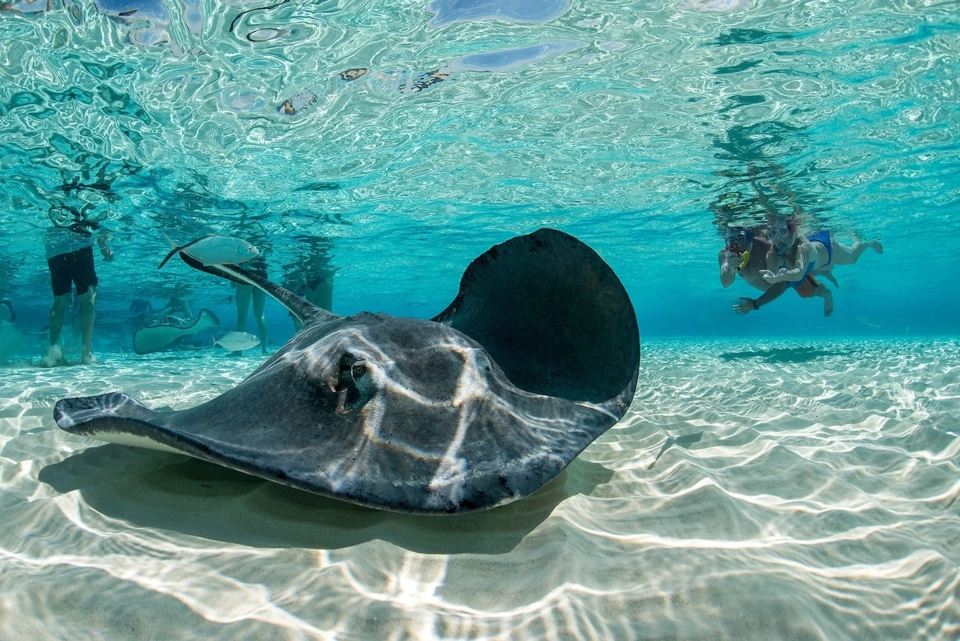
What makes the Cayman Islands extraordinary for yacht charter is the sheer drama beneath the waterline. The three islands sit atop underwater pinnacles rising from depths exceeding 1,600 metres, with the Cayman Trench – the deepest point in the Caribbean at 7,686 metres – lying just to the south. This means world-class wall diving is available within minutes of every anchorage: sheer vertical faces, tunnels, broad sand chutes and amphitheatre-like coves dropping into blue-black abyss. Above the walls, the shallow reef is healthy and teeming with life, and the marquee experience – wading into the calm, chest-deep water of Stingray City to hand-feed roughly 90 wild Southern stingrays – is genuinely unlike anything else in the Caribbean.
Whether you’re planning a long weekend exploring Grand Cayman’s Seven Mile Beach, Stingray City and the Kittiwake wreck, or a week-long voyage that takes in the caves of Cayman Brac and the legendary Bloody Bay Wall on Little Cayman, the Cayman Islands reward the charter guest who wants world-class diving, polished shore-side dining and a marine environment that is among the healthiest in the region. Start planning your Cayman Islands charter with Boatcrowd.
Why Charter a Yacht in the Cayman Islands
Stingray City: A Wildlife Encounter Like No Other
Stingray City sits in the shallow, sandy-bottomed water of Grand Cayman’s North Sound – a 35-square-mile lagoon protected by barrier reef. Roughly 90 wild Southern stingrays have gathered here for decades, drawn by generations of fishermen who cleaned their catch on the sandbar. Today, you can wade into chest-deep, crystal-clear water and hand-feed these graceful creatures as they glide around your legs. The experience is accessible to guests of all ages and swimming abilities, and your captain can have you at the sandbar within 20 minutes of leaving the marina. It is, without exaggeration, one of the most memorable wildlife interactions available anywhere in the world.
Bloody Bay Wall: Among the World’s Greatest Dives
Bloody Bay Marine Park, on Little Cayman’s north coast, contains 24 marked dive sites along a wall that plummets beyond 300 metres from a starting depth of just six metres. Jacques Cousteau himself declared it among the top three dive sites in the world. The wall is covered in tube corals, sea fans and sponges, and the marine life – green turtles, eagle rays, black triggerfish, barracuda – is abundant and largely unafraid of divers. Visibility routinely exceeds 30 metres. The reef shelf above the wall is shallow enough for snorkellers to enjoy the coral gardens, while certified divers can drift along the edge of a vertical abyss that drops into the Caribbean’s deepest water.
Seven Mile Beach and Grand Cayman’s Dining Scene
Seven Mile Beach is Grand Cayman’s showpiece: a gently curving sweep of soft white sand and calm turquoise water on the island’s western shore. The beach is backed by resorts, restaurants and the emerging waterfront district of Camana Bay, but the sand itself is public and never feels overcrowded. The dining scene has reached genuine international quality. Blue by Eric Ripert at the Ritz-Carlton – the island’s only AAA Five Diamond restaurant – serves a tasting-menu format with a 700-label wine list curated to match the seafood. Grand Old House, in a restored 1908 plantation home, offers waterfront fine dining with global recognition. Taikun, also at the Ritz-Carlton, serves real wasabi grated tableside with premium sushi and one of the largest saké selections on the island. For charter guests, this means onshore evenings that rival the best of Miami or the South of France.
Wall Diving from Every Anchorage
The Cayman Islands are widely credited as the birthplace of wall diving. All three islands sit atop underwater pinnacles, and the walls begin in water shallow enough for beginners (six to 15 metres) before plunging into abyssal depths. Grand Cayman’s North and West Walls offer dramatic drop-offs close to Seven Mile Beach. Cayman Brac’s walls are wilder and less visited, with healthy hard-coral formations and passing pelagics. Little Cayman’s Bloody Bay Wall is the crown jewel. With 365 marked mooring sites across the three islands and over 40 dive operators, the infrastructure is world-class.
The Kittiwake Wreck: A Submarine Rescue Ship Beneath Your Keel
The USS Kittiwake, a 77-metre submarine rescue ship launched in 1945 and deliberately sunk off Seven Mile Beach in January 2011, is Grand Cayman’s most accessible wreck dive. She sits upright in 20 metres of water, with the top of the superstructure just five metres below the surface – shallow enough for snorkellers to appreciate the outline. Open Water divers can explore the first two decks; Advanced divers access all five. The wreck has been colonised by schools of tropical fish, eagle rays, sea turtles and resident barracuda. Your captain moors above the site and you’re in the water within minutes.
Top Destinations Near the Cayman Islands
-
Stingray City, North Sound – The marquee experience: roughly 90 wild Southern stingrays in the shallow, sandy-bottomed water of Grand Cayman’s 35-square-mile North Sound lagoon. Wade in chest-deep water and hand-feed these graceful creatures. Accessible to all ages and swimming abilities. A 20-minute cruise from the marina.
-
Seven Mile Beach – Grand Cayman’s western shore: soft white sand, calm turquoise water and a string of restaurants, beach bars and the Camana Bay waterfront district. The natural base for most Grand Cayman charters, with Camana Bay Marina (40 slips, vessels up to 30 metres) and the Cayman Islands Yacht Club nearby.
-
Rum Point – A relaxed, palm-shaded beach on Grand Cayman’s north coast, far from the Seven Mile Beach bustle. Calm water, soft sand and a genuine island atmosphere. A popular departure point for combined Stingray City and Starfish Point tours.
-
Starfish Point – A shallow, sandy spot in North Sound where red cushion sea stars gather in ankle-deep to waist-deep water. A gentle, family-friendly experience best visited in the morning before the crowds arrive.
-
Cayman Brac – The middle island, 89 miles north-east of Grand Cayman. A dramatic limestone bluff rises to 43 metres, riddled with caves and topped with hiking trails offering views across to Little Cayman. The Cayman Brac Museum in Stake Bay preserves local history, and the island’s wilder character appeals to guests who want adventure alongside their diving.
-
Little Cayman – The smallest and least developed of the three, just five miles from Cayman Brac. Home to fewer than 170 permanent residents, a booby-bird colony of over 20,000 nesting pairs, and Bloody Bay Wall. Owen Island, accessible by kayak, offers pristine beach picnic opportunities.
-
USS Kittiwake Wreck – A 77-metre submarine rescue ship sitting upright in 20 metres off Seven Mile Beach. Top of superstructure at five metres – accessible to snorkellers and divers alike. Schools of tropical fish, eagle rays, turtles and resident barracuda.
Best Time to Charter a Yacht in the Cayman Islands
Dry Season: November to April
The prime charter season. Air temperatures of 24–29°C (75–84°F), clear skies, calm seas and minimal rainfall. Water temperatures remain above 26°C (80°F) year-round, ensuring comfortable diving and snorkelling. The north-east trade winds provide a pleasant breeze without generating uncomfortable seas. Charter rates are at their highest during Christmas and New Year, with January through April offering excellent conditions at slightly softer pricing. Early April is often the warmest month of the dry season.
Shoulder Season: May to June
May and June bring warmer air (28–32°C / 82–90°F) and the first occasional rain showers, but conditions remain largely settled and seas are calm. Dive visibility is excellent. Charter rates drop by 15–25% compared to peak season, and the islands are noticeably quieter. An excellent window for guests who want world-class diving without the winter crowds.
Hurricane Season: July to November
The official Atlantic hurricane season runs from June to November, with the highest risk in August, September and October. The Cayman Islands’ westerly position in the Caribbean means they are less frequently struck than eastern Caribbean islands, though the risk is not negligible. July remains warm, swimmable and generally settled. Some charter yachts may reposition during peak hurricane months, reducing fleet availability.
The Cayman Trench and the Underwater World
The Cayman Trench, lying just to the south of the islands, is the deepest point in the Caribbean Sea at 7,686 metres – deep enough to swallow Mount Everest with over a mile of water to spare. This geological feature, a complex transform fault between the North American and Caribbean plates, creates the dramatic underwater topography that makes the Cayman Islands one of the world’s premier diving destinations. In 2010, scientists discovered hydrothermal vents (black smokers) at a depth of five kilometres within the trench, with water temperatures exceeding 450°C – among the hottest undersea vents ever recorded. For charter guests, the trench’s presence means that world-class wall diving begins just metres from the shoreline, with reef shelves giving way to vertical drops into abyssal depths.
Signature Experiences
-
Hand-Feeding Stingrays at Stingray City – Cruise to the shallow sandbar in North Sound and wade into chest-deep, crystal-clear water. Roughly 90 wild Southern stingrays glide around your legs as you feed them by hand – a wildlife encounter so extraordinary it has been called the best 12-foot dive in the world. Your crew has cold drinks and towels waiting on the swim platform.
-
Diving Bloody Bay Wall at Dawn – Have your captain position the yacht off Little Cayman’s north coast before sunrise. Descend from the six-metre reef shelf and drift along a wall that drops beyond 300 metres: tube corals, sea fans, green turtles and eagle rays in visibility exceeding 30 metres. Surface to breakfast on the aft deck, with the quiet island stretching behind you. One of the great diving experiences on earth.
-
Sunset on Seven Mile Beach – Anchor offshore as the sun drops towards the western horizon and the white sand turns amber. Tender ashore for cocktails at a beach bar, or stay aboard and watch the sky change colour from the flybridge with your chef’s canapés and a glass of champagne.
-
Exploring the Kittiwake Wreck – Moor above this 77-metre submarine rescue ship off Seven Mile Beach and descend to explore her five decks in 5–20 metres of water. Schools of tropical fish, eagle rays and a resident barracuda patrol the corridors. The wreck’s upright position and shallow depth make it accessible to snorkellers and divers of all levels.
-
Bioluminescent Bay Kayaking – On a moonless night, paddle into Grand Cayman’s bioluminescent bay – a sheltered body of water where dinoflagellates (Pyrodinium bahamense) glow electric blue when disturbed. Every paddle stroke, every movement of your hand through the water creates trails of cold blue light. Best experienced two to three days after a full moon. An otherworldly evening that guests never forget.
-
Cayman Brac Cave Exploration – Anchor off the Brac and hike the marked trails along the dramatic limestone bluff. Explore the island’s littoral caves – seashore formations with stalactites and geological features shaped by millennia of wave action. Over 200 bird species inhabit the island, including the endangered Cayman Brac parrot, frigate birds and peregrine falcons.
Yacht Types Available
Grand Cayman’s marina infrastructure supports vessels of all sizes, with the Barcadere Marina and the Cayman Islands Yacht Club both accepting yachts up to 150 feet. Camana Bay Marina offers 40 slips for vessels up to 100 feet in the heart of the island’s most stylish waterfront district.
-
Luxury Motor Yachts (78’–99’) – The ideal platform for exploring all three Cayman Islands. A motor yacht covers the 89-mile crossing from Grand Cayman to Cayman Brac in roughly four to five hours at cruising speed, making a multi-island itinerary comfortable and unhurried. Accommodation for 6–8 guests in 3–4 en-suite cabins, with a crew of 3–5 and a full complement of water toys including diving equipment. Weekly rates from around $45,000–$95,000 depending on season and yacht.
-
Superyachts (100’+) – The Barcadere Marina and Cayman Islands Yacht Club accommodate vessels up to 150 feet, with anchorage available in North Sound and off Seven Mile Beach for larger yachts. Several superyachts transit the Cayman Islands each winter season. A superyacht charter pairs world-class wall diving and the Stingray City experience with the space, privacy and service of a floating five-star resort. Weekly rates from roughly $120,000–$250,000+.
-
Luxury Catamarans (55’+) – A popular choice for Grand Cayman-focused charters, offering stability, generous deck space and easy swim-platform access for diving and snorkelling. The shallow draft suits the sandy-bottomed anchorages of North Sound and Rum Point. Fully crewed with captain, chef and steward/ess. Weekly rates from approximately $30,000–$55,000.
Frequently Asked Questions
How much does a yacht charter in the Cayman Islands cost?
Luxury motor yachts (78’–99’) typically start from $45,000–$95,000 per week, fully crewed. Superyachts (100’+) start from roughly $120,000–$250,000+ per week. Luxury catamarans (55’+) start from around $30,000–$55,000 per week. Most charters operate on MYBA terms: base rate plus an Advance Provisioning Allowance (usually 25–35%) covering fuel, food, drinks and dockage. The dry season (November–April) commands the highest rates; shoulder-season rates (May–June) are typically 15–25% softer. Crew gratuity is customarily 10–15%. Enquire with Boatcrowd for a personalised quote.
Are luxury catamarans available for charter in the Cayman Islands?
Yes. Boatcrowd’s fleet includes premium power catamarans ideal for Grand Cayman’s calm anchorages and the shallow-water experiences at Stingray City and Starfish Point. Catamarans offer the widest, most stable platform for groups that spend much of their time in the water, and their generous deck layout suits families and multi-generational groups. The shallow draft allows access to the sandbar at Stingray City without a tender.
Can I charter a yacht in the Cayman Islands for a film or TV production?
Yes. The Cayman Islands Film Commission actively promotes the islands for film, television, music videos and photoshoots. Recent productions include the Hulu/Freeform series Grand Cayman: Secrets in Paradise and the reality series FBoy Island. The islands’ crystal-clear water, dramatic underwater topography, polished shore-side settings and year-round sunshine make them a natural fit for luxury lifestyle, diving and marine-themed content. Boatcrowd can arrange production-friendly charters and coordinate with the Film Commission for permits and logistics.
Is the Cayman Islands a good destination for a proposal, honeymoon or milestone celebration?
The Cayman Islands are outstanding for celebrations. Your crew can arrange a sunset proposal on the white sand of Seven Mile Beach with champagne and a photographer, or a more adventurous option – a proposal at Stingray City with the rays gliding around you. A honeymoon itinerary might include a dawn dive on Bloody Bay Wall, a private picnic on Owen Island off Little Cayman, and a tasting menu at Blue by Eric Ripert. Milestone birthdays are equally memorable – a Stingray City experience for a 40th, a bioluminescent bay kayak for a 50th, or a multi-island dive circuit for a group of friends. Let Boatcrowd know the occasion when you enquire.
Can I bring the whole family, including grandparents and young children?
Absolutely. Stingray City’s shallow, calm water is ideal for children of all ages – the stingrays are gentle and the sandy bottom means little ones can stand comfortably. Starfish Point is ankle-deep and perfect for toddlers. Seven Mile Beach offers gentle swimming, and the North Sound’s sheltered lagoon suits kayaking and paddleboarding. Catamarans provide the widest, most stable platform for multi-generational groups. Crews are experienced with guests of all ages and can organise reef safaris, fish-identification games and kid-friendly menus.
Can I visit all three Cayman Islands on one charter?
Yes, and it is one of the most rewarding itineraries in the western Caribbean. The crossing from Grand Cayman to Cayman Brac is approximately 89 miles (roughly four to five hours at cruising speed), and Cayman Brac to Little Cayman is just five miles (15 minutes). A 5-day charter can cover two islands comfortably, while a 7- or 8-day voyage takes in all three with time to explore each properly. Each island offers a completely different character: Grand Cayman’s polished beach scene and dining, Cayman Brac’s caves and hiking, and Little Cayman’s Bloody Bay Wall and booby-bird colony. Your Boatcrowd charter specialist will design a multi-island route that balances cruising time with time at anchor.
What is Stingray City and is it safe?
Stingray City is a natural gathering point for wild Southern stingrays in the shallow, sandy-bottomed water of Grand Cayman’s North Sound. The stingrays – roughly 90 in number – have been congregating here for decades, attracted by generations of fishermen who cleaned their catch on the sandbar. The rays are wild but habituated to human presence and hand-feeding. They are gentle, graceful creatures with soft, velvety skin. The water is chest-deep, calm and crystal-clear, and the experience is safe and suitable for guests of all ages, including young children and non-swimmers who can stand on the sandy bottom.
Ready to plan your Cayman Islands charter?
Tell us your dates and party size – we'll match you with the right yacht and crew.
15–20 min by road to Cayman Islands Yacht Club
Every yacht is chartered fully crewed with a professional captain and crew, so no licence or sailing experience is required — you simply step aboard.
Best time to charter Cayman Islands
Local knowledgeSeven Mile Beach, Stingray City's sandbar encounters and gin-clear wall diving make the Caymans a polished winter cruising ground.
