 Skip to content

 EN
EN  Deutsch
  Français
  Español
  Italiano
  日本語
日本語  Português


British Virgin Islands · In this guide
BVI Guide: Luxury Yacht Charter in the British Virgin Islands
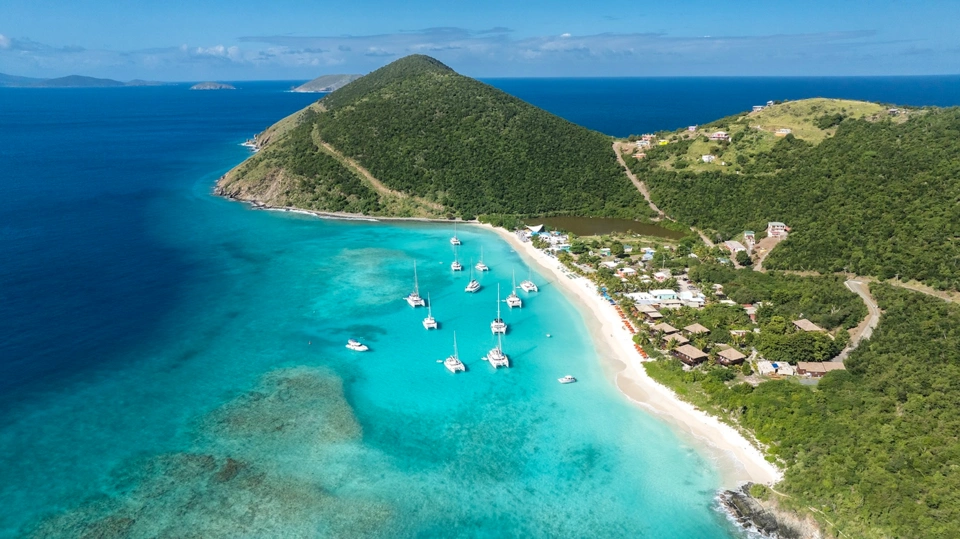
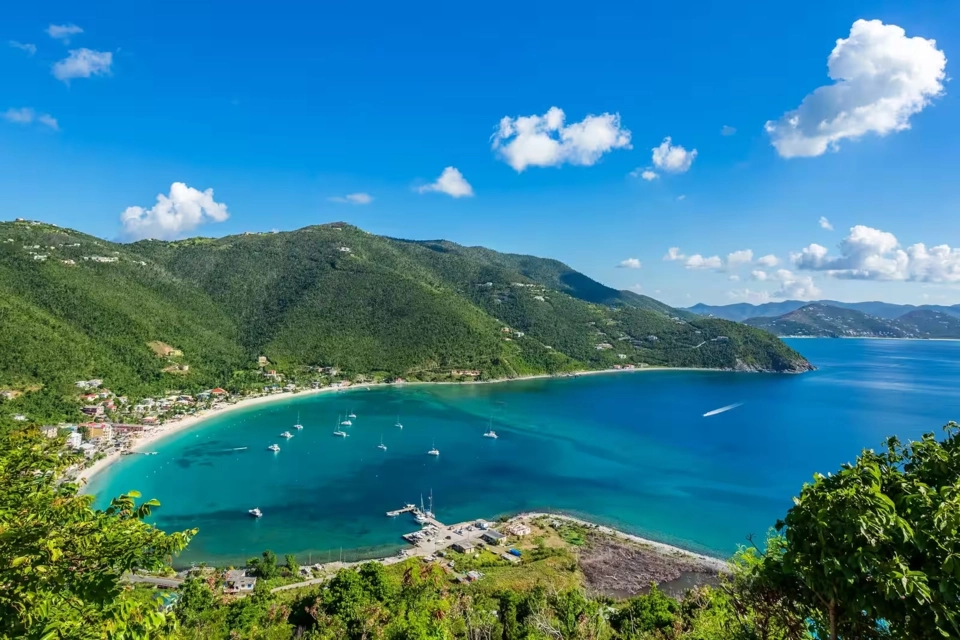
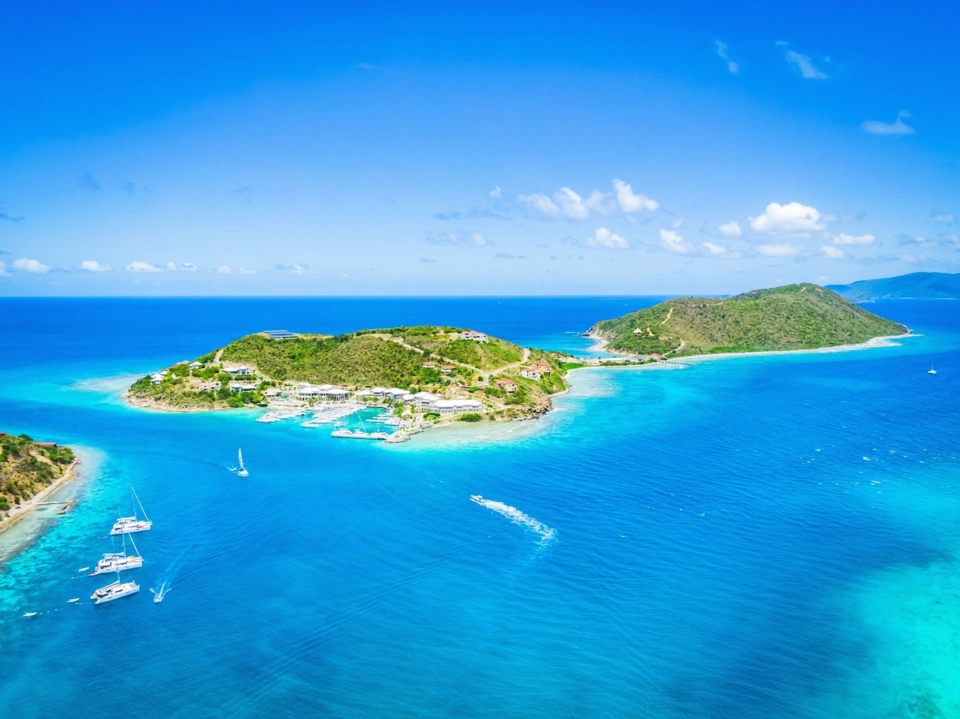
The British Virgin Islands are, by near-universal acclaim, one of the finest yacht charter destinations on earth. Roughly 60 islands, cays and rocks, most uninhabited, all gorgeous, are scattered across a cruising ground so compact that the farthest passages rarely exceed 10 nautical miles. Steady north-east trade winds of 15 to 20 knots, line-of-sight navigation between islands, and sheltered anchorages on virtually every shore make the BVI a playground purpose-built for island-hopping by yacht. From the granite cathedral of The Baths on Virgin Gorda to the legendary beach bars of Jost Van Dyke, from the wreck of the RMS Rhone to the lobster grills of Anegada, the BVI deliver a density of experiences per nautical mile that no other Caribbean destination can match.
The territory sits immediately east of the US Virgin Islands, separated by a channel barely 2 nautical miles wide at its narrowest point. Tortola, the largest island and the charter capital of the Caribbean, is the natural starting point: Road Town’s marinas, Nanny Cay, Village Cay, Soper’s Hole, handle vessels up to 180 feet and offer full-service provisioning, fuel, customs clearance and a warm Caribbean welcome. From Tortola, the Sir Francis Drake Channel runs south-east like a maritime motorway, flanked by islands on both sides and offering some of the most picturesque sailing in the world. Virgin Gorda anchors the eastern end, with the geological wonder of The Baths and the sheltered playground of North Sound. To the north-west, Jost Van Dyke delivers the quintessential barefoot Caribbean beach-bar experience. And low-lying Anegada, 15 miles north, serves the sweetest grilled lobster you will ever taste, straight from the reef to the sand.
For luxury charter guests aboard crewed motor yachts, superyachts and premium catamarans, the BVI offer something rare: a destination where the infrastructure is first-class, the distances are short, the water is turquoise and 25 metres deep, and every anchorage tells a different story. Whether you’re planning a long weekend from Tortola, a week-long grand tour of the archipelago, or a combined USVI-BVI itinerary that stitches together two territories in a single voyage, this guide covers every destination in detail. Start planning your BVI charter with Boatcrowd and let our team match you to the perfect yacht and route.
Ready to plan your British Virgin Islands charter?
Tell us your dates and party size, we'll match you with the right yacht and crew.
Why Charter a Yacht in the BVI
The World’s Premier Island-Hopping Cruising Ground
No other yacht charter destination offers so many islands in such close proximity with such consistently excellent conditions. Over 60 islands and cays are packed into a cruising area roughly 30 nautical miles long and 15 miles wide. Passages between anchorages are typically 3 to 10 nautical miles, 20 minutes to an hour on a motor yacht, and the line-of-sight navigation means your next island is always visible on the horizon. The Sir Francis Drake Channel, the main east-west waterway, is sheltered by islands on both sides and delivers flat-water cruising even when the trade winds are blowing 20 knots. Your captain can show you a different island, a different beach and a different character every single day of a week-long charter.
Steady Trade Winds and Year-Round Warmth
The BVI enjoy one of the most reliable climates in the Caribbean. Air temperatures hold steady at 26 to 31°C (79 to 88°F) year-round, with sea temperatures between 26°C and 29°C (79 to 84°F). The prevailing north-east trade winds blow at 15 to 20 knots through the dry season (December to April), keeping the air fresh and the seas manageable. The islands create natural wind shadows that your captain uses to find calm anchorages on any given day. Rain showers in the dry season are brief, infrequent and almost always followed by sunshine. Conditions are ideal for snorkelling, diving, paddleboarding and every other watersport from December through July.
World-Class Snorkelling, Diving and Marine Life
The BVI sit within a rich marine ecosystem. The wreck of the RMS Rhone, a Royal Mail steamer sunk by a hurricane in 1867 off Salt Island, is one of the Caribbean’s top wreck dives, now encrusted with coral and patrolled by barracuda, sea turtles and eagle rays in 10 to 25 metres of water. The Indians, a cluster of rocky pinnacles south of Tortola, offer a vibrant wall dive and snorkel with schooling fish and colourful sponges. The reef systems around Anegada harbour nurse sharks, spotted eagle rays and the BVI’s most extensive coral gardens. And the sheltered bays throughout the archipelago, from The Baths’ granite pools to the mangrove-fringed inlets of North Sound, teem with juvenile fish, rays and turtles in water so clear that you can read the anchor from the flybridge.
Legendary Beach Bars and Caribbean Character
The BVI have elevated the beach bar to an art form. The Soggy Dollar Bar on Jost Van Dyke, birthplace of the Painkiller cocktail (dark rum, pineapple juice, orange juice, cream of coconut, fresh-grated nutmeg), is reached by swimming ashore, hence the name. Foxy’s Tamarind Bar, also on Jost Van Dyke, has been a yachtsman’s landmark since 1968. Willy T’s, a floating bar and restaurant moored in The Bight at Norman Island, is the most famous party boat in the Caribbean. Saba Rock in North Sound is a tiny island hotel-bar perched between Virgin Gorda and the reef. And the beachfront lobster grills on Anegada serve some of the sweetest Caribbean lobster you will ever taste, cooked over open coals and served with your feet in the sand. These places are not tourist traps, they are genuine Caribbean institutions, woven into the fabric of BVI charter culture.
Easy Access from the USVI
The BVI are just 10 to 12 nautical miles from St Thomas and 2 nautical miles from St John’s eastern tip. Tortola’s Terrance B. Lettsome International Airport receives direct flights from San Juan, Antigua, St Maarten and other Caribbean hubs, and inter-island ferries connect Tortola to St Thomas, St John and Virgin Gorda. For charter guests, the most popular route is to fly into St Thomas (direct flights from a dozen US cities), board the yacht at Yacht Haven Grande, and cruise across to the BVI on the first morning, a passage of roughly one hour. Your captain handles the customs clearance at both ends. A combined USVI-BVI charter is arguably the finest week of island-hopping in the Caribbean.
Top Destinations in the BVI
- Tortola, The largest and most populated island, home to Road Town (the capital), three full-service marinas (Nanny Cay, Village Cay, Soper’s Hole) and the charter capital of the Caribbean. Cane Garden Bay’s crescent beach, Sage Mountain National Park (the highest point in both the USVI and BVI at 1,710 feet), and easy access to every corner of the archipelago make Tortola the natural starting point for any BVI charter.
- Virgin Gorda, The eastern anchor of the BVI, famous for The Baths, a geological wonderland of house-sized granite boulders forming natural pools, grottos and secret passages at the island’s southern tip. North Sound, a large protected bay on the island’s north-east shore, is home to Leverick Bay, the Bitter End Yacht Club, Saba Rock and some of the finest watersports in the Caribbean. Spanish Town provides provisioning and customs clearance.
- Jost Van Dyke, A tiny island north-west of Tortola with an outsized reputation. White Bay is home to the Soggy Dollar Bar and the Painkiller cocktail. Great Harbour hosts Foxy’s Tamarind Bar, a Caribbean legend since 1968. The island’s population is under 300, the beaches are pristine, and the vibe is pure barefoot Caribbean.
- Norman Island, The uninhabited island said to have inspired Robert Louis Stevenson’s Treasure Island. The Bight offers sheltered anchorage and the floating bar Willy T’s. The sea caves at Treasure Point are a spectacular snorkel, swim into the caverns through water lit by shafts of sunlight and schools of glassy sweepers.
- Anegada, The only coral island in the BVI chain, lying flat and low (just 28 feet at its highest) roughly 15 nautical miles north of Virgin Gorda. Famous for its lobster grills (Cow Wreck Beach, Loblolly Bay), its extensive barrier reef (Horseshoe Reef), and its population of wild flamingos. The approach requires careful navigation over the reef, your captain knows the channels.
- Salt Island, A tiny, sparsely inhabited island south of Tortola, best known as the resting place of the RMS Rhone, a Royal Mail steamer sunk by a hurricane in October 1867. The wreck, in 10 to 25 metres of water, is the BVI’s most famous dive site and the territory’s first national marine park.
- Cooper Island, A small island on the south side of the Sir Francis Drake Channel with a single eco-resort, the Cooper Island Beach Club. Excellent snorkelling at Cistern Point and Manchioneel Bay, and a craft-cocktail bar that feels a world away from everything.
Best Time to Charter a Yacht in the BVI
Peak Season: December to April
The dry season delivers the BVI’s best and most consistent conditions: daytime temperatures of 26 to 29°C (79 to 84°F), low humidity, trade winds of 15 to 20 knots, minimal rainfall and excellent visibility. This is high season, the anchorages are busier, the beach bars are livelier, and charter rates are at their highest. The BVI Spring Regatta (late March) draws an international fleet. Christmas, New Year and school-holiday weeks command premium pricing. Book 6 to 12 months in advance through your Boatcrowd specialist to secure the best yachts and itinerary timing.
Shoulder Season: May to June and November
The real sweet spot for many repeat charter guests. Trade winds ease to 10 to 15 knots, the seas are calmer, and the anchorages are quieter. Water temperatures rise to 28 to 29°C (82 to 84°F), visibility is superb, and brief afternoon rain showers are the only interruption to otherwise perfect days. The Soggy Dollar Bar is less crowded, the moorings at The Baths are easier to secure, and the overall pace is more relaxed. November, after the peak of hurricane season has passed, offers similar conditions with even fewer boats.
Summer and Hurricane Season: July to October
The official Atlantic hurricane season runs June through November, with September and October carrying the highest statistical risk. Many charter yachts reposition out of the BVI during these months. However, the majority of summer days are sunny, warm (28 to 32°C / 82 to 90°F) and perfectly pleasant. Your Boatcrowd specialist will advise on weather windows, cancellation flexibility and which yachts remain in the territory through summer.
Signature Experiences
- The Baths, Virgin Gorda, Scramble through house-sized granite boulders, wade through natural pools, and emerge onto the pristine sand of Devil’s Bay. A geological formation found nowhere else in the Caribbean, created by slow-cooling magma millions of years ago. Best visited early morning before the day-trip boats arrive.
- Soggy Dollar Bar, Jost Van Dyke, Swim ashore to White Bay’s powdery sand and order the original Painkiller cocktail at the bar that invented it. Your dollars arrive soggy because there’s no dock, just turquoise water and a beach. It is the most Caribbean experience in the Caribbean.
- RMS Rhone Wreck Dive, Dive the remains of a Royal Mail steamer sunk by a hurricane in 1867, now the BVI’s first national marine park. The bow section sits in 22 metres of water, encrusted with coral and patrolled by barracuda, turtles and eagle rays. The stern section, in 10 metres, is accessible even to snorkellers on calm days. Featured in the 1977 film The Deep.
- Anegada Lobster Dinner, Cruise to the BVI’s only coral island and feast on freshly caught Caribbean lobster grilled over open coals at Cow Wreck Beach or Loblolly Bay. Tables are set in the sand, the sun drops into the sea, and the lobster, sweet, tender, impossibly fresh, is the best you will taste in the Caribbean.
- Norman Island Sea Caves, Snorkel into the sea caves at Treasure Point on the island said to have inspired Treasure Island. Shafts of sunlight pierce the cavern entrances, illuminating glassy sweepers, copper sweepers and silversides in swirling schools. Your crew provides torches for deeper exploration.
- Willy T’s Floating Bar, Pull up alongside the most famous party boat in the Caribbean, moored in The Bight at Norman Island. Cold beer, rum cocktails, a menu of burgers and Caribbean plates, and a jump-off platform that has launched a thousand holiday memories.
- North Sound Watersports, Virgin Gorda, Spend a day in the sheltered waters of North Sound. Kite-surf off Leverick Bay, kayak to Saba Rock for a rum punch, windsurf to the Bitter End and paddleboard back as the light turns golden. The sound’s calm, reef-protected waters are a natural watersports arena.
- Foxy’s Tamarind Bar, Jost Van Dyke, Visit the legendary bar that Foxy Callwood has run in Great Harbour since 1968. Live music, cold Carib beer, and the kind of effortless Caribbean hospitality that no resort can replicate. Foxy himself still performs on most evenings.
Yacht Types Available
Motor Yachts (55’-99’)
Median weekly rate $165,000. Base rate, before APA and tax.
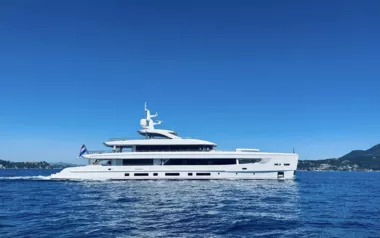
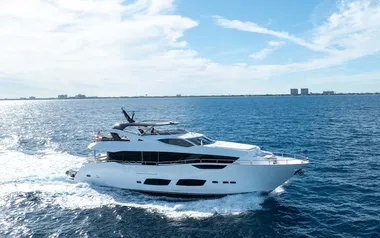
The most popular choice for BVI charters. These crewed vessels typically accommodate 6 to 10 guests in 3 to 4 en-suite cabins, with a crew of 3 to 5 (captain, chef, steward/ess and deckhand). Cruising speeds of 18 to 28 knots make island-hopping swift, Tortola to Virgin Gorda in 30 minutes, Tortola to Jost Van Dyke in 20 minutes. Modern flybridge motor yachts carry water toys (jet ski, seabobs, paddleboards, snorkelling gear, kayaks) and offer the flexibility to cover the entire archipelago in a single week.
Superyachts (100’+)
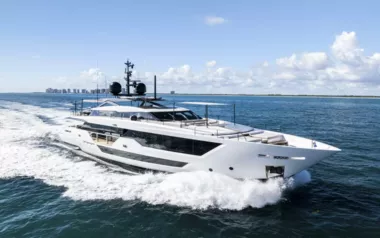
For larger groups or those seeking the ultimate in space, privacy and spectacle. Accommodation for 8 to 12 guests in lavish staterooms, crews of 6 to 9+, expansive deck areas (often with jacuzzis, outdoor cinemas and sun lounges), and a full arsenal of water toys. Nanny Cay and Village Cay accommodate vessels to 140 to 180 feet; larger superyachts anchor in the Sir Francis Drake Channel and use tenders. Crew gratuity is customarily 15 to 20% in the Caribbean.
Luxury Catamarans (55’+)
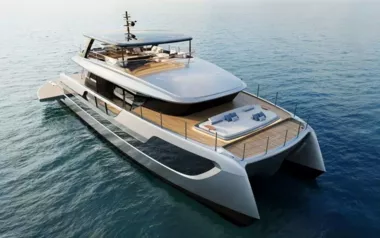
Premium power catamarans from builders like Sunreef, Lagoon and Fountaine Pajot (55’-80’) are exceptionally popular in the BVI. Their shallow draft is ideal for nosing into tight coves and anchoring close to shore over sandy shallows. The twin-hull design virtually eliminates rolling, important in the trade-wind swell that can rock monohull vessels at anchor. Catamarans typically sleep 6 to 10 guests and carry a crew of 3 to 4. The BVI’s short passages and sheltered anchorages make catamarans an ideal platform for this cruising ground.
Frequently Asked Questions
How much does a yacht charter in the BVI cost?
Pricing depends on yacht size, type, season and inclusions. Most BVI charters operate on an all-inclusive or plus-expenses basis. Crew gratuity is customarily 15 to 20%. Enquire with Boatcrowd for a personalised quote.
Do I need a passport and cruising permit for the BVI?
Yes. All visitors to the BVI require a valid passport. An online embarkation card must be completed up to 72 hours before arrival. Yachts arriving from outside BVI waters must clear customs and immigration at an official port of entry (Road Town, Soper’s Hole, Spanish Town or Great Harbour on Jost Van Dyke). A cruising tax of approximately $50 applies, plus a national park fee of $16 per person per day and a search-and-rescue contribution of $2 per person. Your captain handles all clearance formalities.
Can I combine the BVI with the US Virgin Islands on one charter?
Absolutely, and it’s one of the great advantages of chartering in this region. St John’s eastern tip is just 2 nautical miles from the BVI’s western islands. A typical combined itinerary spends 3 to 4 days in the USVI (St Thomas, St John) before crossing into the BVI for 3 to 4 days of island-hopping, or vice versa. The crossing is short, sheltered and comfortable. Your captain handles customs clearance at both ends. A combined USVI-BVI charter covers two territories, two cultures, and some of the finest cruising water on earth.
What is the BVI Spring Regatta?
The BVI Spring Regatta and Sailing Festival is one of the Caribbean’s premier sailing events, held annually in late March. The week-long programme includes coastal racing around Tortola, one-design and performance-cruising classes, and nightly parties at Nanny Cay Resort & Marina. The event draws an international fleet of racing and cruising yachts and transforms Road Town into a celebration of Caribbean sailing culture. If your charter dates coincide, it’s a spectacular event to watch from your yacht, or even enter if your vessel qualifies.
Is the BVI suitable for families with children?
Very much so. The BVI’s calm, sheltered waters, short passages and sandy-bottomed anchorages are ideal for families. Children love the scramble through The Baths’ boulders, the turtle-spotting at various bays, the swimming ashore to beach bars, and the treasure-hunt atmosphere of the Norman Island sea caves. Catamarans are particularly popular with families for their stability, wide beam and easy swim-platform access. Your crew tailors menus, watersports and pacing to suit all ages.
What is Anegada famous for?
Anegada is the BVI’s only coral island, flat, low-lying (just 28 feet at its highest point), and utterly different from the volcanic peaks of the rest of the archipelago. It is famous for three things: its spectacular lobster dinners (grilled over open coals at beachfront restaurants like Cow Wreck Beach and Loblolly Bay), its extensive barrier reef (Horseshoe Reef, which has claimed hundreds of shipwrecks over the centuries), and its population of wild flamingos that wade through the island’s salt ponds. The passage to Anegada (roughly 15 nautical miles from Virgin Gorda) requires careful navigation over the reef, but your captain knows the channels well.
How do the BVI compare to the USVI for a charter?
The two territories complement each other beautifully. The USVI offer superyacht-grade marinas (Yacht Haven Grande), direct US flights, US convenience (no passport for US citizens, US dollar), deeper cultural and historical attractions (Danish colonial architecture, Cruzan Rum, bioluminescent bays) and larger islands. The BVI offer the world’s finest island-hopping (60+ islands in a compact area), legendary beach bars (Soggy Dollar, Foxy’s, Willy T’s), The Baths, the RMS Rhone wreck, and a density of pristine anchorages that the USVI cannot match. The ideal charter combines both, fly into St Thomas, spend 3 to 4 days in the USVI, cross into the BVI for 3 to 4 days, and return. Your Boatcrowd specialist will design a route that maximises variety.
Ready to plan your British Virgin Islands charter?
Tell us your dates and party size, we'll match you with the right yacht and crew.
35 to 45 min by road to Nanny Cay Marina
Every yacht is chartered fully crewed with a professional captain and crew, so no licence or sailing experience is required, you simply step aboard.
What a Charter in the British Virgin Islands Costs Today
The Monthly Price Index · October 2026, low season
Best time to charter British Virgin Islands
Local knowledgeSteady 15 to 20 knot trade winds and line-of-sight island hops make the BVI the world's most forgiving blue-water playground.
