 Skip to content

 EN
EN  Deutsch
  Français
  Español
  Italiano
  日本語
日本語  Português


Bora Bora · In this guide
Bora Bora Guide: Luxury Yacht Charter in Bora Bora


Bora Bora needs no introduction, yet it still manages to exceed every expectation. The island sits roughly 260 kilometres north-west of Tahiti in the Leeward group of the Society Islands, a single volcanic remnant encircled by a barrier reef and a lagoon of such luminous, colour-shifting beauty that early visitors called it the Pearl of the Pacific. Mount Otemanu, a basaltic spire rising 727 metres from the centre of the island, dominates the skyline and serves as a compass point visible from every motu and anchorage in the lagoon. The lagoon itself covers roughly 30 square kilometres of water that shifts from pale jade over white sand to deep sapphire over coral bommies, and the motus (low-lying coral islets) that ring the barrier reef offer white sand, coconut palms and seclusion that feels almost theatrical in its perfection.
For yacht charter guests, Bora Bora delivers an experience that no resort, however luxurious, can replicate. Your crew anchors in a different spot each night, off Matira Point at sunset, near the manta ray cleaning station at dawn, beside a private motu for lunch. The lagoon’s single navigable pass (Teavanui Pass) keeps the interior water calm and protected, while the outer reef delivers world-class diving and snorkelling. Giant manta rays with wingspans exceeding 4 metres glide through the passes on cleaning runs. Blacktip reef sharks and lemon sharks patrol the shallows. Napoleon wrasse, eagle rays, parrotfish and dense schools of surgeonfish populate the coral gardens between the motus. Above the waterline, the sight of Otemanu’s dark rock against the turquoise lagoon and the white sand of the motus is the defining image of the South Pacific.
Whether you’re spending a few days exploring the lagoon, combining Bora Bora with the quieter gems of Taha’a and Raiatea, or using the island as the culmination of a broader Society Islands voyage, this guide covers everything you need. Enquire with Boatcrowd for yacht availability and pricing on our Bora Bora fleet.
Ready to plan your Bora Bora charter?
Tell us your dates and party size, we'll match you with the right yacht and crew.
Why Charter a Yacht in Bora Bora
The World’s Most Beautiful Lagoon
Bora Bora’s lagoon is the standard against which all other tropical lagoons are measured. The barrier reef creates a protected body of water roughly 10 kilometres long and 4 kilometres wide, with depths ranging from knee-deep shallows over white sand to 30-metre channels between the coral heads. The water clarity regularly exceeds 40 metres on calm mornings. The colour palette, from the palest aquamarine to deep cobalt, shifting with every change in cloud cover and sun angle, is extraordinary and impossible to photograph accurately. Anchoring a yacht in this lagoon with Mount Otemanu rising above is one of yachting’s greatest pleasures.
Manta Rays and Exceptional Marine Life
Bora Bora’s lagoon is home to a resident population of manta rays that congregate at cleaning stations near the Teavanui Pass and the Anau coral gardens. These gentle creatures, with wingspans of 3 to 4 metres, glide in from the open ocean to have parasites removed by small cleaner wrasse, often circling within arm’s reach of snorkellers. The lagoon also supports populations of blacktip reef sharks, lemon sharks, eagle rays, sea turtles, moray eels, Napoleon wrasse and over 500 species of reef fish. Snorkelling and diving are extraordinary year-round, and your crew can arrange private dive excursions with local operators.
Privacy and Seclusion
While Bora Bora’s luxury resorts (the St. Regis, the Four Seasons, the Conrad and the InterContinental Thalasso) cluster along the eastern motus, the rest of the lagoon is remarkably quiet. A yacht gives you access to the entire circumference, tucking behind motus on the western reef where no other vessels anchor, finding your own stretch of white sand with nothing but coconut palms and the sound of small waves on the reef, and moving at your own pace without resort schedules or check-out times. The lagoon’s calm, shallow water is your private playground.
Iconic Scenery at Every Angle
Mount Otemanu’s basaltic spire is visible from every point in the lagoon, and it looks different from every angle: a dark, dramatic tower from the east, a softer silhouette against the sunset from the west, a sharp fin from the south. The motus provide the foreground, white sand, turquoise shallows, leaning coconut palms, while the main island’s lush green slopes fill the middle distance. Every movement of the yacht reveals a new composition. It is, quite simply, the most photogenic island on earth.
Key Destinations Near Bora Bora
-
Matira Point, The southern tip of Bora Bora’s main island. A narrow spit of white sand that extends into the lagoon, creating a shallow, luminous pool that barely reaches your knees at low tide. The snorkelling along the coral shelf is excellent, parrotfish, surgeonfish, small reef sharks, and the beach itself is widely considered one of the most beautiful in the world. Public access; uncrowded outside of midday.
-
Coral Gardens, On the eastern side of the lagoon, near Motu Piti Uu Uta. A shallow reef (2 to 4 metres) alive with parrotfish, Napoleon wrasse, triggerfish, giant clams, moray eels and schools of Moorish idols. Calm, warm water and excellent visibility make this the lagoon’s premier snorkelling site. Your crew anchors the tender nearby.
-
Manta Ray Cleaning Station, Near the Teavanui Pass and the Anau area on the lagoon’s east side. Manta rays with wingspans of up to 4 metres glide in from the open ocean to be cleaned by small wrasse, often circling within metres of snorkellers. Visibility is usually excellent and the experience is genuinely awe-inspiring.
-
Motu Tapu, A small, picture-perfect islet on the south-western side of the lagoon, with stunning views across to the main island and Mount Otemanu. Made famous by a 1930s photograph of a nude woman on the beach, Motu Tapu is a favourite anchoring spot for sunset views and private motu picnics.
-
Tupai (Heart Island), A small, uninhabited heart-shaped atoll roughly 16 nautical miles north of Bora Bora. Best admired from a scenic flight (your crew can arrange a helicopter), but the surrounding waters offer excellent snorkelling with fewer visitors than the main lagoon. A romantic detour for proposals and honeymoons.
-
Teavanui Pass, The only navigable pass through Bora Bora’s barrier reef, on the western side. The pass is well-marked and wide enough for superyachts. The current flowing through the pass attracts large pelagic fish, manta rays and the occasional hammerhead shark, an excellent dive site for experienced divers.
Best Time to Charter in Bora Bora
Dry Season: May to October
The prime yacht charter window. Daytime temperatures of 24 to 28°C (75 to 82°F), low humidity, minimal rainfall and gentle trade winds. The lagoon is at its calmest, visibility is superb and the light for photography is at its best, the low-angle sun of the austral winter makes the lagoon glow. Peak season runs June to August; the best yachts book well in advance. Humpback whales pass through from July to November.
Shoulder Season: April, May and November
Warmer air temperatures (26 to 30°C), occasional afternoon showers and slightly higher humidity. The lagoon remains calm and the snorkelling is excellent. The anchorages are quieter. November offers the added possibility of late-season whale sightings.
Wet Season: November to April
The warmest months (28 to 32°C) with higher humidity and more frequent rain, usually as short tropical showers in the afternoon. The lagoon temperature peaks at 28 to 29°C. Cyclone risk is low in the Leeward Islands. The lush green of the island is at its most vivid, and the manta rays are present year-round.
Signature Experiences
- Swim with Manta Rays, Slip into the warm water near the Anau cleaning station as manta rays with 4-metre wingspans glide beneath you. Your crew provides snorkelling kit and a guide who knows the best time and tidal conditions for encounters.
- Private Motu Picnic Beneath Otemanu, Your chef sets up a table on an uninhabited motu on the western barrier reef. Grilled lobster, poisson cru, chilled champagne and the sight of Otemanu’s silhouette rising from the turquoise lagoon. No other guests, no other boats.
- Sunset Cruise on the Lagoon, Your captain positions the yacht in the western lagoon as the sun drops behind the motus. The reflection of the fiery sky in the still water, with Otemanu darkening to a silhouette, is one of the most beautiful sights in the world. Champagne on the flybridge.
- Coral Gardens Snorkel Safari, A morning spent drifting over the shallow coral gardens near Motu Piti Uu Uta, spotting Napoleon wrasse, parrotfish, giant clams and the occasional lemon shark. Warm, calm and crystal clear.
- Helicopter Flight Over Tupai, See the heart-shaped atoll of Tupai from the air, then fly over Bora Bora’s lagoon for an aerial perspective that reveals the full spectrum of colours and the dramatic contrast between the reef, the lagoon and Mount Otemanu.
Yacht Types Available
-
Motor Yachts (55’-99’), Ideal for exploring every corner of the lagoon and making the crossing to Taha’a or Raiatea. Full crew, water toys and all-inclusive service.
-
Superyachts (100’+), The Teavanui Pass accommodates superyachts of all sizes, and the deep lagoon provides sheltered anchorages. A superyacht in Bora Bora’s lagoon is one of yachting’s ultimate experiences.
-
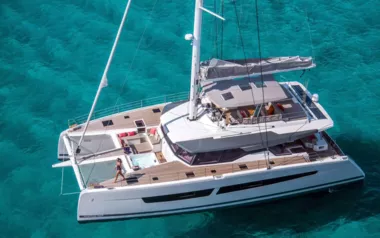
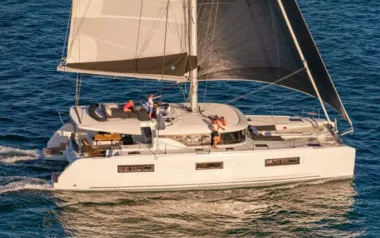
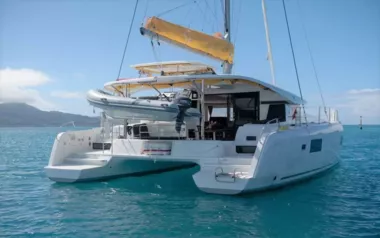
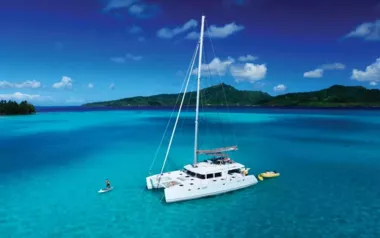
Luxury Catamarans (55’+), The shallow draft of a luxury catamaran is a genuine advantage in Bora Bora, it allows you to anchor in the shallowest turquoise water right off the motus, metres from the sand. Stable, spacious and family-friendly.
Median weekly rate $124,500. Base rate, before APA and tax.
Frequently Asked Questions
How do I get to Bora Bora for a yacht charter?
Bora Bora’s airport is located on Motu Mute, a flat coral islet on the northern barrier reef. Air Tahiti operates multiple daily flights from Papeete (roughly 50 minutes) and connections from Raiatea and Huahine. From the airport, a launch transfers you across the lagoon to your yacht (roughly 15 minutes). International guests fly into Fa’a’ā International Airport in Tahiti and connect on domestic flights. Your Boatcrowd team arranges all transfers.
Is Bora Bora’s lagoon suitable for families with young children?
Bora Bora’s lagoon is one of the safest and most family-friendly bodies of water in the Pacific. The barrier reef keeps the interior water calm and wave-free, and the shallows over white sand at Matira Point and around the motus are warm, gentle and barely knee-deep in places. The marine life is abundant but non-threatening, the blacktip reef sharks are timid and harmless, and the stingrays are habituated to human contact. Catamarans are particularly popular with families for their stability and easy swim-platform access.
Can I combine Bora Bora with other islands on one yacht charter?
Absolutely. Taha’a is roughly 30 nautical miles south-east of Bora Bora (under two hours at cruising speed), and Raiatea lies just beyond. A 5 to 7 day charter can easily cover Bora Bora, Taha’a and Raiatea, delivering a wonderful mix of world-class lagoon scenery, cultural sites, vanilla plantations and pearl farms. For longer itineraries, Huahine (50 nautical miles from Raiatea) and even Moorea and Tahiti can be incorporated. Your Boatcrowd specialist will design the perfect multi-island route.
What are the best snorkelling and diving sites in Bora Bora?
The Coral Gardens (eastern lagoon, near Motu Piti Uu Uta) are the premier snorkelling site: shallow, calm, crystal clear and teeming with parrotfish, wrasse, clams and moray eels. The manta ray cleaning station near Anau offers encounters with giant manta rays. Teavanui Pass delivers drift dives with grey reef sharks, barracuda and pelagic fish. The outer reef drops steeply and attracts larger species including eagle rays and the occasional hammerhead. Yacht crew can arrange private dive excursions with local PADI operators.
When can I see humpback whales near Bora Bora?
Humpback whales migrate to the warm waters around the Society Islands from July to November to calve and nurse. The deep water just outside Bora Bora’s barrier reef is a favoured nursing ground, and sightings from the yacht are common during these months. Licensed whale-watching and in-water encounters can be arranged through local operators, swimming alongside a mother and calf in the clear, deep water outside the pass is one of the most extraordinary wildlife experiences on earth.
Ready to plan your Bora Bora charter?
Tell us your dates and party size, we'll match you with the right yacht and crew.
15 to 20 min by road to Marina Taina, Papeete
Every yacht is chartered fully crewed with a professional captain and crew, so no licence or sailing experience is required, you simply step aboard.
What a Charter in French Polynesia Costs Today
The Monthly Price Index · October 2026, low season
Best time to charter French Polynesia
Local knowledgeBora Bora's lagoon and the Tuamotus' pristine atolls sail year-round, at their finest in the dry austral winter.
