 Skip to content

 EN
EN  Deutsch
  Français
  Español
  Italiano
  日本語
日本語  Português


Bonaire · In this guide
Bonaire Guide: Luxury Yacht Charter in Bonaire
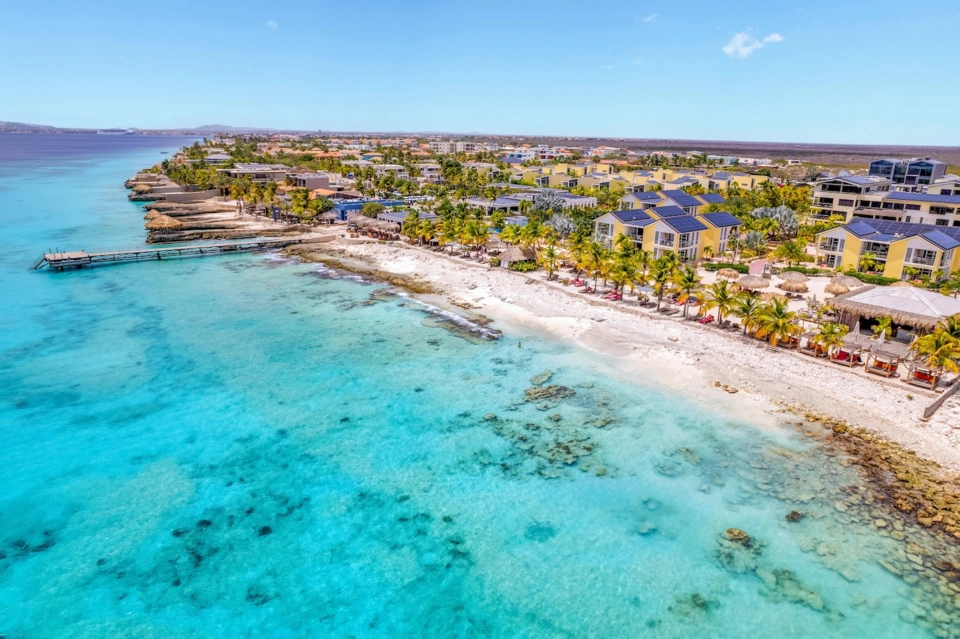


Bonaire is the quiet achiever of the Caribbean – an island that rarely makes the glossy travel-magazine covers yet consistently ranks as one of the world’s finest destinations for diving, snorkelling and marine wildlife. This 288-square-kilometre sliver of land, roughly 38 kilometres long and just 5–8 kilometres wide, sits at the eastern end of the ABC Islands chain, approximately 40 nautical miles east of Curaçao and 100 nautical miles from Aruba. The landscape is low, flat and arid – cactus scrub, salt pans glowing pink with brine shrimp, and flocks of flamingos wading in the shallows – rising only to 240 metres at Mount Brandaris in the north. It is not a glitzy island, nor a loud one. What it offers instead is something increasingly rare: a pristine marine environment protected by one of the oldest and most effective conservation regimes in the Caribbean, a genuine warmth of welcome, and an underwater world that regularly leaves experienced divers short of words.
The Bonaire National Marine Park, established in 1979, was the world’s first underwater national park. It encircles the entire island and the offshore Klein Bonaire, covering 2,700 hectares from the high-water mark to a depth of 60 metres. There are 94 marked mooring sites – 69 around the main island and 25 around Klein Bonaire – and anchoring is prohibited throughout the park’s waters to protect the reef. This policy has paid extraordinary dividends: Bonaire’s coral reefs are among the healthiest in the Caribbean, supporting over 470 fish species, nearly 60 coral species, three species of sea turtle and three species of seahorse. The diving is accessible to all levels – 54 of the 80-plus sites can be reached from shore – and visibility routinely exceeds 30 metres year-round.
Klein Bonaire, an uninhabited island of just 6 square kilometres sitting 800 metres offshore, is the jewel of the marine park. No Name Beach – a crescent of pure white sand with crystal-clear water – is one of the most beautiful and unspoiled beaches in the Caribbean, and the surrounding reef is a sea-turtle nesting ground of international significance. For charter guests, Klein Bonaire is the ultimate day-trip destination: your tender crosses in minutes, there are no facilities, no other visitors on a quiet morning, and the snorkelling is extraordinary. Enquire with Boatcrowd for catamaran or yacht availability and pricing on our Bonaire fleet.
Why Charter a Yacht in Bonaire
The World’s Best Shore Diving – From Your Yacht
Bonaire’s reputation as the world’s top shore-diving destination is well earned. The island’s 94 marked mooring sites cover an extraordinary range of environments: coral gardens, sponge-covered walls, seagrass beds, swim-throughs and some of the Caribbean’s healthiest hard-coral formations. Yellow-painted rocks along the shore mark each site by name. Visibility regularly exceeds 30 metres, water temperatures stay at a comfortable 26–29°C year-round, and currents are generally mild. For charter guests, this means your captain can moor the yacht at a world-class dive site in the morning, reposition to another by lunch, and anchor off Klein Bonaire for an afternoon snorkel – all without a long passage or a crowded dive boat. The variety is remarkable for such a compact island.
Klein Bonaire: Your Private Island for the Day
This uninhabited 6 km² island sits just 800 metres off Bonaire’s western shore – a five-minute tender ride from your mooring. No Name Beach, on Klein Bonaire’s western side, is a crescent of pristine white sand with turquoise water so clear you can see the sandy bottom in 10 metres. There are no buildings, no beach bars, no facilities of any kind – just sand, sea grape and the occasional sea turtle hauling ashore to nest. The surrounding reef is protected marine park, and the snorkelling is outstanding: hawksbill and green turtles, spotted eagle rays, parrotfish, queen angelfish and healthy staghorn and elkhorn coral. Your crew sets up shade, cold drinks and a full beach picnic while you snorkel in silence.
Flamingos, Salt Pans and an Eco-Tourism Ethos
Bonaire’s southern end is one of the Caribbean’s great wildlife spectacles. The Pekelmeer salt pans – still in commercial production – glow pink with brine shrimp and support a resident population of over 10,000 Caribbean flamingos. Bonaire is one of just four locations in the world where flamingos breed, and the sight of hundreds of birds wading in shallow pink water against a backdrop of white salt pyramids and blue sky is unforgettable. The island has embraced eco-tourism with genuine conviction: the marine park runs on entrance fees alone (no government subsidies), anchoring has been banned since the park’s establishment, and Washington Slagbaai National Park (established 1969 as the first nature reserve in the former Netherlands Antilles) protects the northern fifth of the island – 5,643 hectares of dry forest, salt flats, caves, mangroves and rugged coastline.
A Wreck Dive to Remember: the Hilma Hooker
The Hilma Hooker is one of the Caribbean’s most celebrated wreck dives. This 72-metre freighter was seized in 1984 after a drugs-smuggling operation and subsequently sank at her moorings off the south-west coast. She now lies on her starboard side in 18–30 metres of water, fully colonised by corals, sponges and gorgonians, and home to schools of tarpon, barracuda, snappers and the occasional nurse shark. The wreck is shore-accessible (a yellow-painted rock on the beach marks the entry point), but arriving by yacht is far more comfortable: your captain moors directly above the site, and you slip off the swim platform into some of the most rewarding wreck diving in the region. Suitable for all certified divers.
Key Destinations Near Bonaire
- Klein Bonaire – Uninhabited island 800 metres offshore with 25 marked dive/snorkel sites. No Name Beach offers pristine white sand and outstanding sea-turtle snorkelling. A five-minute tender ride from your mooring – the ultimate private-island day trip.
- 1000 Steps – One of Bonaire’s most famous shore-dive sites on the north-west coast. Despite the name, just 67 limestone steps lead down to a beautiful beach and a reef alive with sea turtles, parrotfish and star coral towers. The site is spectacular for both diving and snorkelling.
- Salt Pier – The commercial salt-loading pier on Bonaire’s southern coast doubles as one of the Caribbean’s most unusual dive sites. The pilings are encrusted with soft corals and attract dense schools of fish. Dive access is permitted when no ships are loading – your captain checks the schedule. Depths of 12–21 metres, suitable for beginners.
- Lac Bay – A shallow, mangrove-fringed lagoon on the south-east coast, renowned as one of the Caribbean’s premier windsurfing and kiteboarding spots. The calm, flat water and consistent trade winds make it ideal for water sports, and the mangroves are an important nursery habitat for reef fish and a feeding ground for herons and stilts.
- Washington Slagbaai National Park – The northern fifth of Bonaire, protected since 1969. A rugged landscape of dry forest, salt flats, caves and rocky coastline, home to the endangered yellow-shouldered parrot (lora), wild flamingos, barn owls and the rare Curaçao white-tailed deer. Accessible by 4x4 from Rincón.
- Rincón – The oldest settlement in the entire Dutch Caribbean, founded in the 16th century by the Spanish. A sleepy village of traditional Bonairean houses, the Cadushy Distillery (the island’s only spirits producer), and a genuinely local atmosphere far removed from the tourist coast.
- Curaçao – Approximately 40 nautical miles west (around 2.5 hours at cruising speed). The largest ABC Island, home to the UNESCO World Heritage city of Willemstad, the protected anchorage of Spanish Water, and over 40 beaches. A natural pairing for a multi-island charter from Bonaire.
Best Time to Charter a Yacht in Bonaire
Peak Season: December to April
The dry season brings warm, settled weather (27–30°C / 80–86°F), steady trade winds and virtually no rain. Water temperatures sit at 26–27°C with visibility regularly exceeding 30 metres – ideal conditions for the diving and snorkelling that are Bonaire’s greatest draw. This is the busiest period for charter, and the best yachts book out months in advance. February and March are the driest months. Charter rates are at their highest during Christmas and New Year, with January through April offering excellent conditions at slightly softer pricing.
Shoulder Season: May to July and November
May through July remains warm (28–32°C) and largely dry, with the south-east trade winds keeping conditions comfortable. Dive visibility stays excellent, and the mooring sites are noticeably quieter. Charter rates drop by 15–25%. November sits at the tail end of the nominal hurricane season, but Bonaire’s position south of the hurricane belt means the risk is negligible. Both periods are excellent for guests who want Bonaire’s world-class diving without the peak-season crowds.
Hurricane Season: August to October
Bonaire lies south of the Atlantic hurricane belt and is rarely affected by tropical storms. The last significant hurricane to impact the island was in 2007, and direct hits are extremely uncommon. August through October can bring slightly warmer temperatures (30–33°C) and occasional brief showers, but conditions remain swimmable and diveable year-round. Some charter yachts may reposition during these months, reducing availability. For confident travellers, the quiet season offers excellent diving, warm water and the island at its most serene.
Signature Experiences
- Dawn Snorkel at No Name Beach, Klein Bonaire – Have your captain position the yacht off Klein Bonaire before sunrise. As the first light breaks, tender to No Name Beach and slip into water alive with hawksbill turtles, spotted eagle rays and parrotfish grazing on the reef. No other footprints on the sand, no sounds but the water. Your chef has fresh pastries, tropical fruit and coffee waiting on the aft deck when you return.
- Wreck Dive on the Hilma Hooker – Moor directly above this 72-metre freighter in 18–30 metres of water and descend to a world of coral-encrusted steel, schools of tarpon and the occasional nurse shark drifting through the cargo holds. One of the Caribbean’s most atmospheric wreck dives, suitable for all certified divers. Surface to lunch on the aft deck, with the trade winds cooling you dry.
- Flamingo Watch at the Salt Pans – Cruise along Bonaire’s southern coast past the commercial salt pans, where over 10,000 flamingos wade in shallow pink water. The sight of hundreds of birds lifting off against a backdrop of white salt pyramids and blue sky is one of the Caribbean’s great wildlife spectacles. Your captain positions the yacht for the best viewing angle while your crew serves sundowners.
- 1000 Steps at Golden Hour – Moor off this iconic dive site in the late afternoon, when the low sun lights up the reef in warm gold. Descend the 67 limestone steps to the beach and snorkel among star coral towers, sea turtles and clouds of blue tang. The light filtering through the water at this hour is extraordinary.
- Dinner in Kralendijk – Tender ashore to Bonaire’s charming capital for dinner at At Sea – the island’s finest restaurant, with a chef’s surprise tasting menu and wine pairings. Or head to La Balandra at the Harbour Village Beach Club for imaginative Caribbean cuisine with your feet almost in the water.
- Lac Bay Kiteboarding – For active guests, Lac Bay’s shallow, wind-swept lagoon is one of the Caribbean’s premier kiteboarding and windsurfing spots. Your crew arranges equipment hire and instruction, while those who prefer to watch from the yacht can enjoy the spectacle from the aft deck with cold drinks and the trade winds at their back.
Yacht Types Available
Bonaire is a developing charter destination with a small but growing fleet. Most locally based charter vessels are luxury catamarans, with motor yachts and superyachts visiting seasonally. Bonaire’s mandatory mooring-buoy system (no anchoring is permitted) means all vessels use designated moorings throughout the marine park.
-
Luxury Catamarans (55’+) – The most popular option for Bonaire charters and ideally suited to the island’s marine park. Shallow draft allows access to the mooring sites closest to shore, and the twin-hull stability is a particular advantage for guests spending long days in the water. Fully crewed with captain, chef and steward/ess. Catamarans in the 55’–80’ range typically sleep 6–10 guests and carry a full complement of snorkelling and diving gear. Weekly rates start from approximately $25,000–$50,000 depending on season and vessel.
-
Motor Yachts (55’–99’) – A smaller selection of crewed motor yachts operates in the ABC Islands seasonally. Motor yachts offer speed for the Curaçao crossing (40 nautical miles in roughly 2.5 hours at 18 knots) and additional space for larger groups. Accommodation for 6–8 guests with a crew of 3–5 and water toys. Weekly rates from approximately $40,000–$90,000.
-
Superyachts (100’+) – Harbour Village Marina accommodates visiting superyachts up to 73 metres (240 feet). No superyachts are permanently based in Bonaire, but several transit through the ABC Islands each winter season. A superyacht on Bonaire’s moorings is a striking sight – a floating five-star resort surrounded by some of the healthiest reef in the Caribbean. Weekly rates from roughly $120,000–$250,000+.
Frequently Asked Questions
How much does a yacht charter in Bonaire cost?
Luxury catamarans (55’–80’) – the most popular option – start from around $25,000–$50,000 per week, fully crewed. Motor yachts (55’–99’) typically start from $40,000–$90,000 per week. Visiting superyachts (100’+) start from roughly $120,000–$250,000 per week. Most charters operate on MYBA terms: base rate plus an Advance Provisioning Allowance (usually 25–35%) covering fuel, food, drinks and mooring fees. A marine-park tag ($25 per person) is required for all divers and snorkellers. Shoulder-season rates are typically 15–25% softer. Enquire with Boatcrowd for a personalised quote.
Are luxury catamarans available for charter in Bonaire?
Yes, and they are the most common charter vessel on the island. Catamarans are particularly well suited to Bonaire’s marine park: their shallow draft allows access to mooring sites close to shore, their wide beam provides a stable platform for gearing up and entering the water, and their spacious deck layout is ideal for groups that spend most of the day snorkelling or diving. Boatcrowd’s fleet includes premium power catamarans from builders like Sunreef and Lagoon, fully crewed with captain, chef and steward/ess.
Can I charter a yacht in Bonaire for a film or TV production?
Yes. Bonaire’s crystal-clear water (visibility frequently exceeds 30 metres), healthy coral reefs and protected marine park make it a natural location for underwater filming, nature documentaries and luxury lifestyle content. The BBC’s Wild Caribbean series and multiple episodes of House Hunters International have featured the island. Boatcrowd can arrange production-friendly charters and coordinate with local authorities for filming permits and marine-park access.
Is Bonaire a good destination for a proposal, honeymoon or milestone celebration?
Bonaire is one of the most romantic charter destinations in the southern Caribbean. Imagine a sunrise proposal on the deserted white sand of No Name Beach, with only your tender captain as witness. A honeymoon itinerary might include a private reef snorkel among sea turtles, a sunset cruise past the flamingo colonies, and a chef’s tasting menu aboard under the stars. For milestone birthdays, a wreck dive on the Hilma Hooker followed by a beach picnic on Klein Bonaire creates memories that no resort experience can match. Let Boatcrowd know the occasion and we’ll ensure every detail is handled.
Can I bring the whole family, including grandparents and young children?
Absolutely. Bonaire’s calm, shallow mooring sites and protected reef are ideal for snorkellers of all ages and abilities. Klein Bonaire’s No Name Beach offers gentle, clear water perfect for young swimmers, and the mandatory mooring system means no anchor chains to worry about near the reef. Catamarans provide the widest, most stable platform for families, with easy water access from the swim platform. Crews are experienced with multi-generational groups and can organise reef safaris, fish-identification games and age-appropriate snorkelling instruction.
Can I combine Bonaire with Curaçao and Aruba in one charter?
Yes. Bonaire to Curaçao is approximately 40 nautical miles (about 2.5 hours at cruising speed), making a round trip between the two islands comfortable on a 4- or 5-day charter. A full ABC Islands circuit – Bonaire, Curaçao and Aruba – covers roughly 200 nautical miles and is best suited to a 7–8 day charter, allowing time to explore each island and enjoy the open-water crossings rather than rush through them. Each island offers a completely different character: Bonaire’s marine park and eco-tourism ethos, Curaçao’s UNESCO-listed capital and dramatic coastline, and Aruba’s arid beauty and vibrant beach scene.
Is anchoring really prohibited in Bonaire?
Yes. Bonaire was the first country in the world to mandate mooring buoys instead of anchoring in its marine park. All vessels – from tenders to superyachts – must use the designated yellow or white-and-red mooring buoys located at each of the 94 marked sites. This policy, in place since the marine park’s establishment in 1979, is a key reason Bonaire’s reefs remain among the healthiest in the Caribbean. Harbour Village Marina and the public moorings in Kralendijk provide berthing options for all vessel sizes. Your captain will be familiar with the system and will handle all mooring procedures.
Ready to plan your Bonaire charter?
Tell us your dates and party size – we'll match you with the right yacht and crew.
10–15 min by road to Harbour Village Marina
Every yacht is chartered fully crewed with a professional captain and crew, so no licence or sailing experience is required — you simply step aboard.
Best time to charter Bonaire
Local knowledgeOutside the hurricane belt and ringed by a protected marine park, Bonaire offers year-round charters over some of the Caribbean's clearest reefs.
