 Skip to content

 EN
EN  Deutsch
  Français
  Español
  Italiano
  日本語
日本語  Português


Aruba · In this guide
Aruba Guide: Luxury Yacht Charter in Aruba


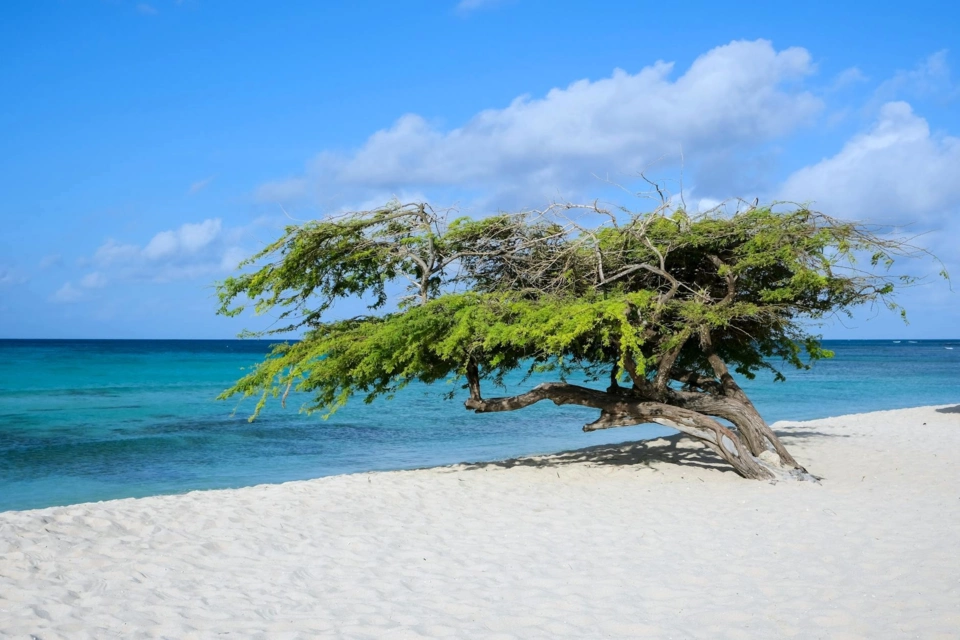
Aruba sits at the southern edge of the Caribbean, just 15 nautical miles north of Venezuela’s coast and well below the Atlantic hurricane belt. This 32-kilometre-long island is the westernmost of the ABC group – Aruba, Bonaire, Curaçao – and it looks nothing like the lush, green Caribbean most visitors expect. The landscape is arid and dramatic: wind-sculpted divi-divi trees leaning permanently to leeward, cactus-covered hillsides rising to 188 metres at Mount Jamanota, and a rugged north coast where Atlantic swells carve sea arches and blow holes into ancient limestone. Turn to the sheltered western shore and the mood shifts entirely – Eagle Beach and Palm Beach roll out miles of powdery white sand lapped by calm, turquoise water, while Oranjestad’s pastel-coloured Dutch colonial buildings line a bustling waterfront of open-air markets, boutiques and harbourside restaurants.
For yacht charter guests, Aruba offers a rare combination: reliable year-round sunshine (the island averages just 18 inches of annual rainfall and sits outside the hurricane zone), world-class diving on the Antilla – one of the Caribbean’s largest accessible shipwrecks at 122 metres long – and a dining scene that ranges from feet-in-the-water seafood at the Flying Fishbone in Savaneta to the 12-course chef’s table at Infini. Renaissance Marina in Oranjestad accommodates vessels up to 60 metres across 100 berths, with fuel, provisioning and full resort access steps from the dock. The marina’s location in the heart of the capital means your crew can provision from local markets, wine merchants and gourmet suppliers without ever needing a taxi.
Whether you’re planning a long weekend exploring Aruba’s western beaches and snorkelling reefs, or a week-long ABC Islands circuit that takes in Curaçao’s UNESCO-listed Willemstad and Bonaire’s legendary dive sites, Aruba is the natural starting point – the island with the strongest tourism infrastructure, the liveliest shoreside scene and the most welcoming atmosphere in the Dutch Caribbean. Start planning your Aruba charter with Boatcrowd and let our team match you to the right yacht and itinerary.
Why Charter a Yacht in Aruba
Year-Round Sunshine, Outside the Hurricane Belt
Aruba’s position at 12°N latitude places it firmly south of the Atlantic hurricane formation zone – a distinction shared only with its ABC neighbours and a handful of southern Caribbean islands. The practical benefit for charter guests is simple: you can book with confidence in any month of the year. Temperatures hover between 27°C and 32°C year-round, water temperatures sit at a comfortable 26–29°C, and the persistent north-east trade winds (averaging 18–25 mph) keep the air fresh and the western anchorages calm. Annual rainfall is just 18 inches – significantly drier than most Caribbean destinations – so rain delays are virtually unheard of. No other major Caribbean charter destination offers this level of weather reliability across all twelve months.
The Antilla: A World-Class Wreck at Your Doorstep
The Antilla is one of the great dive and snorkel experiences in the Caribbean. This 122-metre German cargo ship, built in Hamburg in 1939, was deliberately scuttled by her own crew on 10 May 1940 to prevent capture at the outbreak of the Second World War. She now lies in 6–18 metres of water off Aruba’s north-west coast – shallow enough for snorkellers to see the hull clearly from the surface, deep enough for divers to explore cargo holds, corridors and engine rooms colonised by sponges, corals and schools of reef fish. The wreck is one of the largest diveable shipwrecks in the Caribbean, exceeded only by the Bianca C. in Grenada. Your crew can have you at the site within 20 minutes of leaving the marina.
A Culinary Scene That Surprises
Aruba’s restaurant scene has matured well beyond the resort-hotel stereotype. Infini, run by chef Urvin Croes, serves a 12-course surprise tasting menu with wine pairings in an intimate chef’s-table setting that would hold its own in any European capital. The Flying Fishbone in the old fishing village of Savaneta pioneered feet-in-the-water dining in 1977 and remains one of the most atmospheric restaurants in the Caribbean – tables at the water’s edge, European-Caribbean fusion, and a moonlit setting that was made for celebrations. Papiamento occupies a 19th-century Aruban manor house with garden and poolside tables, serving Caribbean-European fusion built around the local signature dish, keshi yena – Gouda cheese stuffed with spiced meat. For casual waterfront eating, Zeerover in Savaneta serves fresh-caught fish by weight to a crowd of locals and visitors sharing long communal tables.
An Arid Landscape Unlike Anywhere Else in the Caribbean
Most Caribbean islands blend into a similar palette of green hills and palm-fringed beaches. Aruba is different. Arikok National Park covers nearly 20% of the island – roughly 4,000 acres of desert landscape, volcanic rock formations, limestone cliffs and cactus scrub. The Conchi Natural Pool, a dramatic swimming hole formed by volcanic rock on the wild north-east coast, is accessible by boat or 4x4 and feels like something from another continent entirely. The California Lighthouse (built in 1910 and named after a steamship that sank nearby) offers panoramic views from the island’s north-western tip. For charter guests, this visual contrast – rugged desert hinterland meeting calm turquoise water – makes Aruba one of the most photogenic islands in the region and a natural backdrop for film and content production.
Top Destinations Near Aruba
- Eagle Beach – Regularly ranked among the world’s best beaches, Eagle Beach is a wide sweep of soft white sand stretching nearly two kilometres along Aruba’s western coast. The water is calm, turquoise and shallow for a good distance offshore, making it ideal for swimming from the yacht’s swim platform. The iconic fofoti (divi-divi) trees leaning over the sand are among the most photographed sights in the Caribbean. Anchor offshore in 8–12 metres over sand and tender in for a morning swim or a sundowner walk.
- Palm Beach – Aruba’s liveliest stretch of sand, backed by resort towers and a string of restaurants, bars and water-sports operators. The water is exceptionally calm and shallow, with negligible wave action – ideal for families with young children. Anchor in 10–20 metres over sand and tender ashore for lunch at MooMba Beach Bar or a late-afternoon cocktail as the sun drops towards the horizon.
- Baby Beach – A shallow, lagoon-style bay on Aruba’s south-eastern tip, protected by a natural reef barrier. The water rarely exceeds waist depth for a good distance from shore, making it the calmest swimming and beginner snorkelling spot on the island. Your crew anchors nearby and tenders in for a morning of floating in gin-clear water.
- Mangel Halto – A sheltered cove near the old fishing village of Savaneta, surrounded by mangroves and fringed by healthy coral reef. The snorkelling here is outstanding – expect parrotfish, yellowtail snappers, blue tangs, stingrays and occasional sea turtles gliding through the shallows. Calm conditions most days, though not recommended when the swell picks up from the south.
- Boca Catalina – A small, calm bay on the north-west coast between the high-rise hotel area and the California Lighthouse. The snorkelling is beginner-friendly, with colourful reef fish, corals and the occasional sea turtle in clear, shallow water. A favourite stop on day-charter routes from Oranjestad.
- Arashi Beach – A quieter alternative to Palm Beach, just south of the California Lighthouse. Shallow, sandy-bottom water on the left side suits beginners, while the right side offers more advanced snorkelling over rocky reef when conditions are calm. Your captain reads the day’s swell and picks the best approach.
- Curaçao – Roughly 61 nautical miles east of Aruba (about 3.5 hours at cruising speed). The largest of the ABC Islands, home to the UNESCO World Heritage city of Willemstad, the protected anchorage of Spanish Water, and over 40 beaches along a dramatic limestone coastline. A natural extension of any Aruba charter into a multi-island voyage.
- Bonaire – Approximately 100 nautical miles east of Aruba. The world’s best shore-diving destination, with 80+ marked dive sites protected by the Bonaire National Marine Park (established 1979). Klein Bonaire, an uninhabited island just 800 metres offshore, offers pristine white-sand beaches and outstanding snorkelling. Reachable via Curaçao on a 5-day or longer ABC Islands circuit.
Best Time to Charter a Yacht in Aruba
Peak Season: December to April
The dry season brings the most comfortable conditions: air temperatures of 27–30°C (80–86°F), steady north-east trade winds of 15–20 knots, low humidity and virtually no rain. Water temperatures sit at 26–27°C – perfect for snorkelling and diving. This is the busiest period for Caribbean tourism generally, and Aruba’s restaurants and beaches are at their liveliest. Charter rates are at their highest during Christmas and New Year (the holiday period often books out 6–12 months in advance), but January through April offers excellent conditions at slightly softer pricing.
Shoulder Season: May to July and November
May through July remains warm (28–32°C), sunny and significantly less crowded. Trade winds pick up slightly – June averages the strongest breezes of the year at around 25 mph – which keeps anchorages comfortable and the air fresh. Charter rates drop by 15–25% compared to peak season. November sits at the tail end of the nominal Caribbean hurricane season, but Aruba’s southern position means the risk is negligible – conditions are warm, seas are calm and the island is noticeably quieter. Both periods suit guests who prefer fewer boats in the anchorages and easier restaurant reservations.
Hurricane Season: August to October
The official Atlantic hurricane season runs from June to November, but Aruba’s position at 12°N latitude – well south of the hurricane belt – means the island is rarely affected. No major hurricane has made a direct hit on Aruba in living memory. August through October can bring occasional brief rain showers and slightly lighter winds, but conditions remain warm (30–32°C), sunny and swimmable. Yacht availability may be limited during these months as some vessels reposition, but for charter guests willing to travel in the quieter season, Aruba offers a level of weather safety that few Caribbean destinations can match.
Signature Experiences
- Snorkelling the Antilla at Sunrise – Have your captain position the yacht off the wreck site before dawn. As the first light filters through the water, slip off the swim platform and glide over the 122-metre hull of this Second World War cargo ship in just 6–18 metres of depth. Coral-encrusted railings, open cargo holds and schools of reef fish glow in the early-morning light. Your chef has fresh tropical fruit, pastries and coffee waiting on the aft deck when you surface.
- Feet-in-the-Water Dinner at the Flying Fishbone – Tender ashore at the old fishing village of Savaneta and walk to one of the Caribbean’s most romantic restaurants. Tables sit at the water’s edge, waves lapping at your ankles as the kitchen sends out European-Caribbean fusion – fresh catch, lobster, steak – beneath a canopy of stars. Founded in 1977, the Flying Fishbone practically invented waterside dining in Aruba.
- Conchi Natural Pool by Tender – Cruise along Aruba’s wild north-east coast and anchor offshore near this volcanic rock pool – a dramatic swimming hole carved into the coastline by centuries of Atlantic swells. The pool is sheltered from the open ocean, allowing you to float in calm, clear water while waves crash over the rocks just metres away. Arikok National Park’s cactus-studded landscape stretches behind you.
- Sunset from the California Lighthouse – Anchor off Arashi Beach on the north-west tip and tender ashore for the short walk to this 1910 lighthouse. The panoramic views stretch from the resort strip of Palm Beach to the wild dunes of Tierra del Sol, and on a clear evening you can see the coast of Venezuela on the southern horizon. Return to the yacht for sundowners as the sky turns gold.
- Oranjestad Market Morning – Moor at Renaissance Marina and walk the colourful streets of Aruba’s capital. Browse the open-air markets for tropical fruit, spices and local crafts, wander the pastel-painted Dutch colonial buildings, and provision treats for your chef from the gourmet shops along the waterfront. The Bon Bini Festival, held every Tuesday evening at Fort Zoutman, showcases traditional music, dance and local food.
- Keshi Yena at Papiamento – Tender ashore for dinner at this 19th-century manor house surrounded by lush gardens. Papiamento’s signature dish – keshi yena, a hollowed Gouda cheese stuffed with spiced meat – is Aruba’s national dish, and the poolside garden setting is unforgettable. A perfect way to experience local cuisine in a refined, intimate atmosphere.
Yacht Types Available
The ABC Islands are an emerging charter destination, and Aruba’s fleet is still growing. Most locally based charter yachts are luxury catamarans, with a smaller selection of motor yachts and superyachts visiting seasonally from other Caribbean bases. Your Boatcrowd charter specialist can source the right vessel for your group, whether based in Aruba or repositioned from neighbouring islands.
-
Luxury Catamarans (55’+) – The most popular and widely available option for Aruba charters. Premium power catamarans from builders like Sunreef and Lagoon in the 55’–80’ range offer exceptional stability in the trade-wind swells, generous deck space and a shallow draft ideal for nosing into Aruba’s reef-protected bays and sandy shallows. Fully crewed with captain, chef and steward/ess, these vessels typically sleep 6–10 guests in spacious cabins. Their twin-hull design virtually eliminates rolling, making them the most comfortable option for families, multi-generational groups and guests prone to seasickness. Weekly rates start from approximately $25,000–$50,000 depending on season and vessel.
-
Motor Yachts (55’–99’) – A growing selection of crewed motor yachts operates in the ABC Islands, offering speed and flexibility for multi-island itineraries. Cruising at 18–28 knots, a motor yacht covers the 61-nautical-mile crossing to Curaçao in roughly 3.5 hours, making a 4- or 5-day ABC Islands circuit comfortable and unhurried. Accommodation for 6–8 guests in 3–4 en-suite cabins, with a crew of 3–5 and a full complement of water toys. Weekly rates typically start from around $40,000–$90,000 depending on season and yacht.
-
Superyachts (100’+) – Renaissance Marina can accommodate visiting superyachts up to 60 metres. While no superyachts are permanently based in Aruba, several transit through the ABC Islands each winter season on their way between the eastern Caribbean and Panama or South America. A superyacht charter in Aruba pairs the island’s arid beauty and year-round sunshine with the space, privacy and service of a floating five-star resort. Weekly rates for visiting superyachts start from roughly $120,000–$250,000+, depending on vessel size and season.
Frequently Asked Questions
How much does a yacht charter in Aruba cost?
Charter pricing depends on yacht size, type, season and inclusions. Luxury catamarans (55’–80’) – the most popular option in Aruba – start from around $25,000–$50,000 per week, fully crewed with captain, chef and steward/ess. Crewed motor yachts (55’–99’) typically start from $40,000–$90,000 per week. Visiting superyachts (100’+) start from roughly $120,000–$250,000 per week. Most charters operate on an all-inclusive or MYBA terms basis – the base rate plus an Advance Provisioning Allowance (usually 25–35%) covering fuel, food, drinks and dockage. Shoulder-season rates (May–July, November) are typically 15–25% softer. Crew gratuity is customarily 10–15%. Enquire with Boatcrowd for a personalised quote based on your dates, group size and preferences.
Are luxury catamarans available for charter in Aruba?
Yes, and they are the most widely available charter vessel in the ABC Islands. Boatcrowd’s fleet includes premium power catamarans from builders like Sunreef and Lagoon in the 55’–80’ range. These vessels are ideal for Aruba’s waters thanks to their shallow draft (allowing access to reef-protected bays and sandy shallows that deeper-hulled yachts cannot reach), exceptional stability in the Caribbean trade-wind swells, and generous living space both above and below deck. Catamarans come fully crewed and are particularly popular with families and multi-generational groups who appreciate the wide beam, the absence of rolling, and the easy swim-platform access.
Can I charter a yacht in Aruba for a film or TV production?
Yes. Aruba’s year-round sunshine, arid desert landscapes and crystal-clear water make it a natural fit for luxury lifestyle content, fashion shoots and yacht-based sequences. The island offers a distinctive visual contrast – cactus-covered hillsides, volcanic rock formations and white-sand beaches – that sets it apart from typical Caribbean filming locations. Boatcrowd can arrange production-friendly charters with yachts that accommodate camera crews, lighting rigs and talent. The island has no formal film-permit system, though a letter of support from local authorities is recommended and typically takes about a week to arrange.
Is Aruba a good destination for a proposal, honeymoon or milestone birthday?
Aruba is outstanding for celebrations. Your crew can arrange a sunset proposal on the deserted sands of Mangel Halto, with champagne and a photographer arriving by tender. A honeymoon itinerary might include a private snorkel over the Antilla wreck at dawn, a couples’ lunch at the Flying Fishbone with tables in the shallows, and rose-petal turndowns in your master stateroom. Milestone birthdays are equally well catered for – a beach barbecue on Baby Beach for a 40th, a Papiamento garden dinner for a 50th, or a multi-island ABC circuit for a group celebration. Let Boatcrowd know the occasion when you enquire and we’ll ensure every moment is tailored to the event.
Can I bring the whole family, including grandparents and young children?
Absolutely. Aruba’s calm western beaches – particularly Baby Beach and Palm Beach, where the water is shallow and virtually waveless – are ideal for young children. Catamarans offer the widest, most stable platform for multi-generational groups, with easy swim-platform access and plenty of space for everyone. Crews are experienced with guests of all ages: children get age-appropriate snorkelling instruction and kid-friendly menus, while grandparents appreciate calm anchorages, comfortable sun lounges and attentive service. The Antilla wreck is shallow enough for confident young snorkellers to enjoy from the surface.
Can I combine Aruba with Bonaire and Curaçao in one charter?
Yes, and it’s one of the most rewarding itineraries in the southern Caribbean. The three ABC Islands offer completely different characters – Aruba’s arid beauty and lively beach scene, Curaçao’s UNESCO-listed capital and dramatic diving, and Bonaire’s world-class marine park and eco-tourism ethos. The crossing from Aruba to Curaçao is roughly 61 nautical miles (about 3.5 hours at cruising speed), and from Curaçao to Bonaire is approximately 40 nautical miles (around 2.5 hours). A 5-day charter can cover two islands comfortably, while a 7–8 day voyage takes in all three with time to explore each properly. Your Boatcrowd charter specialist will design a multi-island route that balances cruising time with time at anchor.
Is Aruba really outside the hurricane belt?
Yes. Aruba’s position at 12°N latitude – roughly 15 nautical miles from the South American mainland – places it well south of the zone where Atlantic hurricanes typically form and track. No major hurricane has made a direct hit on Aruba in living memory. The island can experience occasional tropical-storm remnants during the August–October period, but these are rare and typically limited to brief rain showers rather than sustained severe weather. This makes Aruba one of the safest year-round charter destinations in the entire Caribbean.
Ready to plan your Aruba charter?
Tell us your dates and party size – we'll match you with the right yacht and crew.
10–15 min by road to Renaissance Marina
Every yacht is chartered fully crewed with a professional captain and crew, so no licence or sailing experience is required — you simply step aboard.
Best time to charter Aruba
Local knowledgeSouth of the hurricane belt with near-constant trade winds, Aruba is one of the Caribbean's rare true year-round charter grounds.
